Table of Contents
- Introduction: Why tax incentives matter in 2026
- Home energy credits (30% federal incentives)
- Clean vehicle tax credits
- Business sustainability tax incentives
- State and local incentives
- ESG tax planning for businesses
- How to claim your credits
- Why choose our firm
- FAQs
- Conclusion and next steps
Introduction: Why Tax Incentives for Sustainability Matter in 2026
Rising energy costs and stricter climate regulations have made sustainability investments financially urgent. The Inflation Reduction Act of 2022 and Infrastructure Investment and Jobs Act of 2021 transformed U.S. tax policy, creating unprecedented opportunities for taxpayers to reduce costs while supporting environmental sustainability. Many of these policies align with objectives promoted by the Environmental Protection Agency.
Tax incentives for sustainability now cover a substantial share of clean energy, energy efficiency, and low-carbon investment costs. Tax analysts emphasize that these incentives function similarly to spending programs, allowing certain credits to be claimed as direct payments by entities that do not typically pay federal income tax. Federal subsidies total approximately $96.7 billion annually.
Both individuals and businesses can access federal, state, and local credits and deductions through 2032, with step-downs thereafter. This article provides practical guidance on major U.S. incentives, their interaction with ESG goals, and claiming procedures from an advisor’s perspective.

Core U.S. Home Energy Tax Credits (30% Federal Incentives)
This section covers post-2022 rules for homeowners investing in energy efficiency and renewable energy systems in existing homes or new construction.
Energy Efficient Home Improvement Credit (Section 25C):
- The Energy Efficiency Home Improvement Tax Credit allows homeowners to claim 30% of costs up to $1,200 for qualifying energy property costs and certain energy efficient home improvements, with no lifetime dollar limits through 2025
- Per-item caps apply: windows ($600), exterior doors ($500 total), home energy audits ($150)
- Separate $2,000 annual cap for heat pumps, heat pump water heaters, and biomass stoves—stackable with the $1,200 limit for potential savings exceeding $3,200 yearly
Residential Clean Energy Credit (Section 25D):
- Homeowners can claim a tax credit of 30% of the costs for qualified, newly installed residential clean energy property, such as solar, wind, geothermal heat pumps, and fuel cells, from 2022 through 2025
- The residential energy-efficient property tax credit (Section 25D) supports home installation of solar electric and water heating systems, as well as some battery storage systems, and is set to expire on December 31, 2025
- The federal tax credit for residential clean energy systems is 30% of the costs for qualified, newly installed property from 2022 through 2025
- Credit steps to 26% in 2033, 22% in 2034
- Property must be U.S.-located; primary residence and some second home installations qualify, but rentals have limitations
- Credits carry forward indefinitely if they exceed current-year tax liability
Transportation and Clean Vehicle Tax Credits
Clean transportation represents a central component of U.S. pollution reduction strategy. Post-August 2022 rules reshaped electric vehicles incentives around domestic content and battery sourcing.
New Clean Vehicle Credit (IRC §30D):
- Up to $7,500 for qualifying new plug-in EVs and fuel cell vehicles through 2032
- Split structure: $3,750 for critical minerals requirements, $3,750 for battery components
- MSRP caps: $55,000 for cars, $80,000 for SUVs/pickups/vans
- Income limits: $150,000 single, $225,000 head of household, $300,000 joint filers
Previously Owned Clean Vehicle Credit:
- Up to $4,000 or 30% of sale price (whichever is less)
- Vehicle must be at least 2 model years old with maximum $25,000 sale price
- Same modified AGI limits apply
Commercial Clean Vehicle Credit:
- The Commercial Clean Vehicle Credit offers financial incentives for purchasing electric or hybrid business fleets, with deadlines for acquisition set through 2025
- Up to $7,500 for light-duty vehicles under 14,000 lbs GVWR
- Up to $40,000 for heavy-duty vehicles over 33,000 lbs
- No income caps for businesses
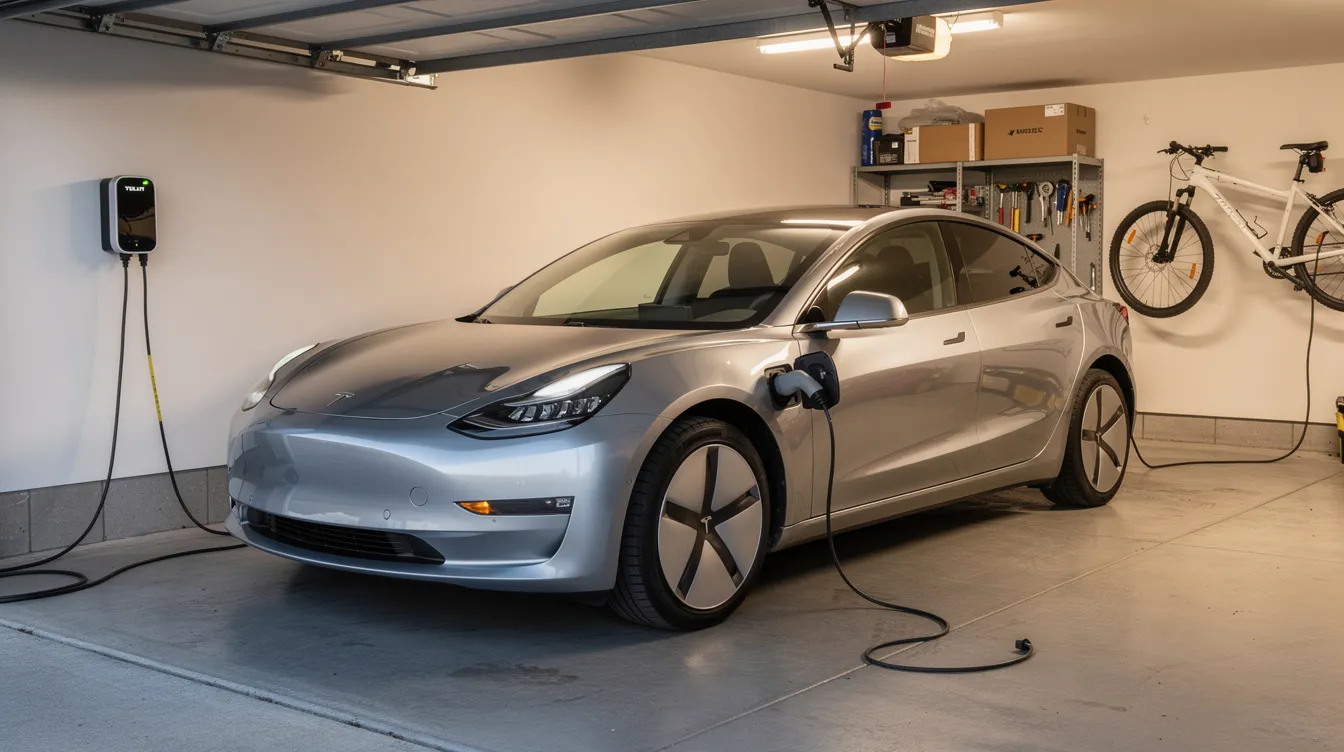
Alternative Fuel Vehicle Refueling Property Credit (Section 30C): Covers qualified EV charging equipment costs through 2032, with enhanced rates for installations in low-income or rural census tracts meeting prevailing wage requirements.
Business-Focused Sustainability Tax Incentives
Business tax incentives for sustainability focus on reducing the net cost of green technology through tax credits and tax deductions. Companies across sectors can take advantage of these provisions.
Investment Tax Credit and Production Tax Credit:
- Federal tax credits for renewable energy include the Investment Tax Credit (ITC) and the Production Tax Credit (PTC), aimed at incentivizing solar, wind, and geothermal installations
- The investment tax credit (Section 48) provides a one-time credit for new investment in qualifying energy producing property, while the production tax credit (Section 45) offers a per kilowatt hour subsidy for the first 10 years of operation
- Under the Inflation Reduction Act, the investment tax credit can rise to 30% for projects that meet certain labor standards and domestic content requirements, with additional credits available for projects in energy communities
Section 179D Deduction:
- The Section 179D Deduction allows building owners or designers to deduct costs for energy efficient upgrades to HVAC, lighting, and building envelopes
- Reaches $5.36 per square foot (2024 indexed) for buildings exceeding ASHRAE 90.1 standards by 25% or more
- Incentives for energy efficient construction are set to expire soon, with construction deadlines for most incentives falling within the next few years
Additional Business Incentives:
- Section 45L New Energy Efficient Home Credit: $2,500-$5,000 per single-family home meeting ENERGY STAR or Zero Energy Ready Home requirements through 2032
- Research & Development tax credits are available for companies developing eco-friendly products or sustainable technologies to improve resource efficiency
- The Advanced Manufacturing Investment Credit was increased to 35% for semiconductor and equipment manufacturing properties placed in service after 2025
- Accelerated Depreciation (MACRS) enables businesses to recover costs of qualifying green energy equipment over a shorter period, which reduces immediate taxable income
Most clean energy tax credits can now be sold to unrelated taxpayers for cash, helping businesses with little tax liability monetize their credits.
State and Local Tax Incentives for Sustainability
Beyond federal programs, states and municipalities offer additional sustainability investments support that can meaningfully increase total savings—often adding 10-30% to federal benefits. Understanding local program requirements and maintaining transparency throughout the application process can help taxpayers maximize available benefits.
Common State Incentives:
- California’s SGIP rebates up to $1,000/kWh for battery storage
- New York’s NY-Sun offers $0.20-$1.00/W solar incentives
- Massachusetts provides 15-30% heat pump rebates
Property Tax Benefits:
- Over 40 states offer property tax exemptions excluding solar system value from assessments
- Local jurisdictions may provide abatements through the 2030s
Sales Tax Exemptions: Approximately 30 states waive sales tax on EVs or clean energy equipment, though eligibility varies by technology and purchase date.
Utilities often provide separate rebates stacking with tax benefits. Check official state energy office resources, as many programs run on fixed funding or have sunset dates requiring planning around each tax year.
ESG, Green Taxes, and Corporate Strategy
Green taxes, also known as environmental taxes, are fiscal policy measures designed to promote sustainable practices and discourage activities that harm the environment. Understanding their interaction with green incentives shapes effective corporate strategy.
Environmental Tax Framework:
- Governments may employ market-based mechanisms such as carbon pricing to incentivize the reduction of greenhouse gas emissions as part of their environmental tax strategies. Some jurisdictions have also considered a carbon tax approach to achieve similar objectives.
- The calculation of environmental taxes varies depending on the jurisdiction and the specific environmental impact being targeted, commonly including taxes on emissions, waste generation, and energy consumption
- Effective July 1, 2022, the Infrastructure Investment and Jobs Act reinstated the Section 4661 excise taxes on chemicals and the Section 4671 tax on imported chemical substances, which are examples of environmental taxes
- The Inflation Reduction Act introduced a new production tax credit for clean hydrogen production, which is part of the broader framework of environmental taxes aimed at promoting clean energy
Strategic ESG Integration:
- The rise of ESG (Environmental, Social, and Governance) considerations has led to various tax credits and incentives aimed at promoting sustainable practices, which can help businesses optimize their tax strategies
- Adopting an ESG tax strategy can enhance brand reputation, provide access to capital, reduce operational costs, and ensure alignment with regulatory frameworks
- Organizations meeting stakeholder expectations around sustainability commitments gain better access to green finance at favorable rates
- Firms leverage ITC/PTC for Scope 1/2 greenhouse gas emissions reductions aligned with CSRD reporting requirements

How to Claim Sustainability Tax Incentives (Individuals & Businesses)
Many valuable credits go unclaimed because taxpayers are unsure about forms and documentation. Ensuring compliance requires systematic planning.
For Individuals:
- Keep detailed invoices and manufacturer certifications
- Work with qualified installers for eligible improvements
- Claim home energy credits on Form 5695 (Residential Energy Credits)
- Claim vehicle credits on Form 8936 (Clean Vehicle Credits)
- Post-2024 rules require manufacturer-issued PIN or QM codes for certain products
- Retain records 3-6 years for IRS audit readiness
For Businesses:
- Conduct sustainability and tax baseline assessment to identify opportunities
- Obtain engineering studies for Section 179D claims
- Coordinate with finance teams on PTC vs. ITC elections
- Maintain detailed cost segregation and project accounting
- Comply with prevailing wage and apprenticeship conditions (Davis-Bacon rates, 10-15% apprentices) for full credit rates
- Keep payroll and contractor records demonstrating compliance
Collaboration with knowledgeable advisors helps navigate interactions between federal, state, and local incentives, carryforwards, and regulations like passive activity limitations.
Why Choose Our Firm for Sustainability-Focused Tax Planning
We understand both tax law and real-world sustainability projects, from rooftop solar installations to large-scale wind energy investments and fleet electrification.
Our Strengths:
- Deep experience with clean energy credits, deductions, and compliance requirements
- Current knowledge of 2022-2026 legislative changes and tax implications
- Multi-year modeling factoring step-downs, wage rules, and ESG reporting
- Coordination with engineers and installers for proper documentation
- Integration of tax outcomes into net-zero roadmaps
We take a transparent, value-focused approach with clear fee structures and proactive communication tailored to homeowners, mid-market businesses, and enterprises. This commitment to transparency helps clients understand opportunities, compliance requirements, and potential risks before moving forward. Contact us for a customized review ensuring you claim every available credit.
Frequently Asked Questions About Tax Incentives for Sustainability
Common practical questions about timelines, eligibility, and stacking green incentives:
How long do the 30% federal home energy credits last? The 30% rate applies through December 31, 2032, stepping to 26% in 2033 and 22% in 2034 for applicable technologies.
Can I combine federal credits with state rebates and utility programs? Yes, in most cases. However, certain charitable contributions or rebates may reduce the basis for calculating your federal credit. Consult an advisor for specific support scenarios.
Can renters or condo owners claim any credits? Renters may qualify for improvements they pay for and control (e.g., certain window AC heat pumps). Landlords claim credits under business provisions for rental property improvements.
Can businesses carry forward unused energy credits? Yes. Standard rules allow 20-year carryforward and 3-year carryback. Transfers through credit monetization markets may benefit cash-poor developers—yielding approximately $0.90-$0.95 per dollar invested.
What documentation should I keep and for how long? Retain invoices, certifications, contracts, and wage records for 3 years federally (6 years for some states). Time-stamped photos and manufacturer certs support audit readiness, given increased IRS clean energy examination rates.
Conclusion: Turning Incentives into Long-Term Sustainability Value
U.S. tax incentives for sustainability can cover 30-70% of costs for clean energy, efficiency, and low-carbon investments when used strategically within key deadlines. Federal programs combined with state and local factors transform project economics—often achieving payback periods under 5-7 years.
Don’t delay. Create a multi-year upgrade or invest plan that sequences projects to maximize annual caps and align with planned policy step-downs. Whether you’re installing geothermal heat pumps, transitioning to electric vehicles, or planning utility-scale renewable energy sources, the window through 2032 offers substantial tax breaks.
Contact our team for a personalized review of your sustainability plans. We’ll identify specific credits, deductions, and funding opportunities you may be eligible for—ensuring you don’t leave dollars on the table while supporting the environment and achieving your ESG goals.