Table of Contents
- Introduction: What Is the Federal Clean Energy Tax Credit and Why It Matters Now
- Quick Answer: How Much Can Homeowners Save With Federal Clean Energy Tax Credits?
- How Federal Energy Tax Credits Work: From Law to Your Tax Return
- Energy Efficient Home Improvement Credit: 30% Back on Qualified Upgrades
- Residential Clean Energy Credit: 30% for Solar, Storage, and More
- Eligibility: Who Can Claim Federal Clean Energy and Energy Efficiency Tax Credits?
- How to Claim Federal Clean Energy and Energy Efficient Home Improvement Credits
- Strategies to Maximize Your Federal Clean Energy Tax Credit Savings
- FAQs About Federal Clean Energy Tax Credits and Home Energy Efficiency
- Why Choose Our Team for Your Clean Energy and Energy Efficient Home Improvements
- Next Steps: Plan Your Energy Efficient Home Improvement and Claim Your Federal Credits
Introduction: What Is the Federal Clean Energy Tax Credit and Why It Matters Now
Two federal tax credits are putting thousands of dollars back into homeowners’ pockets right now: the Energy Efficient Home Improvement Credit and the Residential Clean Energy Credit. Together, they cover everything from heat pumps and insulation to solar panels and battery storage, and the federal clean energy tax credit reduces federal income tax bills for renewable energy investments made at your own home.
Here’s the catch: major pieces of the inflation reduction act clean energy credits apply to improvements made through December 31, 2025, while some provisions extend to 2032 or 2034. Timing matters, and waiting too long could mean leaving real money on the table.
These are dollar-for-dollar energy tax credits, not deductions. A $20,000 solar installation, for example, generates roughly $6,000 through the 30% residential clean energy credit. And homeowners can often combine the efficient home improvement credit with the clean energy credit in the same tax year, stacking savings on a single tax return.
Quick Answer: How Much Can Homeowners Save With Federal Clean Energy Tax Credits?
The short answer: potentially tens of thousands of dollars across both credits, depending on the scope of your project.
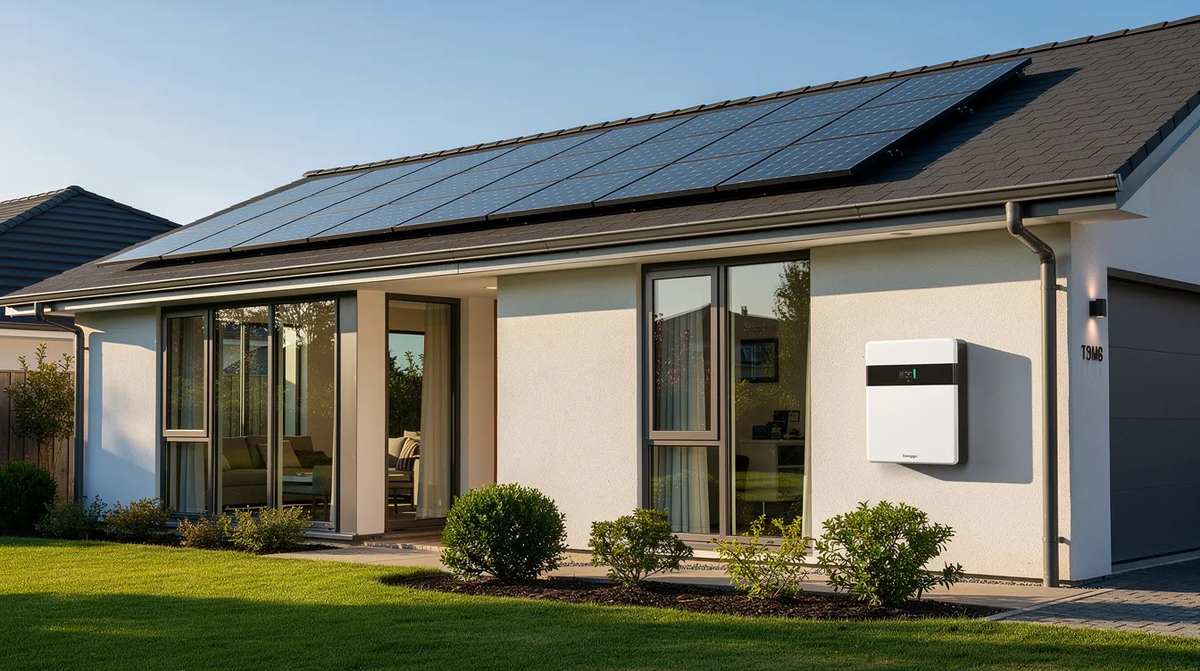
The Residential Clean Energy Credit offers 30% off installation costs for qualifying solar, geothermal heat pumps, and battery storage technology with no general dollar cap through December 31, 2032 (phasing down after that). The Energy Efficient Home Improvement Credit allows up to $1,200 annually for most qualifying improvements like insulation, windows, and central air conditioners, plus an additional $2,000 per year for high-efficiency heat pumps, heat pump water heaters, and biomass stoves.
Here’s what that looks like in practice:
- An $8,000 heat pump installed in 2025 qualifies for 30% under the efficiency credit. That’s $2,400, but the annual cap means homeowners can save up to $2,000 on heat pump upgrades in that category.
- A $28,000 solar and battery project in 2025 generates about $8,400 through the Residential Clean Energy Credit, with there being no maximum annual limit on the Residential Clean Energy Credit for certain technologies.
Both credits are nonrefundable, meaning they reduce your tax bill but won’t generate a refund beyond what you owe. Only the Residential Clean Energy Credit allows you to carry forward unused amounts to future tax years. Keep reading for eligibility details, timelines, and strategies to maximize your total savings.
How Federal Energy Tax Credits Work: From Law to Your Tax Return
The inflation reduction act established the current framework for residential energy tax credits starting in 2023. The inflation reduction act extended and restructured two separate credits-one for energy efficiency improvements to your home’s envelope and systems, another for clean energy generation and storage.
Understanding the difference between a tax credit and a deduction is critical. Tax credits can reduce your tax bill dollar for dollar. If you owe $4,000 in federal income tax and earn a $2,000 clean energy credit, you now owe $2,000. A deduction, by contrast, only reduces your taxable income.
Both credits are claimed on IRS Form 5695 (Residential Energy Credits), attached to your Form 1040. You claim credits for the tax year when equipment is placed in service-meaning installed and operational-not when you sign a contract or make a payment. Starting in 2025, the internal revenue service also requires manufacturer product identification numbers (PINs) for specific energy efficient products. Keep invoices, manufacturer certifications, and energy star labels with your tax records.
Energy Efficient Home Improvement Credit: 30% Back on Qualified Upgrades
This credit replaced the old non-business energy property credit as of January 1, 2023. The Energy Efficient Home Improvement Credit allows 30% up to $1,200 on most qualifying upgrades, and the Energy Efficient Home Improvement Credit has no lifetime limits-it resets each year, which was a significant change from the previous lifetime limit structure.
A separate $2,000 annual credit covers qualified heat pumps, heat pump water heaters, and biomass stoves, sitting on top of the $1,200 general cap. That means you can claim up to $2,000 for heat pump upgrades and up to $1,200 for other improvements in the same tax year, reaching $3,200 total.
Qualifying projects include energy star certified windows, exterior doors, and skylights; insulation and air sealing materials meeting energy efficiency criteria; certain high-efficiency central air conditioners, hot water boilers, furnaces, and electric panels tied to efficiency upgrades. The credit applies only to an existing principal residence-new construction and landlord-only properties typically do not qualify. You cannot claim excess credits for future tax years with this credit; if the amount exceeds your tax liability, the unused portion is lost.
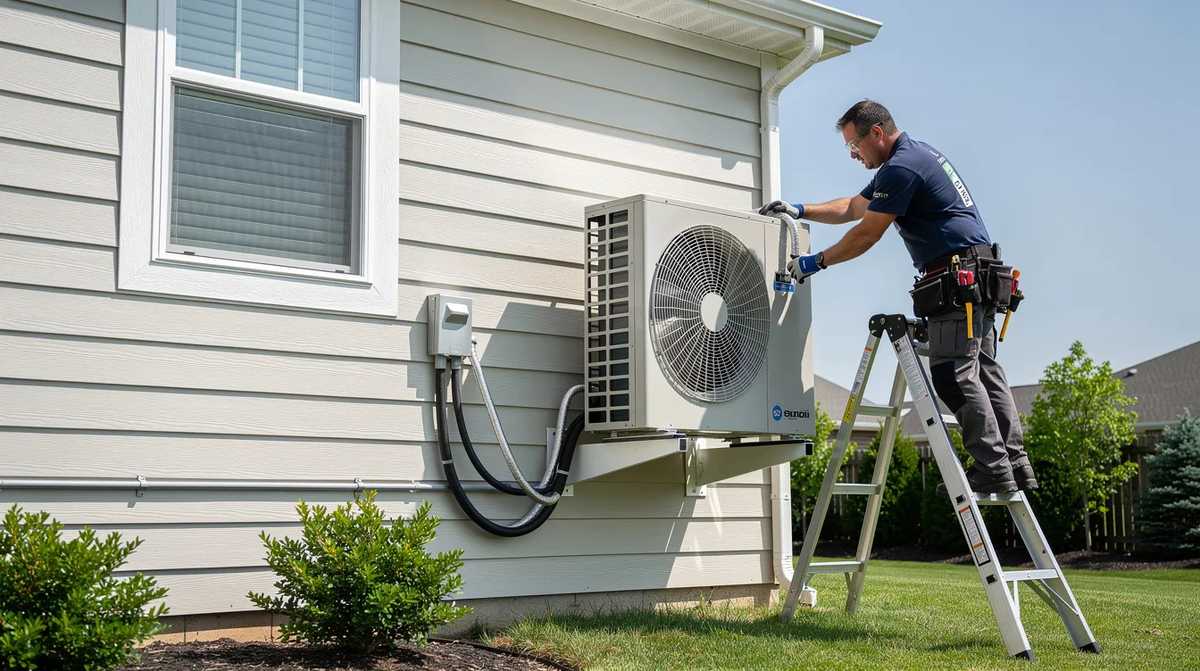
Item-by-Item Annual Limits for Energy Efficient Home Improvements
Here’s a quick-reference breakdown of the statutory caps within the overall 30% credit:
| Improvement | Annual Cap |
|---|---|
| Windows and skylights | $600 |
| Exterior doors | $250 per door, $500 total |
| Central air conditioners, furnaces, boilers | $600 each |
| Home energy audit | $150 |
| Heat pumps, heat pump water heaters, biomass stoves | $2,000 (separate bucket) |
| Insulation and air sealing | Counted within $1,200 general cap |
Planning upgrades across multiple calendar years lets you fully use these annual caps without exceeding them-especially valuable if you’re tackling a whole-house retrofit.
New 2025 PIN Requirement and Manufacturer Rules
Starting with the 2025 tax year, the IRS requires product identification numbers (PINs) for many qualifying energy efficient products. Manufacturers must register as Qualified Manufacturers (QMs) and assign a unique PIN to each eligible product line.
For 2025 filings, homeowners need at least the manufacturer’s 4-digit QM code and the PIN from product labels or invoices for qualifying cooling equipment, heat pumps, windows, exterior doors, and similar items. Before purchasing, confirm products are listed as eligible and ensure contractors provide invoices with manufacturer and model details clearly printed. This tighter documentation reduces the risk of denied claims during IRS verification of energy efficiency tax credits.
Residential Clean Energy Credit: 30% for Solar, Storage, and More
The Residential Clean Energy Credit is the primary federal clean energy credit for homeowners installing solar panels, small wind turbines, geothermal heat pumps, and battery storage. Eligible technologies for the Residential Clean Energy Credit include solar panels and geothermal heat pumps, plus solar water heaters, wind energy systems, fuel cell property, and qualifying biomass fuel systems.
The Residential Clean Energy Credit offers 30% of installation costs for systems placed in service between 2022 and December 31, 2032. The Residential Clean Energy Credit phases out starting in 2033, dropping to 26% that year and 22% in 2034. There is no overall dollar cap except for fuel cell property.
This credit applies to new or existing homes, your primary or secondary residence (as long as it’s personally used), and even homes under construction. Landlords cannot claim it for tenant-occupied properties. Unlike the efficiency credit, unused Residential Clean Energy Credit can be carried forward to reduce your tax liability in future tax years until it’s fully used.
Roofing, Solar Shingles, and Structural Costs
Traditional roofing materials and general roof replacement are not eligible under this credit. However, integrated solar roofing tiles and solar shingles that both protect your home and produce electricity may qualify as residential clean energy property. Get a line-item proposal from your contractor separating eligible solar system components from non-eligible structural work. Consult a tax professional before assuming rooftop solar-adjacent roofing costs will qualify.
Fuel Cell, Geothermal, and Battery Storage Details
Fuel cell property carries a special cap: $500 per half kilowatt of capacity. If you share ownership of a fuel cell vehicle-adjacent residential system with another property owner, joint limits apply. Note that the clean vehicle credit is a separate program for fuel cell vehicle purchases.
Geothermal heat systems must meet current energy star efficiency criteria for space heating, cooling, or hot water. Battery storage technology must have at least 3 kilowatt-hour capacity-and standalone storage now qualifies even if installed years after your original solar system. For example, a homeowner adding a 10 kWh battery in 2025 to a 2020 solar array can claim 30% of the storage installation costs as a residential clean energy credit.
Eligibility: Who Can Claim Federal Clean Energy and Energy Efficiency Tax Credits?
Eligibility depends on property use, ownership, and location. You must live in the home to claim these credits. You must own the property (no credits for leased solar), the property must be in the United States, and for the efficiency credit, upgrades must go into an existing principal residence.
You likely qualify if you pay federal income tax, own your home, and installed qualifying equipment after January 1, 2023. Homeowners with mixed-use properties, partial rental situations, or a home office should consult a tax advisor-business use can prorate or limit available credits.
Primary Residence vs. Second Home vs. Rental Property
The Energy Efficient Home Improvement Credit generally applies only to your principal residence. The Residential Clean Energy Credit can apply to a primary or secondary residence that you personally use, but not properties used exclusively as rentals. If more than 20% of your home is used for business, special allocation rules reduce the credit. Owners of multi-unit buildings occupying at least half of one unit can usually claim credits on costs related to their own residence.
How to Claim Federal Clean Energy and Energy Efficient Home Improvement Credits
The process is straightforward. Gather invoices, contracts, manufacturer certifications, and energy star labels. Confirm installation dates and subtract any utility rebate programs or government subsidies that reduce your qualified expenses (net-metering bill credits typically do not reduce eligible costs). Complete IRS Form 5695 is used to claim the Residential Clean Energy Credit when filing taxes, then transfer the credit to your Form 1040. You do not need to itemize deductions-these credits work with the standard deduction.
If you anticipate a large credit, consider adjusting withholding or estimated payments to improve cash flow. Interest paid on loan origination fees or financing for these projects is separate from the credit calculation.
Documentation and IRS Verification
Keep all receipts for expenses to claim tax credits-maintain records for at least three years after filing. Essential documents include itemized contractor invoices, manufacturer certification statements, utility interconnection approvals, and local inspection costs documentation. Starting in 2025, the IRS cross-checks PINs and QM codes for energy efficient equipment. All equipment must be new, not refurbished. Ask contractors up front for documentation tailored to claiming federal tax credits.
Strategies to Maximize Your Federal Clean Energy Tax Credit Savings
Strategic planning turns good credits into great savings. Consider spreading energy efficient home improvement projects over multiple calendar years to hit the 30% rate each year without exceeding the $1,200 general cap or $2,000 heat pump cap. You can pair a major clean energy project with smaller energy saving improvements in the same year.
For example, replace windows in 2025 ($600 credit) and install a heat pump in 2026 ($2,000 credit) rather than cramming both into one year. Or time installing solar panels for a high-income year when your tax liability can absorb most of the 30% credit immediately, then carry forward any excess credit.
Federal credits stack with many state and local incentives, though certain rebate programs must be subtracted from your cost basis. Two rebate programs at the state level may also be available depending on your location. Consult a qualified tax preparer and contractors familiar with environmentally friendly upgrades to save money on both energy costs and energy bills long-term.
Common Mistakes to Avoid
Watch for these frequent pitfalls:
- Assuming leased solar qualifies for the federal clean energy tax credit (it generally does not-you must be the property owner).
- Failing to verify energy star ratings or IRS technical standards before installation.
- Claiming credits in the wrong tax year because you tracked purchase date, not when equipment was placed in service.
- Misplacing invoices or failing to separate eligible from ineligible costs on Form 5695.
- Forgetting to reduce costs by certain rebates when computing the credit base.
- Doing all efficiency work in a single year and leaving annual credit caps unused in other years.
Double-check IRS instructions for every project. The credits are nonrefundable and cannot exceed your tax liability, so planning around your tax bill matters.
FAQs About Federal Clean Energy Tax Credits and Home Energy Efficiency
Are federal energy tax credits refundable? No. Both credits are nonrefundable, meaning they reduce what you owe but won’t generate a refund. Only the Residential Clean Energy Credit allows unused amounts to carry forward to future tax years.
Can I claim the energy efficient home improvement credit and the residential clean energy credit in the same year? Yes. They apply to different types of improvements and have separate caps. You could install a heat pump (efficiency credit) and a solar system (clean energy credit) in the same tax year and claim both on Form 5695.
Do I need to itemize deductions to claim the federal clean energy tax credit? No. These are credits, not deductions. You can take the standard deduction and still claim credits on your tax return.
What if my solar tax credit is larger than my tax bill? The Residential Clean Energy Credit allows you to carry forward excess credit to future tax years until it’s fully used. The efficiency credit does not offer this-unused amounts are lost.
Do energy star appliances qualify for the federal tax credit? Major building systems like heat pump water heaters, natural gas heat pumps, oil water heaters meeting efficiency standards, and central air conditioners may qualify. Most plug-in appliances like refrigerators and washers do not qualify under current rules.
When do these credits expire? Credits are available for improvements made through December 31, 2025 for the efficiency credit. The clean energy credit runs at 30% through 2032, then phases down. Claim 30% of costs for energy-efficient upgrades up to $2,000 in the heat pump category while the efficiency credit is active. The Residential Clean Energy Credit allows a 30% deduction on costs through 2032.
Why Choose Our Team for Your Clean Energy and Energy Efficient Home Improvements
We specialize in helping homeowners navigate the full landscape of federal energy tax credits, from identifying qualifying improvements to producing the documentation your tax preparer needs. Our team stays current on IRS Form 5695 requirements, energy star technical standards, and the evolving PIN and QM rules that affect every project installed in 2025 and beyond.
Every proposal we deliver includes line-item cost breakdowns that clearly distinguish eligible from ineligible expenses, so you’re never guessing about what counts toward your annual credit. We coordinate with local permitting authorities and utilities for solar and battery storage interconnections, handling the administrative complexity so you can focus on the results-lower energy costs, improved comfort, and reduced energy bills.
Our regional knowledge of local weather patterns, energy prices, and common housing stock means our recommendations are tailored to your home, not generic. While we can’t offer tax advice, we provide the documentation and project guidance that make it straightforward to work with a tax professional and maximize every available federal clean energy tax credit benefit.
Next Steps: Plan Your Energy Efficient Home Improvement and Claim Your Federal Credits
Federal clean energy and energy efficiency tax credits can significantly reduce upgrade costs for homeowners who plan ahead. Deadlines around December 31, 2025 for the efficiency credit and phase-down schedules for the clean energy credit make early action essential. Strategic sequencing of projects helps homeowners save more and cut long-term energy costs.
Here’s what to do next: schedule a home energy consultation to identify the best energy efficient home improvement options for your property. Request a custom proposal that includes estimated eligibility for both the Energy Efficient Home Improvement Credit and the Residential Clean Energy Credit. Contact our team by phone or online to discuss project timing before key federal deadlines pass.
The process is straightforward with the right partner. Clean energy and energy efficiency investments pay off in comfort, lower utility bills, and real tax savings for years to come.