
Table of Contents
- Introduction: Why Commercial Building Tax Deductions Matter in 2026
- Core Commercial Property Tax Deductions Every Owner Should Understand
- Energy Efficient Commercial Building Incentives: Section 179D and Beyond
- Capital Gains, 1031 Exchanges, and Exit Planning for Commercial Real Estate
- Common Mistakes Owners Make with Commercial Building Tax Deductions
- How Corporate Tax Advisors (CTA) Helps You Maximize Commercial Building Tax Deductions
- FAQs: Commercial Building Tax Deductions
- Schedule a Commercial Building Tax Deduction Review
Introduction: Why Commercial Building Tax Deductions Matter in 2026
If you own commercial property in the United States, 2026 is a pivotal year for your tax strategy. The Big Beautiful Bill Act (P.L. 119-21), enacted July 4, 2025, permanently restored 100% bonus depreciation and reset the timeline for energy efficient commercial building incentives under Section 179D of the Internal Revenue Code. These changes make commercial building tax deductions more valuable than they have been in years, but also more complex to navigate.
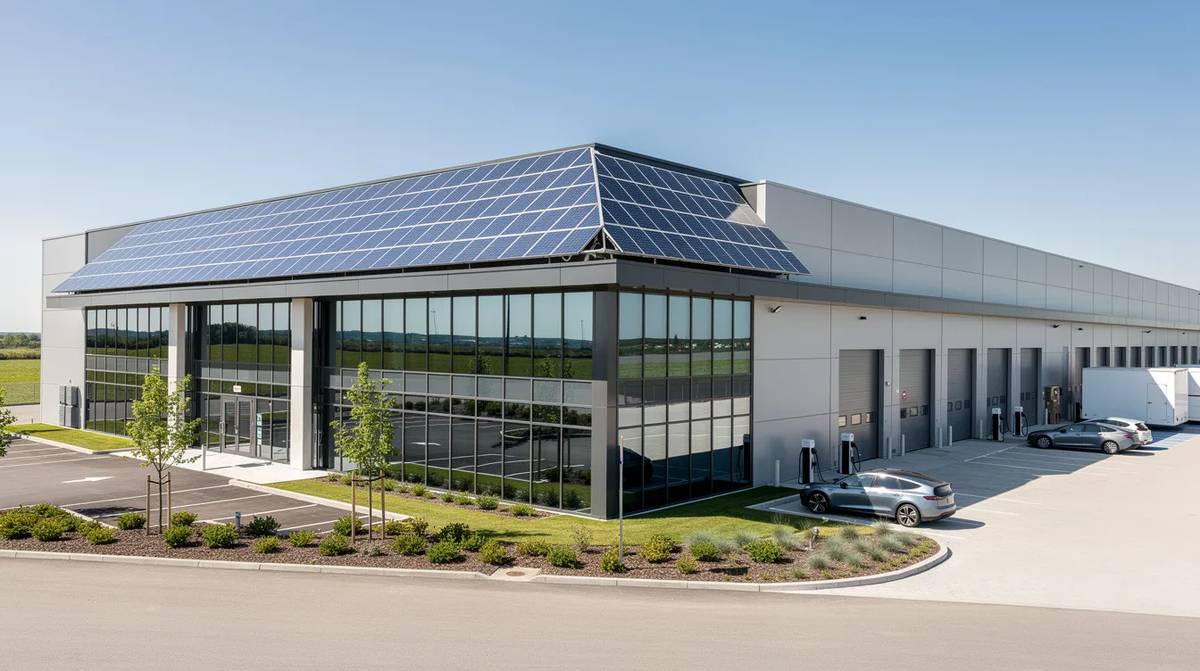
This article is written for U.S. businesses that own or plan to acquire offices, warehouses, manufacturing facilities, data centers, and mixed-use commercial buildings. You will learn the major categories of available tax deductions: mortgage interest deductions, depreciation deductions including accelerated depreciation and cost segregation, the Section 179D Energy Efficient Commercial Buildings Deduction, and planning around capital gains on an eventual sale.
At Corporate Tax Advisors, we have specialized in complex federal and state incentives for commercial real estate since 2014. The strategies described here come from real project experience across manufacturing, architecture and engineering, logistics, and technology clients, not from textbooks. That said, this article is educational, not formal tax advice. You should coordinate any strategy with your CPA and, when appropriate, a specialty tax consulting firm like CTA.
Core Commercial Property Tax Deductions Every Owner Should Understand
Owning commercial real estate unlocks layered tax deductions that accumulate over many taxable years, often making ownership significantly more tax-efficient than leasing. Commercial property deductions help reduce taxable income significantly when properly identified and claimed.
The five core deduction categories for any building owner are mortgage interest, depreciation, repairs and maintenance, property taxes, and operating expenses. Understanding each one is the foundation for every advanced strategy discussed later in this article.
Mortgage Interest. Interest paid on loans for commercial properties may be tax deductible. Investors can deduct mortgage interest from their federal income taxes when the property is used in a trade or business.
Depreciation. Commercial buildings can be depreciated over 39 years for tax purposes under the Modified Accelerated Cost Recovery System (MACRS), creating a consistent annual tax deduction that shelters rental or business income.
Repairs and Maintenance. Costs for repairs and maintenance are generally deductible in the year incurred. Routine items like roof patching, HVAC servicing, plumbing fixes, and repainting do not need to be capitalized. The De Minimis Safe Harbor rule also allows deducting smaller property improvements in the current year, keeping more cash in your pocket sooner.
Property Taxes. Property taxes paid on commercial buildings are fully deductible as business expenses. For a mid-sized commercial building, this can easily range from $25,000 to $75,000 or more per year, creating a large, predictable annual deduction.
Operating Expenses. Tax deductions for operating costs can include utilities, insurance, and maintenance expenses. Insurance premiums for commercial properties are fully deductible, as are professional fees related to property management and legal services. Utilities and maintenance costs for commercial properties are deductible in the current year.
Mortgage Interest Deductions: Turning Debt Service into Tax Savings
Unlike individual home mortgage limits that cap at $750,000 of debt, business interest on a commercial mortgage secured by business property is generally deductible without such a cap, provided the property is used in a trade or business. This distinction is one major reason owning commercial real estate often provides stronger long-term tax advantages than leasing.
Consider a realistic scenario: a $3 million commercial property financed at 75% ($2.25 million in debt) on a 25-year amortization at 6.5% interest. In year one, the interest portion alone comes to approximately $146,250. That entire amount can offset rental or operating income, cutting your tax bill substantially.
However, larger taxpayers need to account for the business interest limitation under IRC Section 163(j). Under current tax laws, the deduction for business interest expense is generally capped at business interest income plus 30% of adjusted taxable income. Small businesses with average annual gross receipts under approximately $32 million (for taxable years beginning in 2026) may be exempt from this limitation entirely. Real property trades or businesses can also elect out of the limitation, though the trade-off involves using the Alternative Depreciation System for certain property. Planning the structure of your borrowing entity matters and should be modeled before closing.
Depreciation Deductions and Accelerated Depreciation
The IRS treats a commercial building (not land) as a 39-year depreciable asset. Consider a $4 million purchase where $1 million is allocated to land (non-depreciable) and $3 million to the building itself. Standard straight-line depreciation deductions would generate approximately $76,923 per year ($3,000,000 ÷ 39), sheltering that much income annually for nearly four decades.
But here is where the real opportunity lives: cost segregation studies can accelerate depreciation deductions significantly. A cost segregation analysis reclassifies building components like HVAC systems, interior lighting, paving, fencing, and specialized electrical into 5-, 7-, or 15-year property classes. Under the Big Beautiful Bill Act, 100% bonus depreciation is permanently restored for certain property acquired and placed in service after January 19, 2025. That means reclassified components can be written off entirely in year one.
For example, if a cost segregation study on a newly acquired commercial building identifies $500,000 of cost in shorter-lived asset classes, the owner can claim the full $500,000 as a depreciation deduction in year one instead of spreading it over 39 years. At a 30% combined tax rate, that is $150,000 in immediate tax savings and dramatically improved cash flow. Corporate Tax Advisors frequently performs cost segregation analyses for buildings placed in service between 2018 and 2026, and “catch-up” depreciation via Form 3115 is available for properties where the study was not done at acquisition.
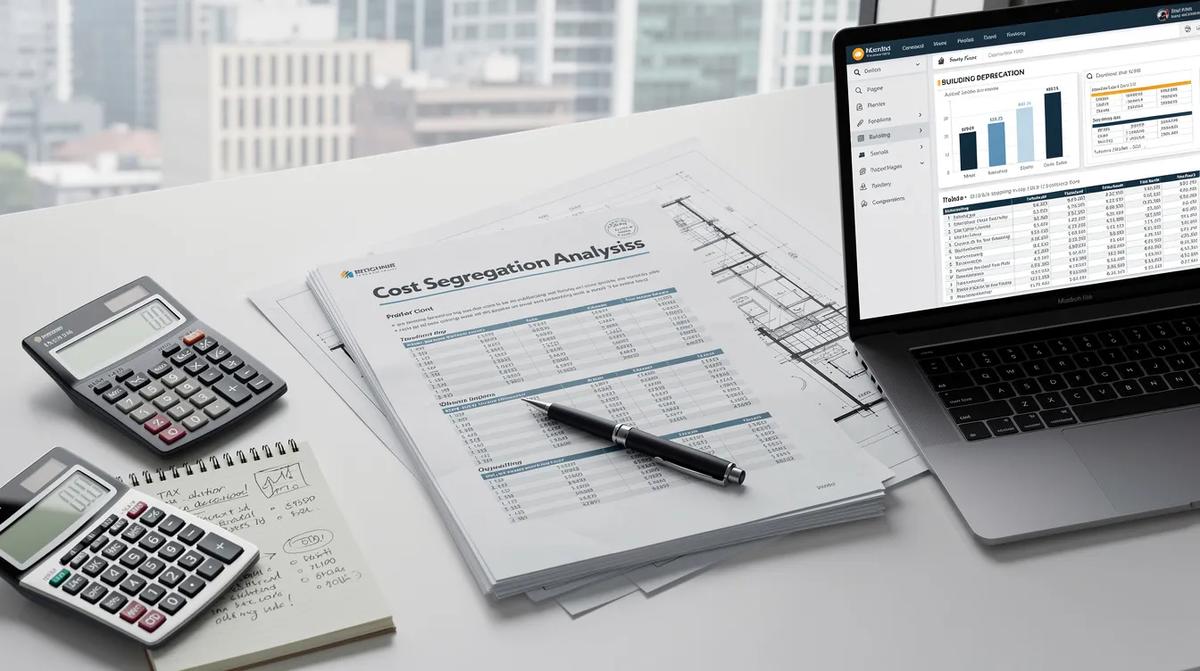
Accelerated depreciation does not change your total long-term write-off. It simply moves more of the tax deduction into earlier years. The trade-off, discussed later, is higher depreciation recapture when you sell.
Energy Efficient Commercial Building Incentives: Section 179D and Beyond
Energy efficient property incentives are now a core pillar of the tax strategy for commercial buildings. The Inflation Reduction Act of 2022 expanded Section 179D dramatically, and the Big Beautiful Bill Act added a termination date: property must begin construction by June 30, 2026, to qualify. This creates real urgency for building upgrade projects in the current year.
The Energy Efficient Commercial Buildings Deduction under Section 179D allows deductions for energy-saving equipment installation across three system categories: interior lighting systems, HVAC and hot water systems, and the building envelope. These improvements must reduce annual energy and power costs compared to a reference building modeled under applicable ASHRAE standards. Both new construction and major retrofits of existing commercial buildings qualify, including privately owned facilities and certain government or tax exempt entity owned buildings where the person primarily responsible for the design (the designer) can receive an allocated deduction.
For property placed in service after December 31, 2022, the 179D deduction can be claimed multiple times over the life of a building, subject to a look-back period of three to four prior taxable years and an updated maximum deduction per square foot that is indexed for inflation starting in 2023.
How the 179D Deduction Works for Energy Efficient Commercial Buildings
There are two primary post-2022 compliance pathways. The traditional pathway uses building energy modeling to compare total annual energy and power cost savings against a reference building model built to ASHRAE Standard 90.1 specifications, with guidance from the American Society of Heating, Refrigerating, and Air Conditioning Engineers and the Illuminating Engineering Society. The alternative pathway measures actual site energy use intensity reduction for retrofits under a qualified retrofit plan.
Tax deductions for energy-efficient upgrades start at 25% savings. Specifically, a minimum of 25% energy savings is required for eligibility. Tax deduction rates start at $0.50 per square foot for projects not meeting prevailing wage requirements, scaling upward with greater energy savings. Tax deductions increase by $0.02 for each percentage point over 25% savings. The maximum tax deduction can reach $5.00 per square foot for the highest levels of energy savings. For 2023, the minimum deduction is $2.50 per square foot with prevailing wage and apprenticeship requirements met. Deduction amounts are indexed for inflation starting in 2023, so for 2025 and 2026 the applicable dollar value per square foot is slightly higher.
Here is a worked example: a 150,000 square foot warehouse retrofit achieving 35% modeled energy savings with prevailing wage compliance could generate a 179D deduction in the range of $675,000, depending on the exact per square foot rate published by the IRS for the applicable year. That is a six-figure tax deduction from a single building upgrade.
The interim lighting rule and partial deduction pathway available under older law have been eliminated for post-2022 projects, so modern projects must satisfy the updated minimum requirements for overall building performance rather than qualifying on a single system alone.
Eligibility, Certification, and ASHRAE Standards
Beginning January 1, 2023, the deduction is available to owners of a qualified building, as well as designers of energy efficient systems in buildings owned by specified tax exempt entities, certain tax exempt entities, an organization exempt from tax, a political subdivision, or an Alaska Native Corporation. The allocated deduction passes to the designer when the building owner is a tax exempt entity that cannot use the deduction itself.
Eligible buildings must be located in the U.S. only, allow depreciation or amortization, and be either new construction or part of a qualified retrofit plan targeting at least a 25% reduction in total annual energy and power costs or site energy use intensity. Energy-efficient property must meet ASHRAE Standard 90.1 requirements. For property placed in service before January 1, 2027, the reference standard is generally ASHRAE 90.1-2007. For property placed in service on or after that date, the standard transitions to 90.1-2019 and subsequently 90.1-2022, per IRS Announcement 2024-24 and related revenue procedures.
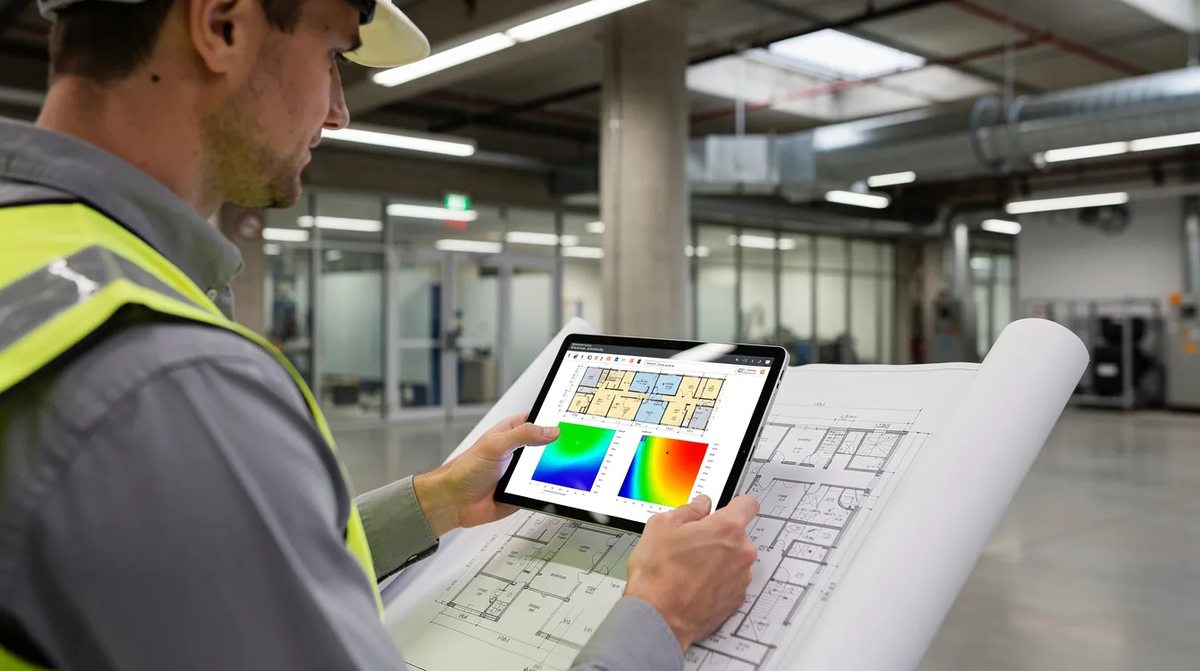
Certification of energy savings is required for tax deduction eligibility. An independent licensed engineer or contractor must model or measure energy performance and certify compliance. While the certification does not need to be attached to the tax return, the building owner and designer must retain detailed documentation, including the energy model outputs, baseline reference building assumptions that account weather conditions, and evidence of prevailing wage and apprenticeship requirements compliance.
To use the alternative measurement pathway for retrofits, eligible buildings must be placed in service at least five years prior to the start of the qualified retrofit plan.
Real-World Example: Combining 179D with Other Commercial Building Deductions
Consider a manufacturer who upgrades a 90,000 square footage facility with new LED interior lighting, high-efficiency air conditioning and HVAC, and envelope improvements. The installed property qualifies as energy efficient commercial building property and is placed in service in such taxable year.
The owner claims a 179D deduction based on the square foot rate applicable to the energy savings achieved, yielding a deduction well into six figures. Simultaneously, a cost segregation study reclassifies other components of the renovation, including specialized electrical, flooring, and site work, into 5- and 15-year property classes eligible for 100% bonus depreciation. The combined tax benefits in the first one to three years dramatically improve after-tax cash flow, freeing capital for growth or additional investment.
At CTA, we frequently coordinate 179D studies with cost segregation and clean energy Investment Tax Credit analyses (for solar or other clean energy systems) to create a single integrated incentive plan. This ensures no eligible tax credits or deductions are missed and that the maximum amount of benefit is captured across all applicable programs.
Capital Gains, 1031 Exchanges, and Exit Planning for Commercial Real Estate
Long-term commercial building ownership eventually leads to a taxable sale. Every year of depreciation deductions reduces your tax basis in the property, which increases the taxable gain when you sell. Section 1250 recapture taxes accumulated depreciation at up to 25%, with the remaining capital gains taxed at the applicable long-term rate (typically 15% or 20%).
1031 exchanges allow deferral of capital gains taxes on property sales. For example, selling a $5 million warehouse with $2 million of accumulated depreciation and rolling the proceeds into a $6 million distribution center via a properly structured 1031 like-kind exchange defers both the capital gains and recapture liability entirely. This is a cornerstone strategy for building long-term wealth in commercial real estate.
Opportunity Zones enable tax deferral on gains invested in economically distressed areas, adding another tool for owners who are selling appreciated commercial property and looking to defer or reduce tax on the gain.
Coordinating Deductions and Capital Gains for Long-Term Strategy
There is a real trade-off between maximizing short-term deductions through accelerated depreciation and increasing your future capital gains and recapture exposure when the building is sold. Some owners deliberately accelerate deductions to reinvest the tax savings into business growth or additional properties, then use 1031 exchanges or long holding periods to manage the ultimate tax burden.
There is no one-size-fits-all approach. Optimal strategy depends on your holding period, financing structure, investor profile, and succession or estate plans. CTA helps clients model the long-term impact of different deduction and exit strategies, often in partnership with the business’s primary CPA or wealth advisor, so decisions are made with full visibility into downstream consequences.
Common Mistakes Owners Make with Commercial Building Tax Deductions
Many commercial property owners underutilize or misapply deductions, leaving substantial money on the table or increasing audit risk. These are the most common errors we see.
Misclassifying capital improvements as routine repairs, or the reverse, is one of the most frequent problems. Anything that extends the life, adds value, or adapts the building to a new use should generally be capitalized rather than expensed. Failing to separate land and building values properly is another issue that leads to incorrect depreciation deductions from day one. Not performing a cost segregation study at acquisition means years of accelerated depreciation are lost, and while catch-up is possible, the time value of those missed deductions cannot be recovered.
Many owners also assume their generalist CPA has captured all available incentives. In reality, specialty deductions like 179D, clean energy tax credits, and jobs and training credits require engineering studies and technical certifications that fall outside most accounting firms’ core capabilities. Documentation gaps, such as missing energy modeling reports, incomplete construction cost breakdowns, or lack of contemporaneous records for renovations, can derail otherwise valid claims. We have worked with numerous clients who owned commercial property for years before discovering, through a specialty review, that they could claim retroactive benefits via cost segregation and 179D analysis for prior taxable years.
How Corporate Tax Advisors (CTA) Helps You Maximize Commercial Building Tax Deductions
Corporate Tax Advisors is a B2B specialty tax advisory firm that partners with business owners and their CPAs to identify, quantify, and defend complex incentives tied to commercial real estate. We do not replace your accounting firm. We augment it with engineering-driven studies and technical expertise that most general practice firms do not maintain in-house.
Our key service lines for commercial buildings include cost segregation studies, 179D energy efficient commercial building studies, clean energy Investment Tax Credit analyses, and related federal and state incentive evaluations. For many of these services, CTA works on a contingency basis: there is no fee unless credits or deductions are identified. We also offer free initial evaluations to determine whether a property qualifies for further analysis.
The typical process works like this: initial consultation and document review, feasibility analysis for 179D and cost segregation, detailed engineering or cost studies, preparation of supporting documentation, coordination with your CPA for filing on your tax return, and support in the event of IRS or state inquiries. Since 2014, we have served clients across manufacturing, architecture and engineering, software and data centers, logistics, and GIS-related facilities.
When It’s Time to Involve a Specialty Tax Consultant
You should contact CTA if you are purchasing or constructing a new commercial building, planning a major renovation or retrofit, installing energy efficient HVAC, lighting, or building envelope systems, adding solar or other clean energy equipment, or preparing to sell a long-held property. Ideally, engage a specialty firm early in the planning or design phase to maximize benefits and avoid design choices that limit eligibility.
It is often still possible to capture missed opportunities for property placed in service in earlier open taxable years through amended returns or method changes. Early involvement leads to a stronger, better-documented tax position and larger confirmed savings.

FAQs: Commercial Building Tax Deductions
Is buying a commercial building for my business tax deductible? The purchase price is not fully deductible in year one. However, owners recover costs through mortgage interest deductions, 39-year depreciation on the building structure, and potentially accelerated depreciation on shorter-lived components identified through cost segregation. These layered deductions reduce taxable income over the life of ownership.
How do commercial building tax deductions differ from residential buildings? Commercial buildings use a 39-year depreciation schedule compared to 27.5 years for residential buildings. Commercial properties also have more frequent access to incentives like the 179D deduction and cost segregation. Lease structures and qualified business income rules also differ significantly between commercial and residential rental property.
Can I claim 179D on an existing commercial building I retrofit? Yes, if the retrofit meets the 25% energy savings threshold and other requirements. You will need a qualified retrofit plan, building energy modeling or measurement by a qualified professional, and independent certification. The property must have been placed in service at least five years before the retrofit plan begins to use the measurement pathway.
What is the difference between standard and accelerated depreciation on a commercial property? Standard depreciation spreads the building cost evenly over 39 years. Accelerated depreciation, achieved through cost segregation, reclassifies certain property into shorter recovery periods (5, 7, or 15 years) and, combined with bonus depreciation, allows those costs to be written off much faster. The impact on near-term cash flow can be dramatic.
Are energy efficient upgrades like LED lighting and high-efficiency HVAC always immediately deductible? Not automatically. Many such improvements are capitalized and depreciated over their applicable recovery period. However, they may also qualify for the 179D deduction or shorter recovery periods that substantially accelerate the write-off. Immediate expensing under Section 179 or the De Minimis Safe Harbor may apply in some cases based on facts and the law in effect for the relevant taxable year.
How can Corporate Tax Advisors work with my existing CPA? CTA partners with your primary accounting firm, handling the technical study work, engineering analysis, and documentation while your CPA signs and files the returns. This coordinated approach ensures a defensible tax strategy without disrupting your existing accounting relationship.
Schedule a Commercial Building Tax Deduction Review
If you own a commercial building placed in service between 2018 and 2026, or you are planning energy efficient upgrades before the June 30, 2026 construction-start deadline for 179D, now is the time to act. Contact Corporate Tax Advisors for a free initial evaluation of your property or upcoming project. We will assess feasibility for 179D, cost segregation, and any additional federal or state incentives that apply to your situation.
Most CTA engagements are contingency-based when tax savings are identified, so there is no cost to explore what is available. Reach out by phone, email, or our short online form to get started.
The tax code rewards commercial building owners who plan ahead. Whether you are acquiring, upgrading, or preparing to exit, the right specialty analysis can improve your cash flow, fund your growth, and keep you competitive. Do not leave six-figure deductions on the table.