Table of Contents
- Introduction: What the 179D Deduction Means for Building Owners in 2026
- Section 179D Basics: How the Efficient Commercial Buildings Deduction Works
- Who Can Claim 179D: Building Owners, Tenants, and Designers
- What Improvements Qualify as Efficient Commercial Building Property
- How 179D Is Calculated for Building Owners in 2023–2026
- Prevailing Wage and Apprenticeship Requirements for the Enhanced 179D Deduction
- Energy Modeling, Certification, and Documentation Requirements
- Common Mistakes Building Owners Make With 179D (and How to Avoid Them)
- How 179D Fits with Cost Segregation, Clean Energy Credits, and Other Tax Incentives
- How Corporate Tax Advisors (CTA) Helps Building Owners Capture 179D
- FAQs: 179D Deduction for Building Owners
- Why Building Owners Choose Corporate Tax Advisors for 179D
- Next Steps: Explore Your 179D Deduction Opportunity
Introduction: What the 179D Deduction Means for Building Owners in 2026
If you own commercial property and have invested in energy efficient building improvements, there is a substantial federal tax deduction you may be leaving unclaimed. The Section 179D deduction is a federal tax incentive for energy-efficient property installation that rewards building owners on a per square foot basis for reducing energy consumption across three core building systems: interior lighting, HVAC and hot water systems, and the building envelope.
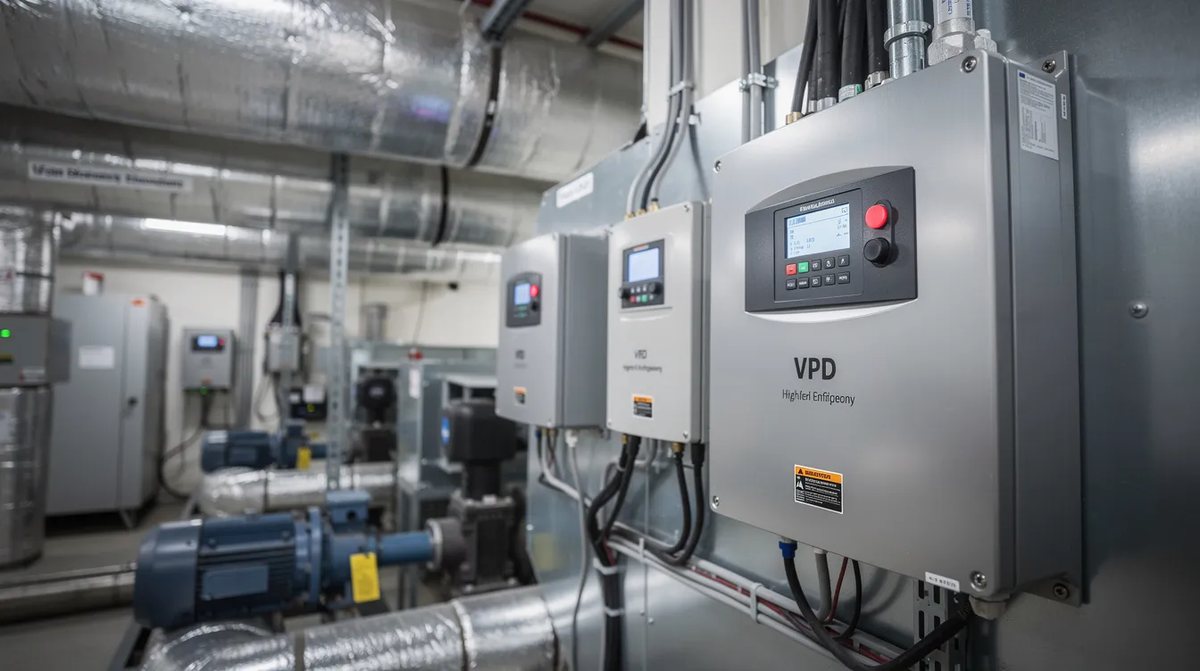
Post-Inflation Reduction Act, eligible commercial building owners meeting prevailing wage and apprenticeship requirements can claim roughly $2.90 to $5.81 per square foot for projects placed in service in recent tax years, with deductions indexed for inflation through 2026. That translates to substantial tax savings on virtually any mid-size or large commercial property. With energy prices remaining volatile, building codes tightening around ASHRAE standards, and the construction-start deadline of June 30, 2026 approaching fast, the window to capture these benefits is narrowing.
This article walks through everything a building owner or CPA needs to know: who qualifies, what improvements qualify, how the 179d tax deduction is calculated, documentation requirements, common pitfalls, and how Corporate Tax Advisors (CTA) helps owners and their accountants capture every eligible dollar.
Section 179D Basics: How the Efficient Commercial Buildings Deduction Works
Section 179D is formally the “Energy Efficient Commercial Buildings Deduction” under the internal revenue code. Originally enacted by the Energy Policy Act of 2005, it was made permanent by the consolidated appropriations act of 2021, then significantly expanded by the Inflation Reduction Act of 2022.
Here is what makes it distinctive:
- Immediate deduction, not depreciation. Instead of capitalizing energy efficient commercial building property and depreciating it over 39 years, section 179d lets building owners deduct the full amount in the tax year the property is placed in service. This accelerates cash flow dramatically compared to standard depreciation.
- Per-square-foot structure with inflation indexing. Deductions under 179D are indexed for inflation starting in 2023. For context, the 2022 deduction was capped at $1.80 per square foot. Under the IRA’s expanded framework, base rates now range from roughly $0.50–$1.16 per square foot, while enhanced rates reach $2.50–$5.81 per square foot depending on the tax year and energy savings percentage achieved.
- Broad building eligibility. The 179D deduction applies to various building types, including office and retail spaces, warehouses, industrial facilities, hotels, and multi-family residential buildings of four or more stories above grade. Each qualified building is evaluated individually, not aggregated by project or contract.
- Basis reduction. The deduction reduces the building’s depreciable basis by the amount claimed. It also cannot exceed the cost of installing such property, even if the per square foot calculation produces a larger number.
This article is general information. Owners should coordinate with their tax advisor and a specialist firm like CTA for project-specific guidance under the current tax code.
Who Can Claim 179D: Building Owners, Tenants, and Designers
Eligibility for the 179d deduction expanded considerably after the Inflation Reduction Act and subsequent IRS guidance. The deduction is available to owners and designers of qualified buildings, but the details of who claims what depend on ownership, lease structure, and tax status.
Building owners who own commercial buildings in the U.S. and can depreciate the eligible property are the primary claimants. This includes corporations, partnerships, real estate investment trusts, and other taxable entities. If a building owner places energy efficient property in service and meets the minimum requirements, they can claim the deduction directly.
Tenants can also qualify. If a tenant pays for and depreciates improvements in a leased commercial space, that tenant may claim the 179d deduction as the party bearing the capital cost. Lease agreements should clearly allocate ownership of the improvements.
Tax-exempt building owners create a different dynamic. Government entities, public schools, Indian tribal governments, Alaska native corporations, and other tax exempt organizations cannot use a tax deduction themselves. However, under the IRA, specified tax exempt entities and certain tax exempt entities can allocate the deduction to the person primarily responsible for creating the technical specifications, known as the “designer.” Tax-exempt organizations can allocate deductions to eligible designers, including architects, engineers, design-build contractors, and energy consultants.
Both the designer and owner must execute a signed allocation letter before filing. Installers who simply follow plans typically do not qualify as designers unless they produce substantive technical specifications. Corporate Tax Advisors routinely helps building owners and designers document allocation letters and designer status to withstand IRS review, whether the buildings are owned by governmental entities, an organization exempt from federal income tax, or other tax exempt entities.
What Improvements Qualify as Efficient Commercial Building Property
The 179D deduction is based on energy efficiency improvements over the baseline ASHRAE standard. Specifically, it targets reductions in total annual energy and power costs across three regulated system categories compared to a reference building model established under ASHRAE Standard 90.1 and Illuminating Engineering Society standards.
Three system categories and examples:
- Interior lighting systems: LED fixture retrofits, occupancy sensors, daylight harvesting controls, advanced dimming, and lighting power density reductions.
- HVAC and hot water systems: High-efficiency chillers, boilers, variable refrigerant flow systems, heat pumps, energy recovery ventilation, and air conditioning upgrades. These air conditioning engineers-designed systems often deliver the largest savings.
- Building envelope systems: Roof insulation, high-performance windows and glazing, curtainwall upgrades, air sealing, and thermal breaks. Building envelope improvements qualify for the 179D deduction when they contribute to the overall savings threshold.
Key qualification rules:
- Energy-efficient improvements include HVAC systems and interior lighting, along with envelope components. Qualifying improvements must meet IRS energy-efficiency thresholds.
- EECBP must achieve at least 25% energy savings to qualify. Improvements must achieve at least 25% energy savings versus the reference building. Buildings must comply with ASHRAE Standard 90.1 for eligibility, with the applicable version (90.1-2007 or 90.1-2019) depending on construction start and placed-in-service dates.
- Eligible projects include both new construction and retrofits of existing commercial buildings. For retrofits, eligible buildings must be placed in service at least five years prior, with upgrades documented under a qualified retrofit plan.
- Qualifying property must be depreciable or amortizable, not simply a repair expense under Section 162.
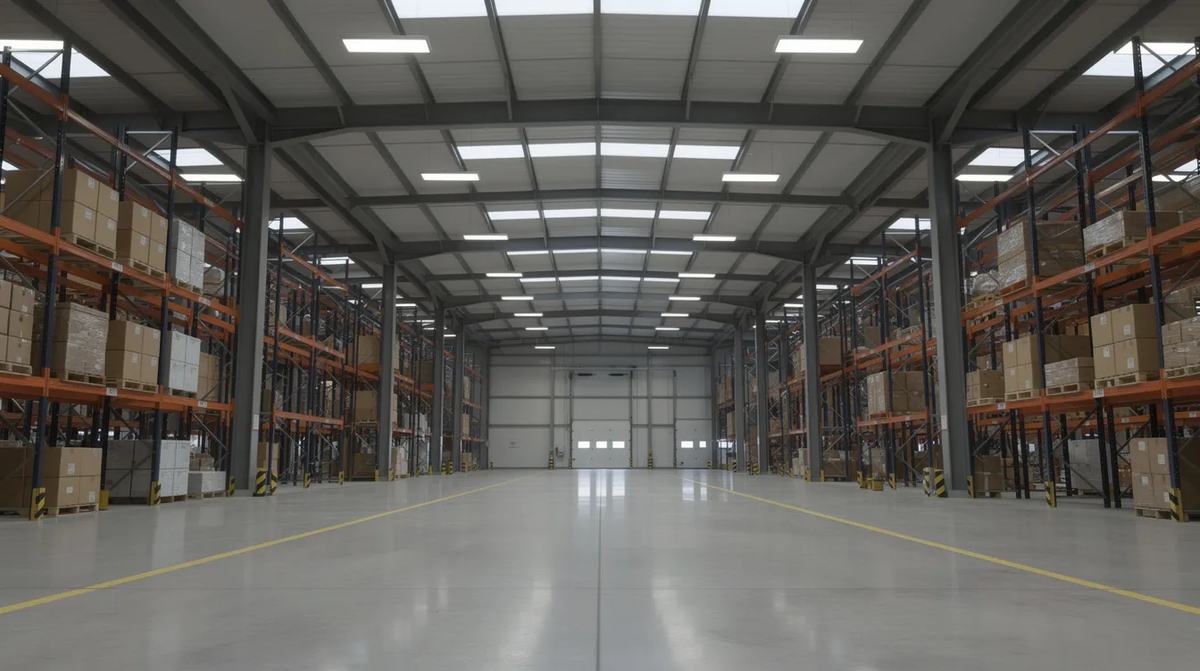
Real-world example: Consider a 120,000 square foot distribution center where the owner upgrades interior lighting to LED with zonal daylight controls, replaces rooftop HVAC units with high-efficiency heat pumps, and adds roof insulation. If building energy modeling shows 40% savings over the reference building and prevailing wage rules are met, the enhanced deduction in 2025 could reach approximately $697,000. That is the kind of building upgrade project that makes 179D worth the engineering investment.
How 179D Is Calculated for Building Owners in 2023–2026
The 179d deduction for building owners operates on a two-tier structure: a base deduction for projects that meet efficiency thresholds, and an enhanced deduction for projects that also satisfy prevailing wage and apprenticeship requirements. The maximum deduction increases with prevailing wage and apprenticeship requirements, making labor compliance a significant financial lever.
Base deduction (without prevailing wage):
- The base deduction starts at $0.50 to $1.00 per square foot for certain efficiency improvements. The minimum deduction for 2023 is $0.50 per square foot at 25% savings.
- Deductions increase by $0.10 for each percentage point above 25% savings.
- At 50% savings, the base reaches approximately $1.00 (2023), $1.13 (2024), or $1.16 (2025) per square foot.
Enhanced deduction (with prevailing wage and apprenticeship):
- At 25% savings: approximately $2.50 (2023), $2.83 (2024), or $2.90 (2025) per square foot.
- At 50% savings: the maximum deduction for 2023 is $5.00 per square foot, scaling to approximately $5.65 (2024) and $5.81 (2025). Deductions can reach up to $5.94 per square foot by 2026 with inflation adjustments.
Important caps and limits:
- The deduction cannot exceed the cost of the installed energy efficient components. If the per square foot formula yields more than you spent, you are capped at actual cost.
- A look-back rule limits claims: prior 3 years of 179D deductions (4 years for an allocated deduction to designers) for the same building reduce the maximum deduction available.
Numeric example: A 200,000 square foot office building achieves 40% energy savings and meets all prevailing wage requirements. At an approximate enhanced rate of $5.30 per square foot, the deduction is roughly $1,060,000. For a 21% corporate taxpayer, that generates approximately $222,600 in direct federal tax savings in that tax year alone.
Building owners must file IRS Form 7205 with their tax return to claim the deduction. Reference the applicable IRS revenue procedures and notices for the specific rates and standards that apply to your placed-in-service year.
Prevailing Wage and Apprenticeship Requirements for the Enhanced 179D Deduction
The largest 179D benefits depend on satisfying two labor conditions added by the Inflation Reduction Act: prevailing wage requirements and registered apprenticeship requirements.
Prevailing wage means paying laborers and mechanics at rates (including fringe benefits) determined by the Department of Labor for the specific county or locality where the building is located. Any shortfall in wages during construction and installation can disqualify the enhanced rate.
Apprenticeship requirements mandate that a minimum percentage of total labor hours be performed by registered apprentices under certified apprenticeship programs. These thresholds increase over time. Limited cure provisions exist for underpayments or missing apprentice hours, but documentation must be in place from the start.
Construction-start rules matter here too. Construction must start before June 30, 2026 to qualify under current 179D rules. The Physical Work Test requires significant physical work to begin on the project. Alternatively, the Five Percent Safe Harbor requires incurring 5% of total project costs. The Continuity Requirement mandates continuous construction efforts after start, and construction must be completed within four years of starting. Projects that began physical work or met the safe harbor before key effective dates may preserve access to higher incentives under older rules.
Corporate Tax Advisors works with owners, general contractors, and subcontractors to create documentation frameworks early in the project so prevailing wage and apprenticeship compliance can be proven when final certification is needed.
Energy Modeling, Certification, and Documentation Requirements
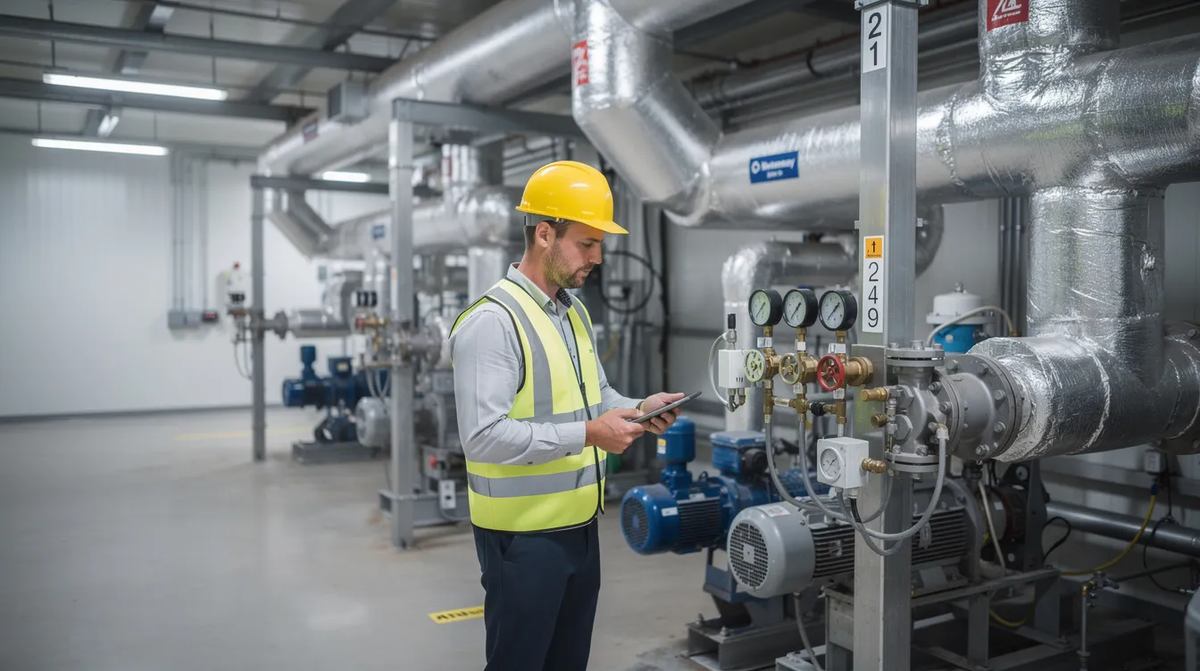
Every 179D claim is engineering-driven. Energy-efficient improvements must be certified by a qualified third party according to DOE guidelines, which means no claim survives without proper modeling and documentation.
Energy modeling: The traditional pathway requires building energy modeling using DOE-approved software (EnergyPlus, eQUEST, TRACE 3D Plus, or similar). The model compares the proposed building against a reference building model under ASHRAE 90.1, accounting for all regulated loads. The alternative pathway applies to retrofit projects completed under a qualified retrofit plan where actual measured energy-use intensity is compared before and after upgrades.
Certification: A licensed professional engineer or registered architect must review on-site conditions, confirm installed systems match the modeled design, and sign the final certification. This inspection verifies that energy efficient components (fixtures, controls, equipment, envelope materials) are installed as specified.
Documentation building owners should maintain:
- Construction drawings and final as-built plans
- Equipment cut-sheets for HVAC, lighting, and envelope materials
- Commissioning reports and change orders
- Lighting layouts and controls sequences
- Payroll records, apprenticeship certifications, and prevailing wage determinations
For tax exempt buildings, allocation letters must specify the building, square footage, owner, designer, and tax year, plus evidence that the designer created the technical specifications.
Corporate Tax Advisors provides end-to-end support: site inspections, energy modeling, PE certification, allocation documentation, and coordination with the taxpayer’s CPA to file current-year claims or amended returns using Form 3115 accounting method changes where needed.
Common Mistakes Building Owners Make With 179D (and How to Avoid Them)
Think of this section as a risk checklist. Here are the errors we see most frequently when commercial building owners pursue the efficient commercial buildings deduction:
- Assuming only “green” buildings qualify. Many owners believe they need LEED certification or a similar rating. In reality, many standard code-plus projects exceed the 25% energy savings threshold when properly modeled. Standard energy efficient property upgrades (better insulation, LED lighting, efficient rooftop units) often produce significant savings without any green certification.
- Documentation gaps. Missing as-built drawings, incomplete equipment cut-sheets, absent wage and apprenticeship records, or unsigned allocation letters are the fastest way to lose the enhanced deduction during an IRS review.
- Timing misalignment. Failing to align placed-in-service dates, ASHRAE standard selection, or construction-start tests with 179D eligibility rules. This is especially critical now, with certain property needing to begin construction before June 30, 2026.
- Under-claiming. CPAs aware of 179D sometimes use rough rules of thumb instead of full engineered energy modeling. This conservative approach often leaves hundreds of thousands of dollars unclaimed on larger properties.
- Coordination errors with other incentives. Misalignment between 179D and cost segregation studies, or overlap with investment tax credits on solar installations, can create compliance issues. 179D deductions cannot overlap with certain credits for the same costs.
CTA’s early involvement, during design or before project closeout, helps owners avoid these pitfalls and capture the full deduction on projects completed across multiple facilities.
How 179D Fits with Cost Segregation, Clean Energy Credits, and Other Tax Incentives
The 179D deduction is one tool in a broader strategy for capital-intensive building projects. Savvy building owners layer it with other tax incentives for maximum benefit.
Cost segregation reclassifies building components into shorter depreciable lives (5, 7, or 15 years), while 179D accelerates a separate energy efficiency deduction. Both can often apply to the same project without double-counting the same dollars, as long as basis adjustments are handled correctly.
Clean energy tax credits such as the investment tax credit for solar and battery storage under Sections 48 and 48E complement 179D. Envelope and mechanical improvements reduce energy loads, making renewable installations more effective. Taxpayers evaluate 179D alongside 45L and 45X incentives when working on mixed-use or residential-adjacent projects, ensuring no prohibited overlap.
Common pairings for CTA clients include 179D plus cost segregation for major office or industrial developments, or 179D plus renewable ITC for facilities adding solar arrays. The key is modeling cash flow impacts, deduction timing, AMT exposure, and financial statement effects so the building owner and their CPA can choose the most advantageous combination of eligible improvements and credits.
How Corporate Tax Advisors (CTA) Helps Building Owners Capture 179D

Corporate Tax Advisors is a specialty tax consulting firm that has partnered with businesses and their CPAs to identify complex federal and state incentives since 2014. The 179d energy efficient commercial buildings deduction is one of CTA’s core service lines.
CTA’s typical 179D process:
- Complimentary screening of the building portfolio to identify eligible property and tax years
- Formal engagement on a contingency basis (no fee unless deductions are identified)
- Detailed energy modeling and on-site inspections by in-house engineers
- PE certification and preparation of all supporting documentation
- Coordination with the taxpayer’s CPA to file IRS Form 7205, amended returns, or automatic accounting method changes
CTA’s clients include owners of office, industrial, retail, hospitality, manufacturing, and distribution facilities across the U.S., as well as architects and engineers seeking allocations from tax exempt building owners.
Real-world results: One multi-site warehouse owner engaged CTA across several states. After screening a portfolio of distribution centers, CTA identified envelope and lighting retrofits that generated mid-seven-figure total deductions. Another client, a design-build firm working on public school renovations, received allocated deductions across dozens of buildings owned by a school district, each documented with allocation letters and independently certified energy models.
CTA also provides related services for the same projects: cost segregation, R&D tax credits for design and engineering work, clean energy ITC evaluations, and jobs and training credits where applicable.
FAQs: 179D Deduction for Building Owners
How much can a building owner save with the 179D deduction?
For a 150,000 square foot commercial building achieving 40% energy savings with prevailing wage compliance, the deduction could reach approximately $795,000 or more, translating to roughly $167,000 in federal tax savings at a 21% corporate rate. Actual results depend on building size, savings percentage, and whether labor rules are met.
Can I claim 179D retroactively for buildings placed in service in prior years?
Yes. If eligible property was placed in service in a prior tax year and the deduction was not claimed, owners may file amended returns or use Form 3115 to change their accounting method. CTA regularly identifies unclaimed deductions on 2022–2025 projects.
Do energy efficient residential or mixed-use buildings qualify?
Multi-family residential buildings of four or more stories above grade qualify under 179D. Buildings of three or fewer stories generally fall under Section 45L instead. For mixed-use properties, each qualifying portion is analyzed separately.
How does a tax-exempt building owner allocate 179D to a designer?
The tax-exempt owner issues a signed allocation letter specifying the building, square footage, amount allocated, and designer identity. The designer, whether architect, engineer, or energy consultant, then claims the allocated deduction on their own tax return.
What does the IRS look for in a 179D audit?
Expect requests for energy modeling files, the reference building model assumptions, final certification reports signed by the PE, prevailing wage documentation, apprenticeship hour logs, and evidence of designer status if the deduction was allocated.
Can multiple designers share a 179D allocation?
Yes. Allocations can be split among several designers proportionally based on their contributions to the technical specifications. Each allocation must be clearly documented by the owner and agreed upon before filing.
How long does the 179D process usually take?
From initial data collection to final certification, expect 6–12 weeks for a typical single-building project. Multi-building portfolios or complex retrofits may take longer, particularly if as-built documentation needs to be reconstructed.
Why Building Owners Choose Corporate Tax Advisors for 179D
For CFOs, controllers, and owners comparing 179D service providers, CTA offers a combination of engineering depth and tax consulting experience that is difficult to match.
- Contingency-based fees. No fee unless deductions are successfully identified and documented. This aligns CTA’s incentives directly with your outcome.
- CPA-collaborative model. CTA handles the technical engineering, energy modeling, and incentive documentation while your existing CPA maintains overall tax strategy and compliance.
- Decade-plus track record. Since 2014, CTA has worked across multiple incentive programs, spotting additional opportunities like R&D credits, jobs and training credits, and clean energy incentives connected to the same building upgrade project.
- Audit-ready documentation. Conservative assumptions where rules are unclear, thorough record-keeping, and direct support if the IRS asks follow-up questions.
- Engineering-led team. In-house licensed engineers and energy modelers experienced with ASHRAE 90.1-2007 and 90.1-2019 standards, large multi-building portfolios, and complex retrofit scenarios.
Next Steps: Explore Your 179D Deduction Opportunity
If you have planned or recently completed energy efficient commercial building upgrades between 2022 and 2026, now is the time to evaluate your 179D potential. Every building in your portfolio deserves a screening, whether it is a single office, a chain of retail locations, or a campus of industrial facilities.
Contact Corporate Tax Advisors for a no-cost initial 179D evaluation. Have your approximate building size, location, systems upgraded, and placed-in-service dates ready. CTA’s team will review your portfolio, identify the highest-impact facilities, and outline an estimated range of potential deductions during a brief discovery call.
Bring your existing CPA firm and facilities or engineering team into the conversation early. When tax advisors, engineers, and accountants are aligned from the start, projects move faster and deductions are maximized. The 179D deduction is not just a tax play. It is a path to improved cash flow, lower operating costs, and long-term energy efficiency and sustainability for your commercial buildings. The construction start deadline is days away. Act now.