Table of Contents
- What Are Investment Tax Credit Services in 2025–2026?
- Core Investment Tax Credits You Can Use Today
- Renewable Energy Tax Credits Under the Inflation Reduction Act
- Historic Tax Credits and Affordable Housing Investment Credits
- How Professional Investment Tax Credit Services Work
- FAQ on Investment Tax Credits, Direct Pay, and Bonus Credits
- Why Choose Our Investment Tax Credit Services
What Are Investment Tax Credit Services in 2025–2026?
An investment tax credit ITC is a dollar-for-dollar reduction in tax liability that the federal government offers to incentivize capital investment in specific property types. First established in 1978 for renewable energy properties, investment tax credits directly reduce the amount of tax a business owes rather than simply lowering taxable income. That distinction matters: a $1 million credit saves exactly $1 million in federal taxes.
Investment tax credit services help businesses identify and monetize federal tax incentives across three major categories. Credits are utilized for investments in renewable energy, rehabilitation of historic buildings, and affordable housing. These advisory firms handle structuring, documentation, compliance, and monetization so that developers, sponsors, tax-exempt organizations, and corporate investors capture the full value of every eligible dollar.
Why does this matter right now? The inflation reduction act of 2022 extended and expanded the ITC through at least 2032, introduced direct pay for nonprofits, and created transferable credits. Meanwhile, new FEOC restrictions start in 2026, and bonus credit application windows are competitive. This article provides a brief overview of key ITC types, 2025–2026 rules, common pitfalls, and how specialized services maximize returns.
Core Investment Tax Credits You Can Use Today
Understanding the difference between an investment tax credit and a production tax credit is your first decision point. An investment credit is determined based on the capital cost of a project, while a production tax credit (PTC) pays per kilowatt-hour of electricity generated over time. Developers run financial models comparing after-tax returns under each, and the right choice depends on technology, capacity factor, and location.
The main categories of interest today are Section 48 and Section 48E for renewable energy tax credits, historic tax credits under Section 47 for rehabilitation of certified historic structures, and the Low-Income Housing Tax Credit (LIHTC) under Section 42 for affordable housing. Qualified investments for ITCs include solar energy systems, wind turbines, and energy storage technology, along with geothermal and other qualifying clean energy property.
The ITC provides a 30% credit for eligible projects through 2032 when prevailing wage and apprenticeship requirements are met. The ITC includes six different bonus credits, and projects can receive up to six bonus credits under the ITC. When stacked, bonus credits can increase ITC value up to 70% of eligible costs. For example, a 5 MW solar and storage project placed in service in 2026 that meets wage standards, uses domestic content, and sits in an energy community could qualify for a base rate of 30% plus 10% domestic content plus 10% energy community, reaching 50% before low-income community bonuses.
Renewable Energy Tax Credits Under the Inflation Reduction Act
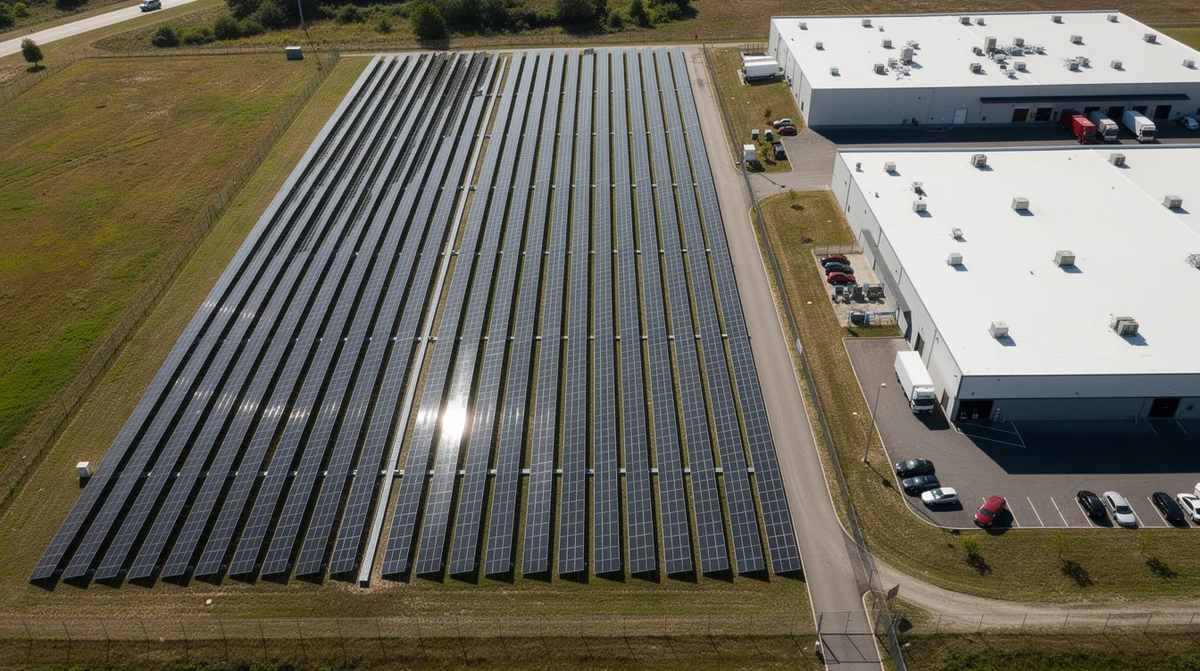
The inflation reduction act extended the ITC through 2024 under the existing process of Section 48, and the IRA raised the ITC to 30% through 2032 for solar projects, wind projects, storage, and other clean energy installations. Starting with projects placed in service after December 31, 2024, the technology-neutral Section 48E replaced Section 48 for facilities that generate electricity with zero or near-zero emissions. This transition continues until U.S. power-sector emissions fall to 25% of 2022 levels, at which point congress may trigger a phase-down.
The base rate under Section 48E is 6% of qualified investment. When the IRA created labor requirements for higher tax credit rates, it defined a pathway to 30%: meet prevailing wage and apprenticeship requirements during construction and for operational years afterward. Projects can receive a 10% or 20% bonus credit on top of that base. Projects must meet domestic content requirements for bonus credits (a certain percentage of steel, iron, and manufactured products sourced domestically). Four bonus credits are available for low-income communities, and the IRA includes bonus credits for low-income community projects with limited annual capacity of 1.8 GW DC.
Investment tax credit services assist with technology eligibility analysis, prevailing wage compliance documentation, domestic content analysis using IRS safe harbor tables, and aligning the begin construction date with physical work or five percent expenditure safe harbors. They also help investors compare ITC versus PTC under Section 45 and Section 45Y to determine which path yields higher after-tax returns for solar and wind projects.
Key Changes Clean Energy Investors Must Watch
The shift from technology-specific Section 48 to technology-neutral Section 48E affects every project planning timeline starting in 2025. Here are the key changes:
- FEOC restrictions: Projects must not receive material assistance from prohibited foreign entities. Prohibited foreign entities include those from China, Iran, North Korea, and Russia. The material assistance cost ratio determines allowed PFE material usage. Projects starting construction by December 31, 2025, avoid FEOC requirements, but those beginning in 2026 face a 40% threshold for qualified facilities and 55% for energy storage, rising annually.
| Year Construction Begins | Qualified Facility Threshold | Energy Storage Threshold |
|---|---|---|
| 2026 | 40% | 55% |
| 2027 | 45% | 60% |
| 2028 | 50% | 65% |
| 2029 | 55% | 70% |
| 2030+ | 60% | 75% |
- Low-income bonus capacity: Application windows open each February and close in August, with oversubscription risk.
- Phase-down: The ITC will phase out for projects starting after July 4, 2026, under certain provisions, and the 30% baseline is scheduled to decline after 2032 unless congress extends it.
- Guidance monitoring: An investment tax credit advisor tracks IRS notices on placed-in-service deadlines, safe harbor updates, and foreign entity compliance to update project plans accordingly.
Direct Pay and Transferability for Renewable Energy Projects
The ITC includes provisions for nonprofits to access direct pay, also known as Elective Pay for tax-exempt entities. Nonprofits can access ITC through direct pay reimbursement, and nonprofits can access the ITC through direct pay under the IRA. Direct pay allows tax-exempt entities to receive full ITC value as cash from the IRS, even without income tax liability. This covers cities, schools, cooperatives, and tribes.
Entities must notify the IRS to participate in direct pay through a pre-filing registration number. Direct pay reimbursement is available after project completion, when the entity files its return with the appropriate form. Certain tax credits are refundable for businesses, allowing excess credits to be refunded even when they exceed tax owed. Excess tax credits can often be carried back one year or carried forward for up to 20 years.
Transferability lets taxable taxpayers sell credits to unrelated buyers for cash, creating a market separate from traditional tax equity. Investment tax credit services support both pathways through pricing analysis, buyer vetting, drafting transfer agreements, and coordinating with lenders. Organizations planning 2025–2027 projects should decide early whether to use direct pay, traditional tax equity, or transferable credits, as the choice affects legal entities, financing terms, and timelines.
Historic Tax Credits and Affordable Housing Investment Credits
Beyond energy, the federal government offers investment credits for community development. The federal historic tax credit provides a 20% credit on qualified rehabilitation expenditures for certified historic buildings, claimed over a five-year period. Many states offer additional historic credits that stack with federal, and the process requires National Park Service certification. Settlement within the investment tax credits often involves compliance with stringent regulations, including preservation approvals and basis allocation among land, building, and improvements.
LIHTC remains the primary driver of new affordable housing in the United States, generating equity for developers through 9% and 4% credits claimed over 10 years. Corporations and investors treat these programs as part of an investment tax strategy for predictable long-term returns, low risk yield, and community impact that can create jobs and revitalize neighborhoods. ITCs can offset up to 75% of the current year’s federal income tax liability, making them powerful tools for reducing federal taxes.

Example Structures: Combining Credits to Close Funding Gaps
Consider a 1920s warehouse converted to mixed-use housing: federal HTC (20%), state HTC, LIHTC for the residential units, and a solar ITC on the rooftop installation. Layered credits can reduce total project equity need by 20–40%, attracting mission-aligned investors seeking tax credit allocations over 10+ years. ITC services involve structuring complex transactions like tax equity partnerships to ensure each entity claims the correct credit.
Investment tax credit advisors coordinate with lenders, Community Development Entities, and housing authorities to align closing timelines, compliance reporting, and exit strategies. Incorrect structuring risks recapture across multiple credit layers, so professional advisory and legal review are essential.
How Professional Investment Tax Credit Services Work
A typical engagement moves through four phases. During the feasibility phase, advisors review project eligibility, model the investment tax credit or other credits, and compare scenarios: ITC vs PTC, direct pay vs transfer, bonus depreciation and accelerated depreciation benefits, and bonus credit options. Investment tax credits improve cash flow and provide high after-tax returns when structured correctly.
The structuring phase involves forming project entities, determining who owns the investment credit, designing tax equity or credit sale structures, and aligning with investor and lender requirements. Documentation and compliance follow: creating recordkeeping systems for wage, apprenticeship, domestic content, and community benefit requirements, including supplier certifications and engineering reports confirming placed-in-service dates.
Post-closing services include annual compliance monitoring during each tax year, support for IRS examinations, tracking recapture risks, and helping with amendments if project scope or ownership changes within the recapture period. These resources are paid for through advisory fees defined at engagement start.
What Clients Should Know Before Choosing an ITC Advisor
Ask potential service providers about their experience with specific sections of the code (48, 48E, 45, 45Y, 42, 47), their track record since the inflation reduction act, and their audit history. Review sample financial models to gauge realism of assumptions. Multi-disciplinary teams covering tax, legal, engineering, and community finance outperform single-discipline advisors, especially for projects pursuing multiple bonus credits. Clarify fee structure upfront: flat-fee, success-based, or blended.
Common Mistakes That Reduce Investment Tax Credit Value
- Failing to meet prevailing wage and apprenticeship requirements, dropping the base rate from 30% to 6%
- Missing Low-Income Communities Bonus Credit application windows, losing a 10–20% adder
- Using ineligible foreign-sourced components after new FEOC restrictions take effect
- Placing a historic building in service before final HTC approvals from the National Park Service
- Misallocating rehabilitation costs between eligible and ineligible expenditures
- Violating LIHTC rent and income restrictions during the 15-year compliance period
- Incorrect basis calculations that include ineligible development fees, triggering IRS adjustments
Robust documentation and early planning with an ITC advisor greatly reduce these risks. Implementing internal checklists and quarterly reviews for large portfolios starting in 2025–2026 catches issues before filing returns.

FAQ on Investment Tax Credits, Direct Pay, and Bonus Credits
How much is the investment tax credit worth for a typical commercial solar project starting construction in 2025? A project meeting prevailing wage standards, using domestic content, and located in an energy community could qualify for 30% base plus 10% domestic plus 10% energy community, totaling 50%. On a $10 million project, that equals $5 million in credits. If the project is eligible for low-income community bonuses, the percentage could reach 60–70%.
Can nonprofits and local governments really use the ITC without tax liability? Yes. Direct pay allows tax-exempt entities to receive the full ITC value as a cash reimbursement from the IRS after project completion. Registration with the IRS is required before filing.
How do investment tax credit services get paid? Common models include flat fees, success-based fees tied to credit value captured, or blended approaches. Confirm whether the advisor is independent or also investing in the project, as that affects incentives and interest alignment.
What are bonus credits and how many can my project stack? Projects can receive up to six bonus credits: domestic content (10%), energy community (10%), and up to four categories of low-income community bonuses (10% or 20% each depending on category). Stacking is subject to eligibility and capacity limits.
What records should I keep in case the IRS audits my ITC? Keep contracts and invoices tracing component manufacturing origin, supplier certifications, payroll records proving prevailing wage compliance, apprenticeship documentation, engineering reports, placed-in-service certificates, and proof of ownership and basis.
Can I combine LIHTC, historic tax credits, and renewable energy tax credits in one project? Yes, but it requires careful structuring. The same property may qualify for multiple credits if ownership aligns, expenditures are properly allocated, and compliance periods for each program are maintained. Basis reduction rules and divergent recapture periods make professional guidance essential for businesses investing in layered capital stacks.
Why Choose Our Investment Tax Credit Services
Our team specializes in investment tax credit services covering renewable energy, historic rehabilitation, and affordable housing. Since the inflation reduction act took effect, we have structured transactions across solar, wind, storage, and community development-helping developers, nonprofits, municipalities, and corporations reduce federal tax liability while meeting ESG and community impact goals.
What sets us apart:
- Data-driven financial modeling with real-time policy tracking for key changes including FEOC rules and the Section 48E transition
- Strong relationships with tax credit buyers and institutional investors
- Multi-disciplinary team spanning tax, legal, engineering, and community finance
From early feasibility studies through post-closing compliance and audit defense, every engagement is handled by a consistent, senior-led team focused on capturing the full value of every eligible credit.
Plan Your 2025–2027 Investment Tax Credit Strategy
The window for maximizing investment tax credit value is narrowing. Schedule a consultation, request an ITC feasibility review, or submit your project details through our online form. The best time to engage is before construction starts or property acquisition closes.
Typical next steps: introductory call, document review, high-level investment tax credit roadmap, and a proposal for advisory services with clear timelines and fees. We approach every engagement as a long-term partnership, not a one-time transaction.