Table of Contents
- Introduction: Why Clean Energy Tax Credits Matter Right Now
- Key Federal Clean Energy Tax Credits at a Glance
- Residential Clean Energy Credit: 30% Back on Solar, Storage & More
- Energy Efficient Home Improvement Credit: Annual Savings for Upgrades
- Clean Vehicle Credits: New, Used & Commercial EV Incentives
- Business & Project-Side Incentives: ITC, PTC & Advanced Manufacturing
- Direct Pay & Transferability: Turning Credits into Cash
- How to Actually Claim Clean Energy Tax Credits on Your Return
- Strategies to Maximize Your Clean Energy Tax Savings
- FAQs About Clean Energy Tax Credits
- Why Choose Our Team for Navigating Clean Energy Tax Incentives
- Call to Action: Plan Your Clean Energy Tax Strategy Today
Introduction: Why Clean Energy Tax Credits Matter Right Now
Clean energy tax incentives are federal credits that reward homeowners, drivers, and businesses for investing in renewable energy and energy efficient home upgrades. Tax credits reduce the amount of income tax owed dollar-for-dollar, making them far more valuable than standard deductions. The United States has clean energy tax incentives driven by the Inflation Reduction Act of 2022, but the One Big Beautiful Bill Act signed July 4, 2025 accelerated many expiration dates, creating real urgency.
Clean energy tax incentives provide billions in savings for qualifying individuals and businesses. They also address major financial barriers to the adoption of green energy while lowering long-term household and commercial energy bills by offsetting upfront costs. Federal clean energy tax incentives stimulate the economy and create green-sector jobs across every state.
This guide covers what credits exist for new or existing homes, vehicles, and clean energy projects, the exact percentages and deadlines, who qualifies, and how to claim the credit on your federal tax return, including how direct pay works for tax exempt entities.
Key Federal Clean Energy Tax Credits at a Glance
Here are the major federal incentives available through tax year 2025, organized by who they serve:
- Residential Clean Energy Credit (§25D) – 30% of costs for solar panels, geothermal heat pumps, battery storage, fuel cells, and wind systems on a home
- Energy Efficient Home Improvement Credit (§25C) – 30% with annual caps for insulation, heat pumps, Energy Star windows, and similar efficiency upgrades
- New Clean Vehicle Credit (§30D) – up to $7,500 for qualifying EVs and fuel cell vehicles acquired by September 30, 2025
- Used Clean Vehicle Credit (§25E) – up to $4,000 for pre-owned clean vehicles acquired by September 30, 2025
- Commercial Clean Vehicle Credit (§45W) – up to $7,500 or $40,000 depending on vehicle weight, for vehicles acquired by September 30, 2025
- Investment Tax Credit (§48/§48E) – 6% base or 30% bonus for qualifying clean energy property
- Production Tax Credit (§45/§45Y) – per-kWh credits for electricity generation from a qualified facility
The sections below break each credit down with qualifying costs, examples, and deadlines.
Residential Clean Energy Credit: 30% Back on Solar, Storage & More
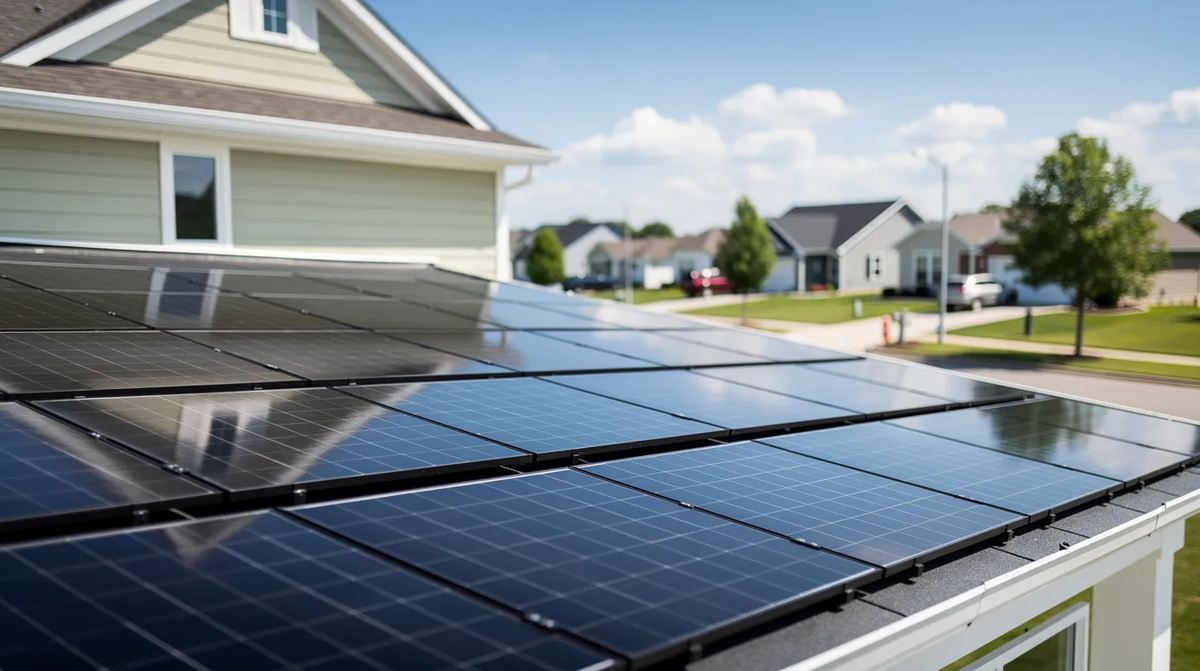
The residential clean energy credit equals 30% of qualified clean energy property costs for installing solar panels, solar water heaters, geothermal heat pumps, small wind turbines, fuel cell property, stand-alone battery storage technology (minimum 3 kWh), and solar roofing tiles on your U.S. residence. The credit is available for installations from 2022 to 2025, with credits applying to qualified clean energy property installed until December 31, 2025 under the big beautiful bill act.
You can claim the credit for your primary home in the U.S., and secondary homes also qualify, though rental-only properties do not. Qualified expenditures include equipment, labor costs for onsite preparation and installation, and sales tax. Finance charges like interest paid and loan origination fees do not count. Fuel cell property credits are limited to $500 per half kilowatt of capacity.
The residential clean energy credit is nonrefundable and cannot exceed tax owed, but you can carry forward unused credits to future years. Example: a property owner who installs a $30,000 rooftop solar and battery storage system in 2025 earns a $9,000 federal tax credit. If their federal income taxes owed are only $5,000, the remaining $4,000 carries forward. Credits have no lifetime dollar limits for homeowners. The federal clean energy tax credit is 30% of costs – claim it before this window closes.
Energy Efficient Home Improvement Credit: Annual Savings for Upgrades
The Energy Efficient Home Improvement Credit (§25C) provides energy efficiency credits covering 30% of qualified costs for upgrades to an existing home, including insulation, air sealing, exterior doors, Energy Star windows, efficient electric appliances, biomass stoves, and high-efficiency HVAC systems. Tax credits for energy-efficient home upgrades expire December 31, 2025 under OBBB.
You can claim up to $1,200 for energy efficiency improvements under the general annual credit cap. Credits for energy efficiency upgrades can total up to $2,000 for heat pumps, heat pump water heater units, and biomass stoves, allowing up to $3,200 total in a single tax year. A home energy audit qualifies for up to $150 within the general cap. Improvements must be made to your principal residence in the U.S. You can claim credits for improvements to your primary home only – landlords who don’t occupy the property and any other property owner of rental-only units are excluded.
Products must meet Energy Star or Consortium for Energy Efficiency tiers. Starting in 2025, manufacturers assign product identification numbers (PINs) that taxpayers report to claim the credit. Common mistakes include failing to confirm standards, confusing state rebates with federal credits, and not keeping invoices with model numbers. Strategic homeowners can split energy efficient upgrades across tax years to maximize annual limits – for example, installing insulation and windows one year, then a heat pump the next.
Clean Vehicle Credits: New, Used & Commercial EV Incentives
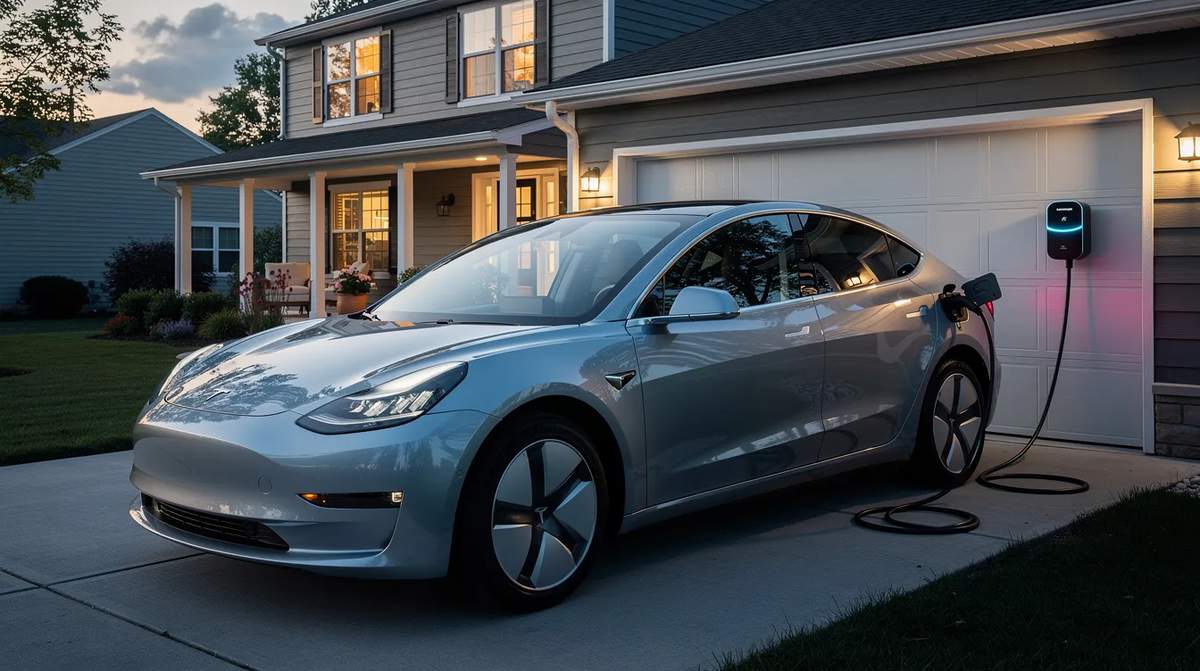
Clean vehicle credit programs lower the cost of an electric vehicle and certain fuel cell vehicles acquired through September 30, 2025. The New Clean Vehicle Credit (§30D) offers up to $7,500 for qualifying EVs that meet critical minerals and battery component sourcing requirements. Buyers can transfer the credit to a dealer at point of sale for an upfront price reduction. Income caps apply (e.g., $300,000 adjusted gross income for married filing jointly), along with MSRP limits ($80,000 for trucks/SUVs, $55,000 for others) and North American final assembly rules.
The Used Clean Vehicle Credit (§25E) equals 30% of sale price, capped at $4,000 for qualifying pre-owned EVs purchased from a dealer. Income limits are lower than for new vehicles. The Commercial Clean Vehicle Credit (§45W) lets businesses and tax exempt entities claim up to $7,500 for light-duty and up to $40,000 for heavy-duty clean vehicles, with fewer restrictions on battery sourcing. A leased vehicle can indirectly benefit moderate income families because the lessor claims the commercial credit and may pass savings through lower lease payments. An ev charger may qualify under separate provisions. All vehicles acquired after September 30, 2025 are ineligible.
Business & Project-Side Incentives: ITC, PTC & Advanced Manufacturing
The Investment Tax Credit supports initial investments in new clean energy installations with a base rate of 6%, increasing to 30% when prevailing wage and apprenticeship requirements are met. Additional bonuses of up to 10% each apply for domestic content and projects in energy communities. The Clean Electricity Investment and Production Credits reward businesses for investing in or producing clean electricity.
The Production Tax Credit incentivizes the operation of clean energy sources based on energy produced, paying a per-kWh amount indexed for inflation. Businesses can choose between ITC and PTC depending on projected output and financing. Incentives support domestic manufacturing growth in clean energy components, including through the Section 48C Advanced Energy Project Credit for facilities manufacturing solar modules, battery cells, and grid components. Eligible clean energy projects include utility-scale solar or wind farms, grid-scale battery storage facilities, and industrial upgrades that significantly reduce greenhouse gas emissions and combat climate change. Renewable energy tax credits remain a cornerstone of financial incentives for developers and comparable entity endorsed organizations.
Direct Pay & Transferability: Turning Credits into Cash
Direct pay allows tax-exempt entities to receive cash payments for credits even when they owe no federal tax. Non-profits, schools, local governments, Tribes, and rural co-ops that primarily serve their communities can receive IRS payments equal to their earned clean energy tax credits. A comparable entity – such as a public school installing a $1 million solar array with a 30% ITC – receives $300,000 as a direct payment after filing.
For-profit entities can sell renewable energy credits to unrelated taxpayers. The cash received is generally excluded from gross income, and buyers cannot deduct the purchase price. Both direct pay and transferability require electronic pre-filing registration with the IRS. Organizations must maintain records of project costs, placed-in-service dates, and labor compliance – this process helps close financing gaps for rooftop solar installations, EV bus fleets, and battery storage on non-profit campuses.
How to Actually Claim Clean Energy Tax Credits on Your Return
You must file Form 5695 to claim the residential clean energy credit and energy efficient home improvement credits on your tax return. For clean vehicle credits, use Form 8936 and include VIN details. Business credits flow through Form 3800 and related schedules for each credit applies under sections 48, 45, and 45W.
Keep detailed invoices showing labor and materials, model numbers, Energy Star certifications, and manufacturer PINs (starting 2025). Credits are claimed in the tax year property is placed in service. Example: solar panels purchased December 2024 but installed February 2025 go on your 2025 return. The credits are nonrefundable and cannot exceed tax owed, but unused residential clean energy amounts carry forward to future years. Consult a tax professional when combining multiple credits or using direct pay.
Strategies to Maximize Your Clean Energy Tax Savings
Plan a multi-year roadmap for energy efficient home improvements to capture the full annual credit each tax year. Combine the residential clean energy credit (installing solar panels plus battery storage) with efficiency upgrades like insulation and heat pumps to cut monthly energy bills and utility bills substantially.
For businesses, evaluate whether the ITC or PTC provides a higher net benefit based on projected output. Consider phasing projects to meet prevailing wage requirements and qualify for bonus rates. Use direct pay and transferability planning early to close financing gaps.
Common mistakes to avoid: waiting until filing season to gather documentation, assuming state incentives don’t interact with federal rules, and overlooking Energy Star or IRS technical criteria when selecting equipment. Rewiring America and similar resources can help identify eligible products.
FAQs About Clean Energy Tax Credits
What is the difference between a clean energy tax credit and a tax deduction? A tax credit reduces the amount of federal tax you owe dollar-for-dollar. A deduction only reduces your taxable income, meaning its value depends on your tax bracket. A $7,500 credit saves exactly $7,500; a $7,500 deduction might save $1,850 if you’re in the 25% bracket.
Can I claim both the Residential Clean Energy Credit and the Energy Efficient Home Improvement Credit in the same year? Yes. These are separate credits under different IRC sections. You could install solar panels (claiming the property credit under §25D) and add insulation or a heat pump water heater (claiming under §25C) in the same tax year, each with its own limits.
Do I need to own my home to claim the credit for solar panels? You must own the home and use it as a residence. Renters cannot claim the rooftop solar tax credit directly, though community solar programs may offer separate financial incentives in some states.
Can I still claim the federal solar tax credit if my state also offers solar incentives? Generally yes. State tax credits typically do not reduce your federal credit amount. However, utility rebates that reduce your purchase price may lower your qualified cost basis, which reduces the federal credit calculation.
What happens if my clean energy tax credit exceeds my federal tax liability? The residential clean energy credit is nonrefundable, so it cannot generate a refund beyond your tax owed. However, you can carry forward the unused portion to future tax years until it’s fully used.
Is there an income limit for energy efficient home improvement credits? The §25C credit does not have income caps. Eligibility depends on meeting product standards and installing in your principal residence. Income limits apply only to clean vehicle credits under §30D and §25E.
Why Choose Our Team for Navigating Clean Energy Tax Incentives
We bring deep knowledge of federal tax rules for clean energy, including up-to-date familiarity with the Inflation Reduction Act and the One Big Beautiful Bill Act modifications.
- Personalized assessments of which clean energy tax credits you can realistically claim
- Guidance on documentation, timing, and IRS forms to avoid costly filing mistakes
- Support for direct pay and credit transferability strategies for tax exempt entities and developers
- Insight into stacking federal credits with state, utility, and municipal energy efficiency incentives
We translate complex energy tax regulations into practical plans for homeowners, small businesses, and local governments, ensuring every eligible dollar works in your favor.
Call to Action: Plan Your Clean Energy Tax Strategy Today
Start by making a prioritized list of potential clean energy and energy efficiency projects – whether that’s installing solar panels, upgrading to a heat pump, improving insulation, or purchasing an electric vehicle. Then reach out for a consultation to map those projects against available energy tax credits and the December 31, 2025 deadline.
Contact us to review your eligibility for the residential clean energy credit, energy efficient home improvement credit, clean vehicle credits, or business incentives. Request a customized energy tax savings roadmap before starting major projects. With the right plan, you’ll reduce your energy bills, lower greenhouse gas emissions, and know exactly how to claim the credit on your next federal tax return.