Table of Contents
- Introduction: Why Section 179D Matters for Commercial Buildings Today
- Section 179D at a Glance: Key Facts You Need First
- How the Energy Efficient Commercial Building Deduction Works
- Who Qualifies for the 179D Energy Efficient Commercial Deduction?
- What Buildings and Improvements Are Eligible?
- How Much Is the 179D Tax Deduction Worth?
- Recent Law Changes: Inflation Reduction Act & the “Big Beautiful Bill Act”
- Compliance Requirements: Energy Modeling, ASHRAE Standards, and Certification
- Qualifying Improvements: HVAC, Lighting, and Building Envelope
- Claiming the 179D Deduction: Process, Timeline, and Documentation
- Common Mistakes Building Owners Make with the 179D Tax Deduction
- How 179D Interacts with Other Energy Efficiency Incentives
- Why Local and Sector-Specific Expertise Matters
- Frequently Asked Questions About the 179D Energy Efficient Commercial Building Deduction
- Why Choose Our Team for Your 179D Energy Efficiency Strategy
- Next Steps: Turn Energy Efficiency Into a Tax Savings Strategy
Introduction: Why Section 179D Matters for Commercial Buildings Today
The Energy Efficient Commercial Buildings Deduction is a U.S. federal tax incentive that allows commercial building owners and designers to deduct up to roughly $5–$6 per square foot for qualifying energy efficiency improvements. If you own, lease, or design commercial property and you’re investing in upgrades to HVAC systems, interior lighting, or the building envelope, this deduction can translate into significant tax savings.
Section 179D has been part of the internal revenue code since 2005, but the inflation reduction act permanently expanded it, lowered qualification thresholds, and introduced enhanced deduction tiers. More recently, the big beautiful bill act added a termination provision that makes timing critical. The deduction is available to building owners and designers, and for buildings owned by tax exempt entities, eligible designers can claim the benefit through an allocated deduction.
This guide covers who qualifies, what improvements qualify, how calculations work, recent law changes, compliance requirements, and the practical steps to claim this valuable incentive before key deadlines pass.
Section 179D at a Glance: Key Facts You Need First
Here is what you need to know before diving into the details: Section 179D is a performance-based federal tax deduction that rewards commercial building owners and designers for installing energy efficient property that measurably reduces power costs.
- Section 179D is officially the “Energy Efficient Commercial Buildings Deduction,” codified in the internal revenue code as IRC § 179D.
- It applies to energy efficient commercial building property (EECBP) installed in U.S. commercial buildings and certain residential rental buildings at least four stories high.
- For property placed in service from 2023 onward, the 179D deduction is indexed for inflation starting in 2023. A minimum deduction of $0.50 per square foot applies without additional requirements, while enhanced rates reach $5.36 per square foot in 2023, $5.65 in 2024, and approximately $5.81 or higher by 2025–2026.
- EECBP must achieve at least 25% energy savings compared to a reference building meeting ASHRAE Standard 90.1, with additional value scaling up to a 50% savings cap.
- The deduction can be claimed every four years for additional improvements per qualified building after December 31, 2022, subject to lifetime limits.
This deduction is separate from tax credits for renewable energy or Section 45L residential credits, though coordination is needed to avoid double-claiming the same costs.
How the Energy Efficient Commercial Building Deduction Works
The energy efficient commercial building deduction is a per square foot tax deduction tied to modeled or measured energy savings. It rewards performance, not just equipment purchases.
The deduction amount depends on three factors: the cost of eligible improvements, the square footage of the commercial building, and the percentage of total annual energy and power costs saved versus a reference building. Energy modeling must use Department of Energy approved software to compare a proposed building against a reference building model designed to meet the minimum requirements of ASHRAE Standard 90.1. Energy savings must exceed 25% compared to that reference building for any deduction to apply.
The deduction reduces the tax basis of the building but yields an immediate federal income tax deduction in the year the energy efficient property is placed in service.
Example: Consider a 100,000 square foot office building that achieves 35% modeled energy savings and meets prevailing wage requirements. The enhanced deduction rate at 35% savings would be approximately $2.90 + (10 × $0.12) = $4.10 per square foot, generating roughly $410,000 in federal tax savings. Without wage compliance, the base rate drops to around $0.78 per square foot, yielding approximately $78,000.
Commercial building owners should engage tax advisors and building energy modeling professionals during design, not after construction, to maximize the applicable dollar value.
Who Qualifies for the 179D Energy Efficient Commercial Deduction?
Eligibility for the 179D tax deduction now extends well beyond traditional commercial property owners. The 179D deduction is available to all building owners from 2023, covering a wide range of parties.
Qualifying parties include:
- Taxpaying building owners of commercial buildings-offices, warehouses, retail centers, industrial facilities, hotels, and more.
- Tenants who pay for and own depreciable energy efficient improvements within a commercial building.
- Designers (architects, engineers, design-build contractors) who are the person primarily responsible for the technical specifications of qualifying systems. Designers of energy-efficient systems for government buildings can claim this deduction when they receive a formal allocation letter.
After legislative expansions, eligible allocating entities include federal, state, and local governments, specified tax exempt entities such as hospitals, universities, and religious institutions, indian tribal governments, alaska native corporations, and other tax exempt organizations including non profit entities. These entities are an organization exempt from federal income tax, so they cannot claim the deduction directly but can provide an allocated deduction to the qualified individual who designed the systems.
Purely installing or maintaining equipment without performing design work generally does not qualify someone as a designer.
Example: A nonprofit hospital (a tax-exempt entity) upgrades its HVAC systems and building envelope. The hospital issues an allocation letter to the engineering firm that designed the systems. That firm then claims the 179D deduction, provided all savings and compliance criteria are met.
What Buildings and Improvements Are Eligible?
Section 179D focuses on energy efficiency at the whole-building level, but the deduction applies to costs associated with installing energy-efficient property in building systems across specific categories.
Eligible building types:
- U.S. commercial buildings including offices, schools, warehouses, retail centers, hotels, and industrial facilities. Buildings must be located in the U.S. to qualify.
- Eligible properties include commercial buildings and certain residential buildings at least four stories high that fall under commercial building energy codes.
Qualified energy efficient commercial building property includes:
- Interior lighting systems such as LED retrofits and advanced lighting controls
- HVAC and hot water systems including high-efficiency boilers, chillers, heat pumps, and energy recovery ventilators
- Building envelope components like high-performance glazing, additional insulation, cool roofs, and improved air sealing
The key test is a minimum 25% reduction in total annual energy and power costs versus the ASHRAE 90.1 reference building. Improvements must achieve at least 25% savings in energy costs to qualify, and they must be depreciable or amortizable certain property placed in service during such taxable year.
For retrofit projects, a qualified retrofit plan framework applies. A building must be placed in service at least five years prior to the retrofit plan to use the measurement-based pathway.
How Much Is the 179D Tax Deduction Worth?
Section 179D provides both a base deduction and a higher enhanced deduction when prevailing wage and apprenticeship requirements are met. Projects can qualify when they meet prevailing wage and apprenticeship requirements, unlocking roughly five times the base amount. A bonus deduction applies for projects meeting prevailing wage requirements.
Base deduction (without wage/apprenticeship compliance):
| Savings Level | Per Square Foot Rate | Per Percentage Point Above 25% |
|---|---|---|
| 25% (minimum) | ~$0.50–$0.58/sf | – |
| Each point above 25% | +$0.02/sf | Deductions increase by $0.02 for each percentage point above 25% savings |
| 50% (maximum) | ~$1.00–$1.16/sf | – |
Enhanced deduction (with prevailing wage and apprenticeship compliance):
| Savings Level | Per Square Foot Rate | Per Percentage Point Above 25% |
|---|---|---|
| 25% (minimum) | ~$2.50–$2.90/sf | – |
| Each point above 25% | +$0.10–$0.12/sf | Scales with inflation indexing |
| 50% (maximum) | Up to $5.81/sf | The enhanced deduction can reach up to $5.81 per square foot |
For context, deductions for 2022 are capped at $1.80 per square foot, while the maximum deduction is $5.00 per square foot for 2023-a dramatic jump. The deduction for any such taxable year cannot exceed the actual cost of the installed property.
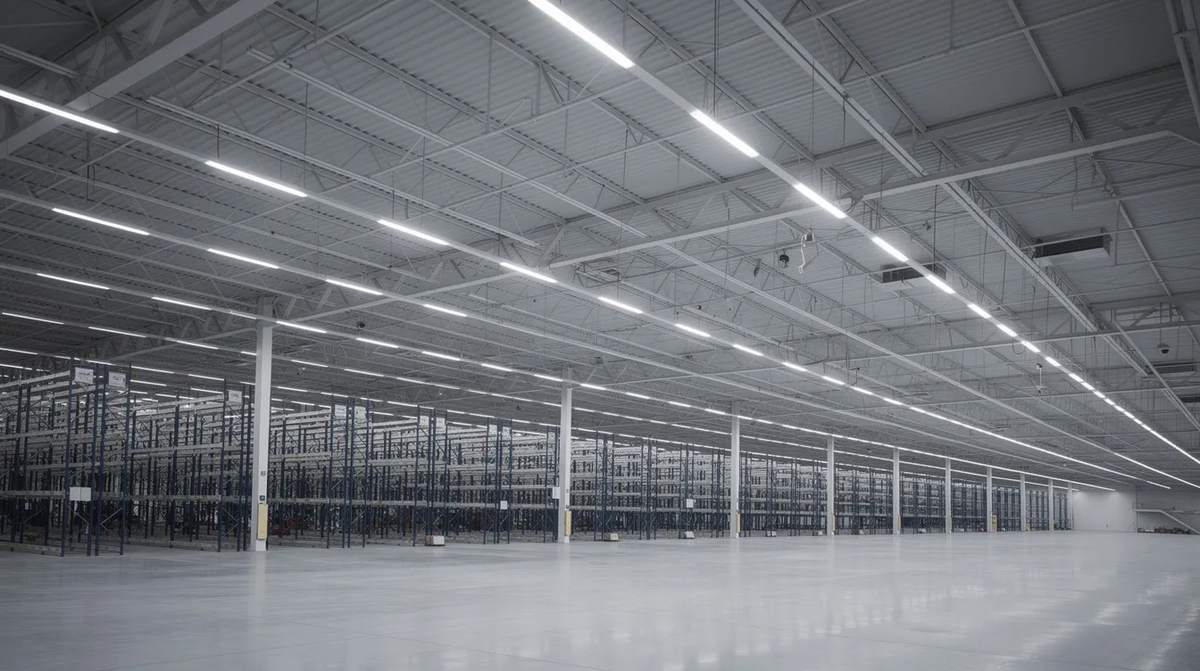
Example: A 150,000 square foot warehouse achieving 30% savings with prevailing wage compliance would earn roughly $3.50 per square foot, generating approximately $525,000 in significant tax savings. Without wage compliance, the partial deduction drops to about $102,000.
Recent Law Changes: Inflation Reduction Act & the “Big Beautiful Bill Act”
Section 179D has evolved substantially. Two pieces of legislation reshaped the deduction for taxable years beginning after December 31, 2022.
Inflation Reduction Act changes:
- Permanently extended the efficient commercial buildings deduction and increased applicable dollar amounts
- Introduced the base vs. enhanced deduction structure with prevailing wage requirements and apprenticeship requirements as multipliers
- Lowered the energy savings threshold from 50% to 25%, making qualification more achievable for a broader range of building upgrade project types
- Expanded designer eligibility to include certain tax exempt entities and tax exempt buildings beyond just government-owned facilities
Big Beautiful Bill Act (P.L. 119-21) impacts:
- Construction must begin before June 30, 2026, for eligibility under 179D-projects whose construction starts after that date will not qualify
- Confirmed inflation-indexed per square foot limits and clarified lifetime maximum deduction periods
- ASHRAE Standard 90.1-2019 applies for buildings after January 1, 2023, with construction begun after December 31, 2022. For property placed in service after December 31, 2028, ASHRAE 90.1-2022 will apply
- Confirmed safe harbor rules allowing projects that begin construction before certain dates to use older ASHRAE versions
These laws increased potential deductions but made compliance more technical. Always verify the most current per square foot amounts using recent IRS guidance and revenue procedures for the specific tax year in question.
Compliance Requirements: Energy Modeling, ASHRAE Standards, and Certification
Section 179D is heavily documentation-driven. Without proper final certification and records, even qualifying projects can lose the deduction.
Energy modeling must be certified by a licensed professional engineer, and the analysis must demonstrate at least 25% energy savings. Documentation must include construction contracts and engineering plans, as well as acceptable documentation including daily logs and site surveys. Records of physical work performed are necessary for compliance.
What the certification package must include:
- Detailed energy modeling reports comparing the subject building to the reference building model, using DOE-approved software and the correct ASHRAE standard version
- System descriptions covering interior lighting, HVAC systems, hot water systems, and building envelope specifications
- Construction documents, equipment submittals, and commissioning data
- Signed certificates from a licensed professional engineer confirming the percentage of energy savings and verifying that installed systems match the modeled design
- Projects must meet specific energy standards referencing ASHRAE 90.1 for the applicable period
Energy-efficient upgrades must be certified by a licensed professional engineer who is not related to the taxpayer. The DOE’s 179D portal tools can help estimate potential deductions, but a formal certification is required to actually claim the tax deduction.
Engage qualified engineers and tax professionals early in project planning. Design decisions made after schematic design can prevent hitting the 25% savings threshold.
Qualifying Improvements: HVAC, Lighting, and Building Envelope
The 179D deduction is system-agnostic in principle, but practically driven by improvements in three major categories of building systems.
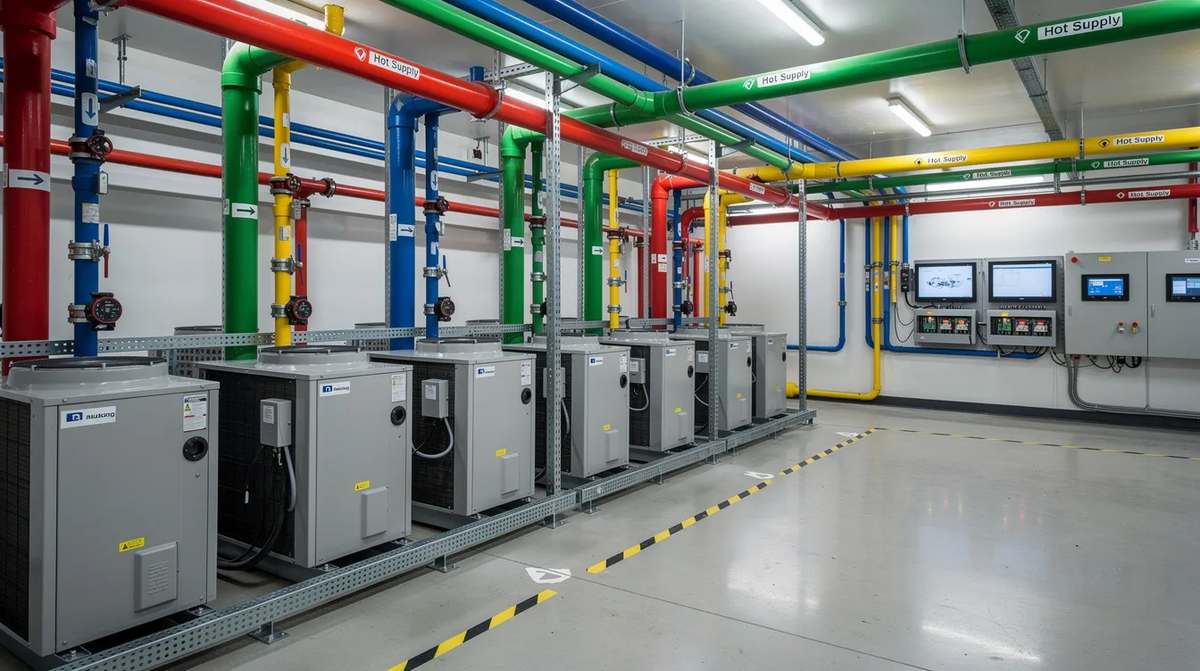
HVAC and hot water systems: High-efficiency chillers and boilers, variable speed drives, heat pumps, VRF systems, dedicated outdoor air systems (DOAS), energy recovery ventilators, and advanced controls including smart building automation for air conditioning and ventilation. Standards are set in consultation with organizations such as the American Society of Heating, Refrigerating and Air Conditioning Engineers (ASHRAE).
Interior lighting systems: LED fixture retrofits, high-efficacy luminaires, daylighting controls, occupancy sensors, and networked lighting control systems designed according to illuminating engineering society standards. Reducing lighting power density often delivers outsized energy savings relative to cost.
Building envelope: Increased roof and wall insulation, continuous insulation, improved air sealing, high-performance glazing with low-E coatings and optimized SHGC values, reflective cool roofs, and improved door assemblies.
These measures must work together to achieve minimum requirements for overall energy savings. Projects that only touch one system may still qualify if total modeled savings reach at least 25%.
Retrofit example: A warehouse installs LED lighting throughout, adds roof insulation, and replaces single-pane windows with high-performance glazing. Combined savings of 30–35% are achievable with relatively modest disruption, qualifying for both new construction and retrofit pathways.
Claiming the 179D Deduction: Process, Timeline, and Documentation
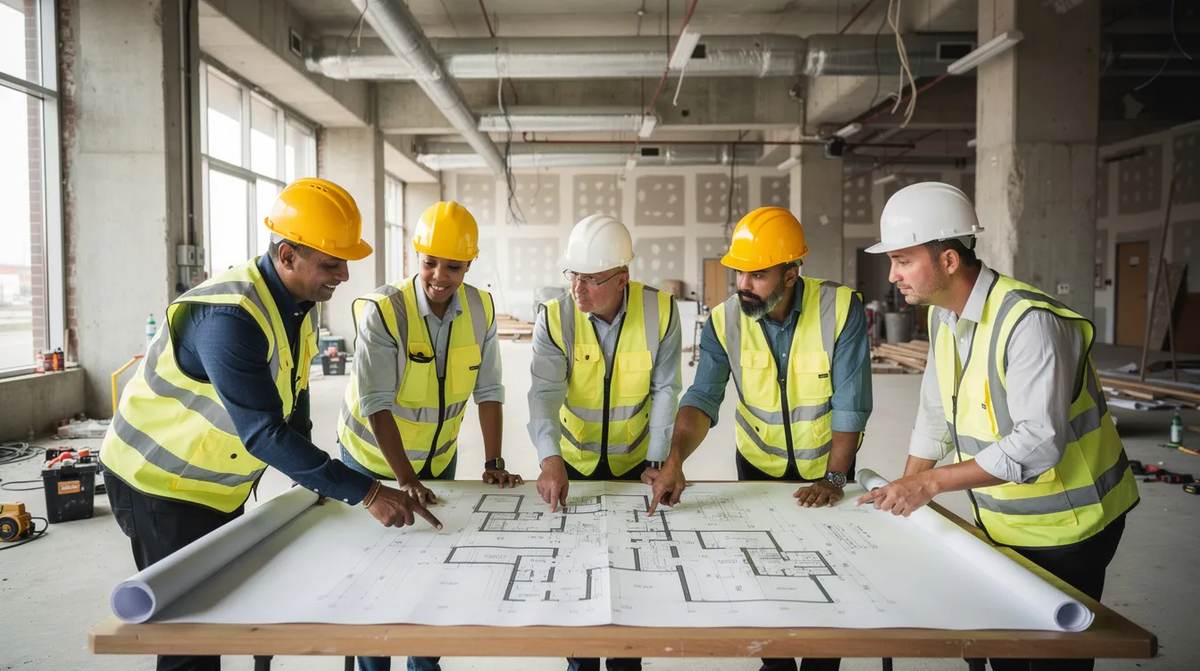
Claiming the energy efficient commercial building deduction requires coordination between the building owner, designers, tax advisors, and engineers. Here is a typical step-by-step process:
- Identify candidate buildings: Select commercial buildings with energy efficient building improvements for both new construction and retrofit projects completed or planned
- Engage modeling professionals early: Bring in a qualified energy modeling team during design to influence system choices and maximize the applicable dollar value
- Collect documentation: Gather plans, specifications, invoices, equipment submittals, and commissioning reports for all installed property
- Perform energy modeling: Run ASHRAE-based simulations using DOE-approved software, targeting at least 25% total energy and power cost savings vs. the reference building
- Conduct site inspections: Verify that installed systems match the modeled design
- Obtain certification: Secure a signed 179D final certification and, if applicable, an allocation letter from a tax exempt or government building owner to the designer
- File with tax advisor: Report the deduction on the appropriate year’s federal income tax return and adjust building basis
Track placed in service dates carefully. The deduction for projects completed in prior open tax years can sometimes be claimed retroactively. Align project timing with the June 30, 2026 construction start deadline.
Common Mistakes Building Owners Make with the 179D Tax Deduction
Many commercial building owners leave money on the table or create audit risk by misunderstanding 179D rules. Here are the most common pitfalls:
- Assuming efficient equipment automatically qualifies. Installing high-efficiency HVAC or LED lighting does not guarantee 25% total modeled savings. The whole-building test matters.
- Ignoring prevailing wage and apprenticeship requirements. Failing to document certified payroll, apprentice hours, and wage rates means losing the enhanced per square foot deduction-potentially 80% of the total benefit.
- Poor documentation. Not retaining drawings, invoices, modeling files, and certifications can result in disallowance during an IRS exam.
- Overlooking retroactive opportunities. Buildings owned with energy efficient improvements from prior open tax years may still qualify if certification can be assembled.
- Misidentifying the designer. For tax exempt buildings, allocating the deduction to an installer rather than the person primarily responsible for design specifications invalidates the claim.
Review all 179D calculations and allocation letters with a tax professional familiar with energy incentives before filing returns.
How 179D Interacts with Other Energy Efficiency Incentives
Many energy efficient commercial projects qualify for multiple incentives, but the internal revenue code restricts double-dipping on the same costs.
The 179D deduction generally cannot be claimed on the same expenditures used to generate certain energy tax credits. Common companion incentives include:
- Section 45L for qualifying residential and multi-family projects
- Renewable energy tax credits for solar, wind, or storage systems on commercial property
- State or utility rebates for lighting, HVAC, and building envelope upgrades
A coordinated tax plan can maximize total value by assigning certain costs to credits and others to the 179D deduction, and by sequencing projects over multiple tax years to stay within per-building lifetime limits.
Example: A large retail center installs solar panels (investment tax credit), upgrades interior lighting (utility rebate), and retrofits HVAC and envelope under 179D. Each cost stream is allocated to the appropriate tax incentive, avoiding overlap while capturing significant savings across all programs.
Why Local and Sector-Specific Expertise Matters
While 179D is a federal deduction, its practical application depends heavily on local codes, climate zones, and building type. Climate zones influence which HVAC and building envelope strategies deliver cost-effective energy savings. Local codes and utility programs change the incremental cost of eligible improvements. Sectors like healthcare, data centers, logistics, and higher education have unique load profiles that affect building energy modeling outcomes.
An advisor familiar with local conditions can design a package of improvements that reliably hits the 25% threshold, prioritize upgrades with the best combination of tax savings and operational impact, and navigate jurisdiction-specific permitting and commissioning requirements.
Warehouses often achieve qualifying savings through lighting and envelope alone, while hospitals typically require comprehensive HVAC and hot water systems upgrades due to high ventilation and process loads. Both building types use 179D effectively-but with very different strategies.
Frequently Asked Questions About the 179D Energy Efficient Commercial Building Deduction
These questions reflect what building owners, designers, and CFOs commonly ask about the energy efficient commercial building deduction.
What is the Section 179D energy tax deduction and how does it differ from Section 179? Section 179 allows expensing of certain depreciable business property. Section 179D is entirely separate-it is a performance-based deduction specifically for energy efficient commercial buildings that achieve modeled or measured energy savings against ASHRAE standards. It requires certification and compliance with specific energy thresholds.
How much can I realistically save per square foot on a typical commercial building retrofit? With prevailing wage compliance in 2025, enhanced rates range from approximately $2.90 to $5.81 per square foot. Without wage compliance, base rates run $0.58 to $1.16 per square foot. A mid-size retrofit hitting 30–35% savings typically generates enhanced deductions in the $3.50–$4.50 range.
Can I claim 179D for projects completed in past years? Yes, if the projects fall within still-open tax years and you can assemble proper certification, modeling data, and documentation. Retroactive claims work especially well when energy efficient improvements were made but formal modeling was not initially performed.
Do improvements to only one system, like lighting, qualify for 179D? Potentially. The whole-building performance test applies, but if interior lighting alone generates at least 25% total energy and power cost savings, it can qualify. Combining systems makes reaching the threshold easier and typically yields a larger deduction.
How do prevailing wage and apprenticeship rules affect my deduction? They are the gateway to the enhanced deduction-roughly five times the base rate. Compliance requires documented prevailing wage payments, use of registered apprentices, certified payroll records, and meeting minimum requirements set by federal labor standards. Projects started before certain key dates may have different rules.
Can tax exempt entities like schools and hospitals benefit from 179D? Tax exempt organizations cannot claim the deduction themselves, but they can allocate it to the designer. This allows hospitals, universities, and buildings owned by governments or certain tax exempt entities to drive value through reduced design fees or negotiated cost sharing with the qualifying design firm.
How does the 179D deduction affect my building’s tax basis and future depreciation? Claiming the deduction reduces the depreciable basis of the building. Future depreciation deductions will be slightly smaller, and upon sale or disposition, there may be recapture implications. Coordinate with a tax professional to track basis adjustments for each building.
Why Choose Our Team for Your 179D Energy Efficiency Strategy
Claiming the energy efficient commercial building deduction is both a tax code exercise and an engineering challenge. Success requires a team that understands ASHRAE standards, prevailing wage documentation, building energy modeling, and federal tax law simultaneously.
Our approach covers the full process: feasibility screening, energy modeling, site verification, final certification, and coordination with your CPA. We work across building types-offices, warehouses, industrial facilities, hospitals, and multi-family over four stories-and have experience with projects involving tax exempt buildings, tribal governments, and alaska native corporations.
In one engagement, a 200,000 square foot regional hospital system achieved approximately 35% modeled savings and qualified for an enhanced deduction exceeding $600,000. In another, a mid-sized manufacturer captured over $300,000 in deductions by combining LED lighting, envelope upgrades, and HVAC improvements across two facilities. We help identify these opportunities across entire portfolios, not just individual buildings.
Next Steps: Turn Energy Efficiency Into a Tax Savings Strategy
Section 179D can deliver significant per square foot tax deductions, improve building performance, and support long-term energy efficiency goals. But with construction needing to begin construction before June 30, 2026, for new projects, the window is narrowing.
Here is what to do next:
- Identify buildings or upcoming projects that could qualify, including past retrofits in open tax years
- Gather basic data: location, square footage, building type, project scope, and completion dates
- Check whether prevailing wage rules are being met on current or planned projects
- Schedule a consultation to evaluate potential 179D savings
Contact our team for a no-obligation 179D assessment. Whether you have a single building or a multi-property portfolio, a preliminary review can uncover missed or upcoming opportunities with modest effort and potentially large returns. The risk is small. The upside is a six-figure deduction you may already be entitled to claim.