
Table of Contents
- Why Cost Segregation Matters for Restaurants Right Now
- How Cost Segregation Works for Restaurants
- Why Restaurants Are Especially Strong Candidates for Cost Segregation
- Restaurant Assets Commonly Reclassified in a Cost Segregation Study
- Financial Impact: How Accelerated Depreciation Affects Restaurant Cash Flow
- When to Conduct a Cost Segregation Study for Your Restaurant
- How a Restaurant Cost Segregation Study Works with Corporate Tax Advisors (CTA)
- FAQs: Common Questions About Cost Segregation for Restaurants
- Why Choose Corporate Tax Advisors (CTA) for Restaurant Cost Segregation
- Next Steps: Leverage Cost Segregation to Strengthen Your Restaurant’s Cash Flow
Introduction: Why Cost Segregation Matters for Restaurants Right Now
Most restaurant owners are still depreciating their entire build-out over 39 years, even though a large share of their kitchen equipment, land improvements, and interior finishes wear out far faster. A cost segregation study for restaurants can reclassify 30–45% of total project cost into 5-, 7-, and 15-year property, creating significant tax savings and near-term cash flow that the restaurant business desperately needs during ramp-up.
In 2026, 100% bonus depreciation is available for qualifying assets placed in service after January 19, 2025, thanks to the One Big Beautiful Bill Act. That means restaurant owners who act now can front-load deductions more aggressively than at any point in recent years. Corporate Tax Advisors (CTA) has been performing cost segregation studies since 2014 and regularly partners with a restaurant’s existing CPA to uncover missed depreciation.
This article covers how cost segregation works for restaurants, which assets qualify, when to do a study, and what kind of ROI owners typically see.
How Cost Segregation Works for Restaurants
Cost segregation is an engineering-based tax analysis that breaks a restaurant property into detailed building components instead of treating everything as a single 39-year asset. The IRS requires commercial buildings to be depreciated over a 39-year period by default, but a cost segregation study can identify assets for 5-, 7-, or 15-year depreciation, reclassifying them under IRC §1245 while leaving true structural components as 39-year §1250 property.
Here is how restaurant assets typically break down by recovery periods:
- 5-year personal property: commercial kitchen equipment, POS systems, bar equipment, decorative lighting fixtures, booths and tables, signage, specialty millwork, and ice machines
- 7-year property: certain furniture, fixed assets, and fixtures not clearly within the 5-year class
- 15-year land improvements: parking lots, drive-thru lanes, outdoor seating pads, landscaping, exterior lighting, and site improvements
Once assets are reclassified into shorter depreciation categories, bonus depreciation allows for immediate write-offs of eligible assets in the first year. Cost segregation can shift 20–40% of property costs into shorter categories, and the interaction with accelerated depreciation creates immediate tax savings that reduce taxable income right when restaurant owners need capital most.
A cost segregation study does not change the total deduction over the life of the property. It changes timing-which in a margin-thin industry like the restaurant industry is the difference between reinvesting and struggling.
Why Restaurants Are Especially Strong Candidates for Cost Segregation
Restaurants are among the top asset classes for cost segregation because the IRS itself has issued specific guidance-including a Restaurant Industry Directive and Cost Segregation Audit Techniques Guide-recognizing how unique the asset mix is. Restaurants are ideal candidates for cost segregation due to their specialized build-outs, and a typical free-standing or in-line restaurant often has 35–45% of its depreciable basis in non-structural assets and land improvements, higher than many other commercial properties.
Key restaurant-specific drivers of accelerated depreciation include:
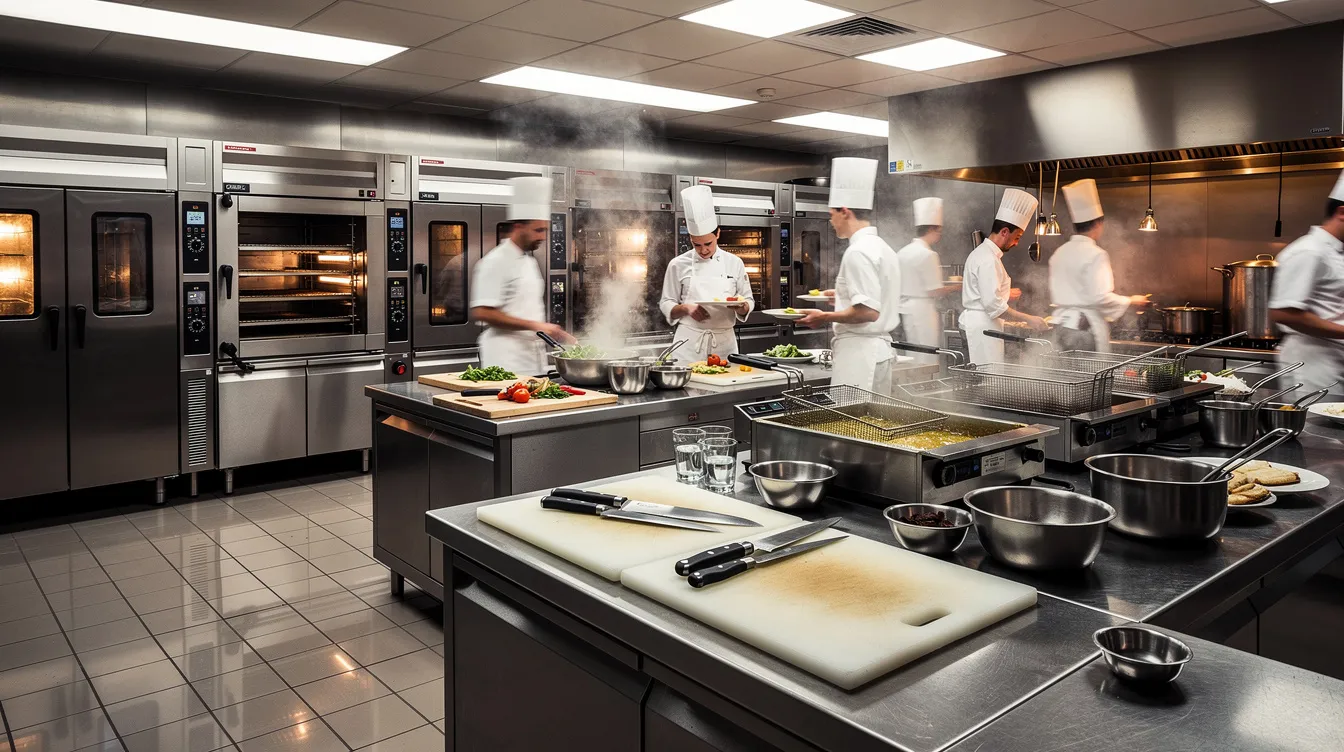
- High concentration of specialized kitchen equipment like commercial ovens, fryers, walk in freezers, hoods, and dishwashing lines
- Dedicated electrical systems, gas lines, and specialized plumbing serving only specific equipment
- Heavy upfront investment in customer-facing finishes: custom millwork, decorative lighting, branded bars, AV systems, and exterior signage
- Site work including drive-thru lanes, menu boards, patios, and expanded parking lots
Because IRS guidance for restaurant cost segregation is relatively mature, a professionally prepared study aligned with proper documentation tends to be both defensible and efficient in audit situations. Restaurants often allocate 35–45% of costs to personal property, making the tax benefits from proper classification substantial.
Restaurant Assets Commonly Reclassified in a Cost Segregation Study
A restaurant cost segregation study inventories and values restaurant assets line-by-line using construction documents, invoices, and site inspections. Here is how qualifying assets are typically classified:
| Asset Category | Examples | Typical Classification |
|---|---|---|
| Kitchen equipment | Grills, fryers, commercial ovens, combi-ovens, walk in freezers, dishwashers, prep tables, grease interceptors | 5-year property |
| Kitchen infrastructure | Electrical circuits, water lines, gas lines, and hood/vent systems dedicated to specific specialized equipment | 5-year property |
| Customer areas | Booths, movable partitions, decorative lighting, wall coverings, artwork, sound systems, decorative elements in dining areas | 5- or 7-year property |
| Bar and beverage systems | Draft beer lines, tap towers, back-bar refrigeration units, specialty ice machines, soda systems, specialized plumbing | 5-year property |
| Land improvements | Parking lots, curbs, sidewalks, outdoor seating slabs, fencing, pole lighting, monument signs, landscaping, irrigation | 15-year property |
Specialized systems like HVAC systems serving only the kitchen, commercial kitchen equipment with dedicated circuits, and specialized plumbing all qualify for shorter depreciation lives when they can be documented as serving specific restaurant operations rather than the building as a whole.
Proper documentation is critical. As-built drawings, MEP plans, equipment schedules, and detailed fixed-asset listings support these asset classifications under IRS rules and protect your tax position during any review.
Financial Impact: How Accelerated Depreciation Affects Restaurant Cash Flow
Front-loaded tax deductions matter enormously in the restaurant industry, where restaurant construction and remodels are capital-intensive and early cash flow can determine whether a location survives its first two years.
Consider this example: a $3.0 million ground-up casual dining restaurant placed in service in 2026 with $2.4 million of depreciable basis. Without cost segregation, nearly all of that depreciates over 39 years-roughly $62,000 per year in depreciation deductions. With a study, assume 40% ($960,000) moves into 5- and 7-year property and 10% ($240,000) into 15-year land improvements. With 100% bonus depreciation now available for qualifying assets, those shorter lived assets can be fully expensed in year one. First-year tax savings can exceed $300,000 for typical restaurant projects of this size, compared to roughly $62,000 under straight-line depreciation.
Those extra deductions reduce your current tax liability and can be used to:
- Cover payroll and food costs during ramp-up
- Reduce debt on build-out or equipment upgrades and loans
- Fund expansion to a second unit, drive-thru addition, or digital ordering system
Depreciation recapture applies when you sell shorter lived assets, but restaurant owners who hold properties for several years typically find the time value of accelerated depreciation and reinvestment opportunities far outweigh that concern. A $5M restaurant renovation can classify many assets as 5- and 7-year property, generating even larger immediate benefits.
When to Conduct a Cost Segregation Study for Your Restaurant
Timing affects both the technical options available and the cash-flow impact, but restaurant owners have more flexibility than many realize.
Ideal timing scenarios:
- New construction: Perform a study the year the restaurant is placed in service so the first return reflects accelerated depreciation and any bonus depreciation
- Acquisitions: When purchasing an existing restaurant property or second-generation space, complete the study in the acquisition year to maximize deductions on the allocable building and leasehold improvements basis
- Major renovation: After significant renovations like a brand refresh, dining room reconfiguration, or equipment upgrades, a targeted study can capture new qualified improvement property and refreshed kitchen or bar assets
Look-back opportunities:
Restaurants can benefit from cost segregation years after a property is placed in service. Taxpayers can utilize lookback studies to capture missed depreciation through an accounting method change using IRS Form 3115. The Section 481(a) adjustment allows a one-time catch-up deduction for missed depreciation in the current year without amending prior returns. This is powerful for restaurants opened as far back as 2006–2010 that never had a study done.
CTA regularly evaluates restaurant properties with a depreciable basis as low as $500,000–$750,000, with multi-unit portfolios and franchise locations often realizing the largest dollar benefits.
How a Restaurant Cost Segregation Study Works with Corporate Tax Advisors (CTA)
The process is structured, documented, and coordinated with your current CPA-not in competition with them.
CTA’s typical workflow for cost segregation restaurants:
- Free initial assessment: Review of prior tax returns, depreciation schedules, construction costs, and lease terms to estimate potential accelerated depreciation and ROI before you commit.
- Data collection: Gathering architectural drawings, contractor pay apps, change orders, equipment lists, and fixed-asset registers. CTA’s engineering-based team maps each asset to IRS-approved asset classes.
- Site visit: Engineers walk the restaurant to confirm asset locations-kitchen lines, bar buildouts, drive-thru lanes, patio structures, and site improvements-and photograph features not obvious in plans.
- Engineering and tax analysis: The team applies IRS guidance, including Restaurant Industry Directive matrices, to assign recovery periods and calculate accelerated depreciation. A quality cost segregation study should be performed by engineers and tax professionals working together.
- Report delivery: CTA prepares a detailed, IRS-defensible report with an asset-by-asset schedule, narrative methodology, and reconciliation to original costs.
CTA works on a contingency or success-based fee structure for many clients-no fee unless tax savings are identified. Most cost segregation studies take four to eight weeks to complete.
FAQs: Common Questions About Cost Segregation for Restaurants
Restaurant owners and franchisees often have recurring questions about eligibility, cost, and audit risk. Here are the most common ones.
Do small, single-location restaurants really benefit from cost segregation?
Yes. While very small projects may not justify the cost, many single-location restaurants with at least $500,000–$750,000 of building and improvement basis see meaningful year tax savings. This is especially true for those opened or remodeled in the last 10–15 years, where look-back deductions can be substantial.
Is cost segregation risky or likely to trigger an IRS audit for my restaurant?
Cost segregation is an IRS-approved tax planning strategy. The restaurant industry has its own IRS directive and matrices specifically for proper treatment of restaurant assets. The key is using a professional, engineering-based study with proper documentation rather than rough estimates.
How long does a restaurant cost segregation study take from start to finish?
Most single-unit studies take about four to eight weeks from engagement to final report, depending on the availability of drawings and invoices. Multi-unit or highly customized flagship locations with leased space may take longer.
What happens if I plan to sell or refinance my restaurant property?
Accelerated depreciation can increase potential depreciation recapture at sale, but many owners still come out ahead due to the time value of money. Planning hold periods and potential 1031 exchanges with a tax advisor can soften recapture impacts on commercial real estate transactions.
Can I combine cost segregation with other tax incentives like R&D credits or energy incentives?
Absolutely. Many restaurant groups pair cost segregation with energy-efficient lighting or HVAC qualifying for Section 179D, or R&D credits for in-house product development. CTA regularly coordinates these incentives into a broader strategy to maximize tax benefits and improve financial performance.
Does it matter if I lease my restaurant space instead of owning the building?
Lessees who fund their own buildouts and tenant improvements can still benefit. The depreciable basis is in the leasehold improvements and restaurant equipment they own, and a cost segregation study can accelerate tax deductions on those assets even without owning the underlying real estate.
Why Choose Corporate Tax Advisors (CTA) for Restaurant Cost Segregation
CTA is a specialized tax incentives firm with deep experience in restaurant cost segregation and related credits since 2014. Key differentiators for restaurant owners:
- Industry experience across quick-service, fast-casual, casual dining, and fine dining concepts, including franchise locations and corporate-owned footprints
- Engineering-driven methodology aligned with IRS guidance for restaurant assets, minimizing audit exposure and ensuring proper classification
- Ability to handle portfolios of 5–50+ locations, standardizing assumptions and documentation across multiple states
- Contingency-based pricing that aligns fees with actual tax benefits delivered
- Complementary incentive studies including energy incentives, jobs and training credits, and R&D credits through a single advisory team
CTA collaborates directly with your existing CPA, providing the technical study and schedules so your accountant can confidently file returns and maximize deductions.
Next Steps: Leverage Cost Segregation to Strengthen Your Restaurant’s Cash Flow
Leveraging cost segregation for restaurants is a proven way to unlock earlier depreciation on kitchen equipment, build-outs, and land improvements. It can accelerate tax deductions and improve cash flow without changing anything about your restaurant operations-just how you classify what you already own.
The best time to act is the year of construction, acquisition, or major renovation. But look-back studies using IRS Form 3115 can still deliver substantial catch-up deductions for restaurants placed in service years ago, helping you reduce taxable income retroactively.
Contact Corporate Tax Advisors for a no-cost initial evaluation of your restaurant or restaurant portfolio. Upload your depreciation schedules, closing statements, and construction cost summaries, and CTA will provide an estimate of potential accelerated depreciation and expected ROI. In a competitive 2026 restaurant market, cost segregation turns fixed assets into strategic financial tools-freeing capital to fund expansion, menu innovation, and technology upgrades that keep you ahead.