Clean energy tax rules can turn a project from “maybe” into “fundable,” but only if you meet the details. A qualified advisor helps businesses, investors, and tax-exempt entities capture the full benefits without creating avoidable IRS risk.

Table of Contents
Use these links to jump to the part most relevant to your clean energy investments:
- See what a clean energy tax credit consultant does
- Review key clean energy tax credits under the Inflation Reduction Act
- Find more credit value with planning strategies
- Turn an energy tax credit into cash
- Learn who can qualify
- See why you should choose our team
- Understand our process
- Read common FAQ answers
- Next Steps
What a Clean Energy Tax Credit Consultant Does (And Why You Need One Now)
A clean energy tax credit consultant helps project sponsors identify opportunities, structure, document, and claim federal, state, and local clean energy tax incentives. Since the 2022 inflation reduction act, many credits apply to property placed in service after 1/1/2023, with major technology-neutral changes after 12/31/2024.
Typical clients include:
- Renewable energy developers building solar, wind, geothermal, biogas, storage, and other renewable energy projects
- Manufacturers producing solar energy components, wind energy components, inverters, qualifying battery components, and applicable critical minerals produced in the United States
- Real estate owners adding solar, heat pumps, storage, or EV charging
- Fleet operators adopting commercial clean vehicles
Working with a clean energy tax credit consultant provides technical compliance expertise, financial modeling, and strategic monetization paths. Consultants interpret regulatory requirements, align construction timelines, assist with IRS documentation, evaluate domestic content and Energy Communities, and coordinate with accounting, legal, finance, and investors. Consultants also ensure compliance with IRS rules and fill out complex tax forms such as IRS Form 5695 and Form 3468.
Core Clean Energy Tax Credits and Incentives You Should Know
The Inflation Reduction Act expanded federal tax credits for clean energy projects beginning construction or placed in service from 2023 through 2032. Clean energy credits function as a dollar-for-dollar reduction of the taxes owed, but the base Investment Tax Credit (ITC) or Production Tax Credit (PTC) can often be multiplied or enhanced through specific qualifiers.
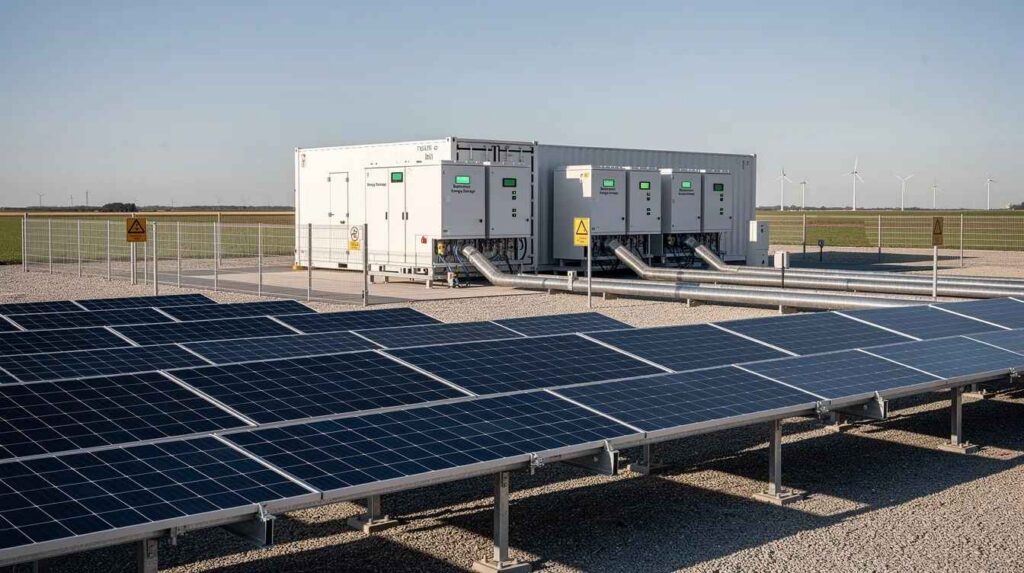
- Investment Tax Credit, Sections 48/48E: Investment tax credits may start at 6% and reach 30% or more; the Clean Energy Investment Tax Credit allows for a credit starting at 6% and potentially increasing to 50% for costs related to energy property placed in service before January 1, 2025.
- Production Tax Credit, Sections 45/45Y: production tax credits reward electricity output from renewable energy sources and other clean electricity technologies.
- Section 48C: supports qualifying advanced energy manufacturing and industrial transition projects.
- Section 45X: The advanced manufacturing production credit applies to U.S.-made components; battery cells can earn about $35/kWh under IRC §45X.
- Section 30C: the Alternative Vehicle Refueling Property Credit provides a maximum credit of 30% of the cost of charging stations, capped at $100,000 per station, with specific location requirements for eligibility.
- Section 45W: Commercial clean vehicle credits can reach $7,500 for lighter vehicles or $40,000 for heavier vehicles.
- Section 45V: clean hydrogen can receive up to $3/kg for the cleanest tier with labor compliance.
To claim the maximum 30% rate for most commercial energy credits, projects exceeding 1 megawatt must fulfill rigorous labor rules. Ensuring all laborers are paid local prevailing wage rates during construction and future alteration phases is required for certain credits, and registered apprentices must log a mandated percentage of total labor hours, 15% for recent projects. If a taxpayer fails prevailing wage requirements, correction can require paying the difference plus interest and a $5,000 penalty per worker, rising to $10,000 for intentional disregard. If labor rules are missed, the credit can be slashed from 30% to 6%.
These tax provisions cover renewable energy, storage, clean hydrogen, carbon dioxide sequestration, clean fuels, and other energy tax credits.
How a Consultant Helps You Capture More Value from the Inflation Reduction Act
The Inflation Reduction Act created new ways to monetize energy credits, including transferability under IRC §6418 and direct pay under IRC §6417. A consultant uses specialized financial modeling to simulate different scenarios based on project scale, technology type, and location.
A consultant can:
- Model ITC vs. PTC, credit value, tax liability, cash timing, and economic return
- Evaluate projects for bonus credits related to Domestic Content Requirements or project locations in Energy Communities
- Assess whether projects qualify for an additional 10% to 20% credit bumps by meeting strict criteria
- Review potential opportunities across facilities, fleets, and manufacturing sites
- Integrate cost segregation, Section 179D, grants, rebates, and other credits and incentives
- Help navigate the pre-registration portal requirements and secure the unique registration numbers required by the IRS
The IRS requires electronic pre-filing registration for eligible taxpayers wanting to transfer clean energy credits or enter the direct pay program, including taxpayer identification and information about each eligible project. See the IRS pre-filing registration guidance.
Monetizing Clean Energy Credits: Transfers, Direct Pay, and Tax Equity
For CFOs and developers, the key question is simple: how do credits become cash?
Under Internal Revenue Code §6418, entities without sufficient tax liability can transfer all or a portion of an eligible clean energy tax credit to an unrelated taxpayer for cash, allowing monetization. The Inflation Reduction Act allows for-profit entities to conduct a one-time transfer of select clean energy credits to monetize them quickly, without creating gross income for the seller or a deduction for the buyer. Consultants assist project owners in selling generated credits to corporate buyers for cash under Section 6418; corporate buyers can purchase credits at a discount, typically $0.93 to $0.95 on the dollar, for immediate tax savings. IRS final transfer rules are summarized here.
Not-for-profit entities can now utilize a direct payment program under Internal Revenue Code §6417, allowing them to receive cash refunds for applicable clean energy credits regardless of tax liability, enhancing their ability to invest in clean energy infrastructure. Direct pay provisions under the Inflation Reduction Act are available for qualified clean energy investments such as solar panels, battery storage systems, and geothermal energy.
For example, a $50 million solar-plus-storage project with a 30% credit may generate $15 million of value before bonuses. Tax equity may still fit large utility-scale renewable energy infrastructure, while a transfer can be faster for eligible taxpayers.
Who Can Benefit Most from Clean Energy Tax Credits?
Clean energy tax credits are not only for utilities. Businesses can utilize the Investment Tax Credit (ITC) or the Production Tax Credit (PTC) to fund major renewable energy infrastructure, while consultants help assess property or business projects to determine qualifying technologies and expenditures.
Strong candidates include:
- Manufacturers investing in U.S. solar, battery, inverter, or clean energy component plants
- Logistics companies are electrifying fleets
- Real estate owners installing rooftop solar or EV charging
- Data centers adding renewable energy and storage
- Industrial companies producing or using clean hydrogen
- Homeowners using the Residential Clean Energy Credit to offset 30% of renewable energy systems, or maximizing the Energy Efficient Home Improvement Credit, Section 25C, for eligible upgrades
State and local incentives, grants, and property tax abatements may stack with federal energy tax benefits. Timelines matter, so plan before procurement and construction, especially after legislative updates like the One Big Beautiful Bill Act (OBBBA), often discussed as the big beautiful bill act, significantly altered clean energy timelines and eligibility.
Why Choose Our Team as Your Clean Energy Tax Credit Consultant
Our team provides comprehensive services for energy tax, clean energy credits, and Inflation Reduction Act planning. We combine deep industry expertise, deep knowledge of available incentives, and specialized expertise in technical diligence.
We support clients with:
- Analysis of Sections 45, 48, 48C, 45X, 30C, 45W, and 45V
- Renewable energy tax credits, renewable energy tax planning, and clean energy tax modeling
- Solar, wind, storage, clean fuels, and clean hydrogen project support
- Eligibility memos, credit calculations, forms, filings, and due diligence
- IRS registration, separate filings for individual clean energy properties, and aggregated attachments, because the IRS requires distinct reporting
- Transparent assumptions, practical strategies, and collaboration with your in-house tax, finance, and legal team
Our proven track record is built on helping companies maximize incentives while keeping documentation defensible under strict IRS guidelines.
Step-by-Step: How We Work With You on Energy Tax Credits
Here is the typical engagement:
- We scan existing and planned clean energy investments.
- We identify eligible technologies, costs, tax incentives, and federal energy tax credits.
- We model credits, transfer options, direct pay, tax equity, and cash impact.
- We prepare a plan for prevailing wage, apprenticeship, domestic content, and Energy Community documentation.
- We assist with applications, pre-registration, forms, and claim support.
- We monitor IRS and Treasury updates that may affect future investment decisions.
This process helps businesses invest with more confidence and pursue sustainability goals with a stronger financial advantage.
Frequently Asked Questions About Clean Energy Tax Credits
How do I know if my project qualifies for federal clean energy tax credits?
Eligibility depends on technology, location, placed-in-service date, ownership, costs, and compliance. A consultant reviews the project, taxpayer status, and documentation before you claim.
What is the difference between the ITC and PTC under the Inflation Reduction Act?
The ITC is based on eligible project cost. The PTC is based on electricity production over time, so it often fits high-output renewable energy projects.
Can I combine state and local incentives with federal energy tax credits?
Often yes, but not always without adjustment. A consultant evaluates the total incentive stack, including rebates, grants, and property tax programs.
What records do I need to keep?
Keep invoices, contracts, wage records, apprenticeship logs, domestic content certifications, placed-in-service evidence, and IRS registration numbers. Tax specialists ensure defensible documentation for strict IRS guidelines, which can increase base credits significantly.
How do transferable energy credits work in practice?
The seller registers the project, negotiates a transfer, documents the sale, and reports it on the return. The buyer uses the credit against tax, subject to IRS rules.
When should I involve a consultant?
Before site selection, procurement, financing, or major construction. Early planning is the best way to qualify, protect funds, and avoid losing benefits.
Next Steps: Evaluate Your Clean Energy Tax Credit Potential
Clean energy incentives can materially reduce costs, but the rules are complex and time-sensitive. Before finalizing 2026–2027 capital budgets, inventory upcoming projects, gather location, cost, technology, and timeline details, and then contact our team for an initial assessment.
The right plan can support a sustainable future while improving financial results.