
Table of Contents
- Introduction: Why Business Energy Tax Credits Matter in 2026
- Basics: How Business Energy Tax Credits Work
- Major Federal Business Energy Tax Credits Under the Inflation Reduction Act
- Who Qualifies? Eligibility Rules for Business Energy Tax Credits
- How to Claim Business Energy Tax Credits: Step-by-Step
- Common Pitfalls and Mistakes to Avoid with Energy Tax Credits
- How Business Energy Tax Credits Support Broader Energy Efficiency Strategies
- FAQs: Business Energy Tax Credits
- Why Choose Our Team for Business Energy Tax Credit Guidance
- Call to Action: Turn Energy Projects into Tax-Smart Investments
Introduction: Why Business Energy Tax Credits Matter in 2026
Federal and state business energy tax credits can reduce the net cost of projects like solar, combined heat and power, fuel cells, EV fleets, and energy efficient retrofits by 30% to 70% of the cost of eligible equipment installation when stacked correctly. Tax credits can significantly reduce federal tax liabilities for businesses, and the window between 2024 and 2026 is one of the most generous periods in U.S. history for these incentives.
An energy tax credit is a dollar-for-dollar reduction of your tax bill, not merely a tax deduction that lowers taxable income. The Inflation Reduction Act locked in and expanded many of these credits into the 2030s, creating a rare opportunity for businesses of all sizes. This guide covers major credits under the Inflation Reduction Act, eligibility rules, real examples with dates and dollar amounts, the claiming process, common mistakes, FAQs, and how professional guidance can help.
Basics: How Business Energy Tax Credits Work
Understanding the mechanics behind energy tax credits is critical before evaluating any project.
A tax credit reduces your tax bill dollar-for-dollar. A $100,000 project with a 30% credit means $30,000 directly off your federal taxes. Compare that to a tax deduction: a $100,000 deduction at a 21% corporate rate saves only $21,000. The difference matters significantly at scale.
Most federal business energy credits are non-refundable, meaning they cannot reduce your liability below zero. However, tax credits can offset federal tax liability under IRC Section 6418, which introduced transferability after 2022. Transferability allows businesses to sell unused credits to other entities for cash. Some businesses can save $1 million by purchasing clean energy credits at a discount through these transfer markets. Direct Pay allows tax-exempt entities to receive cash for credits, and the IRA allows tax-exempt entities to receive direct payments for investments, broadening access to eligible taxpayers who previously couldn’t benefit.
Key IRS code sections to know: Sections 45, 45Y, 48, 48E (energy generation credits), Section 179D (commercial buildings deduction), Section 45W (clean vehicles), and Section 48C (advanced energy manufacturing). This article focuses on the credits most relevant to operating businesses rather than utility-scale developers.
Major Federal Business Energy Tax Credits Under the Inflation Reduction Act
The Inflation Reduction Act of 2022 overhauled the landscape of energy tax credits, locking in many incentives into the 2030s and adding bonuses for domestic content, prevailing wages, and projects in energy communities. The Qualifying Advanced Energy Project Credit allocates competitive credits for manufacturers of clean-energy equipment, and credits for clean energy manufacturing can be obtained under Section 48C for industrial facilities. Below are the core programs most companies should evaluate.
Investment Tax Credit (ITC) for Solar, Fuel Cells & More
The Investment Tax Credit covers solar, wind, and geothermal technologies under Section 48 and its newer technology-neutral counterpart Section 48E. The Federal Solar Tax Credit is 30% for installations until 2032, meaning businesses can receive a 30% tax credit for solar installations placed in service during that period. Eligible technologies include solar, wind, and geothermal systems, as well as solar thermal process heat, solar thermal electric, solar space heat, solar water heat, fuel cells, energy storage, and geothermal heat pumps.
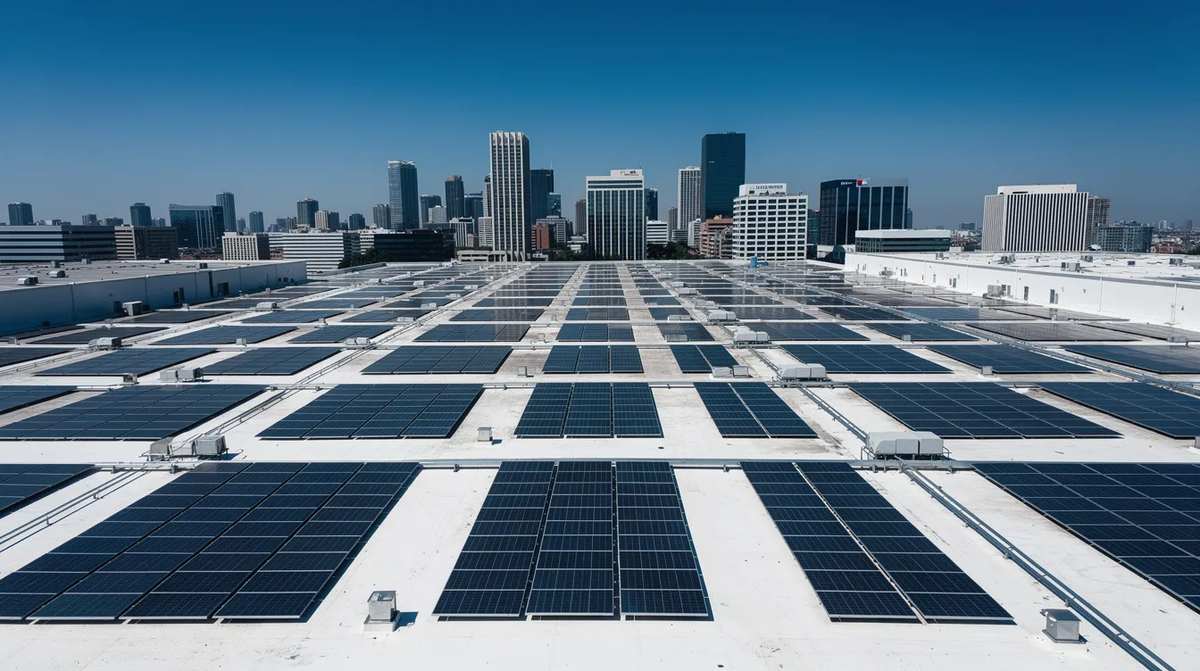
The base credit rate is 6% without meeting labor requirements, jumping to 30% when prevailing wage and apprenticeship requirements are satisfied. Bonus adders of 10 percentage points each for domestic content and energy community siting can push the total to 50% or more. The Federal Solar Tax Credit offers a 30% credit until 2032, with step-downs beginning for projects starting construction after 2033.
Consider this example: a $400,000 commercial solar and storage facility installed in 2026 with full prevailing wage compliance generates a $120,000 base credit at 30%. Add domestic content and energy community bonuses, and that credit climbs to $200,000. Fuel cells can also qualify, typically requiring at least 0.5 kW capacity, with eligible costs including equipment, installation, and interconnection.
Production Tax Credit (PTC) for Energy Generation
The Production Tax Credit applies to renewable energy generation under Sections 45 and 45Y. Instead of a percentage of project cost, the PTC pays an inflation-adjusted per-kWh credit for electricity produced by eligible facilities including wind, some solar, biomass, geothermal electric, and municipal solid waste projects.
At the enhanced rate (with prevailing wage compliance), the credit is approximately $0.015 per kWh. A business-owned 1 MW clean electricity facility producing 4,000,000 kWh annually would earn roughly $60,000 per year for up to 10 years, totaling $600,000. Without meeting labor requirements, that drops to about $12,000 per year. The IRA created technology-neutral versions (45Y) starting in 2025 for facilities with zero or near-zero greenhouse gas emissions. Businesses cannot claim both the ITC and PTC for the same facility, so modeling which generates greater value is essential.
Section 179D: Energy-Efficient Commercial Buildings Deduction
Deductions for building improvements can be claimed under Section 179D for energy-efficient upgrades to commercial and certain multifamily buildings. This is a deduction rather than a credit, reducing taxable income through improvements to lighting, HVAC, building envelope, and hot water systems.
Energy-efficient commercial buildings can earn up to $1.80 per square foot at base rates without prevailing wage compliance. With prevailing wage and apprenticeship compliance, the deduction can reach over $5.00 per square foot, adjusted for inflation. For 2026, values range from approximately $2.97 to $5.94 per square foot with full compliance. Businesses can receive up to $1.80 per square foot for energy-efficient upgrades at the base level, while tax credits for energy-efficient commercial buildings can reach $1.80 per square foot before PWA bonuses are applied.
Example: a 100,000-square-foot warehouse retrofitted in 2025 achieving 35% energy savings with prevailing wage compliance could generate a deduction exceeding $400,000. A qualified professional must certify savings relative to ASHRAE standards using energy modeling, and the U.S. Department of Energy provides tools for this process. Note that Section 179D is terminated for any property whose construction begins after June 30, 2026.
Credits for Clean Vehicles and Charging Infrastructure
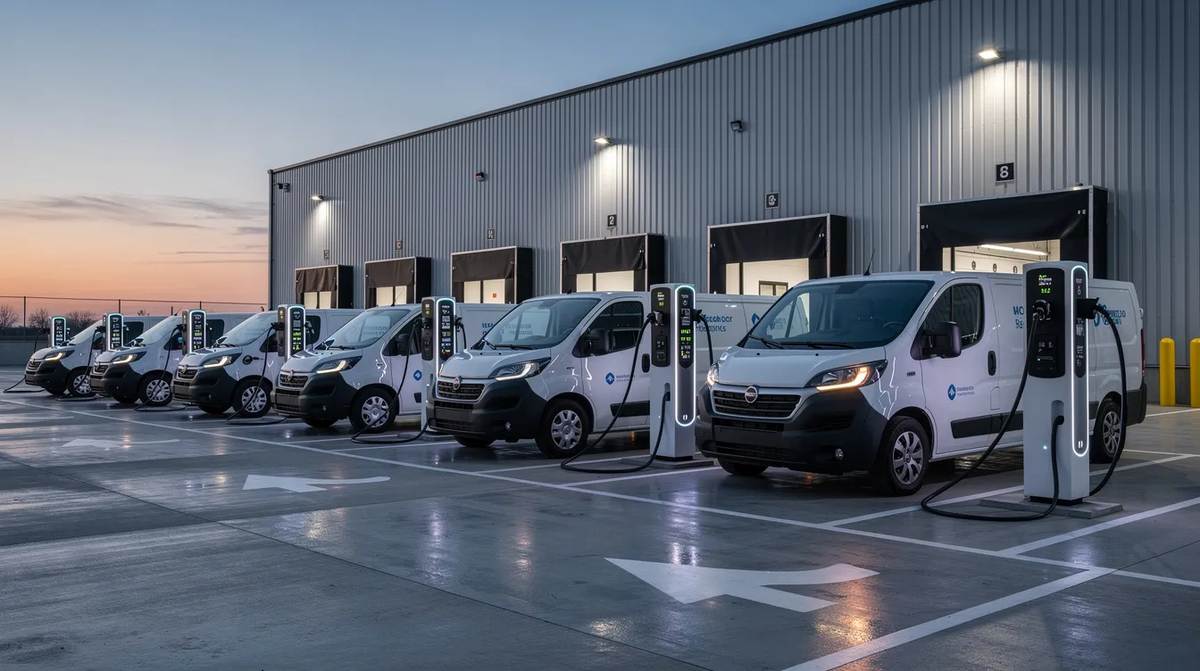
Businesses purchasing qualified clean vehicles could access a commercial clean vehicle credit of up to $7,500 for light-duty vehicles and up to $40,000 for heavy-duty electric or fuel cell vehicles. The credit equals the lesser of 30% of basis (for vehicles with no gasoline or diesel engine) or the incremental cost over a comparable conventional vehicle.
A delivery fleet replacing five diesel vans with battery-electric vans could generate $37,500 in credits plus ongoing fuel and maintenance savings. Separate incentives may exist for EV charging stations under Section 30C, especially in low-income or rural census tracts. Note that the commercial clean vehicle credit under Section 45W is not available for vehicles acquired after September 30, 2025, so this window has closed for new acquisitions.
Combined Heat and Power, Fuel Cells, and Other Advanced Systems
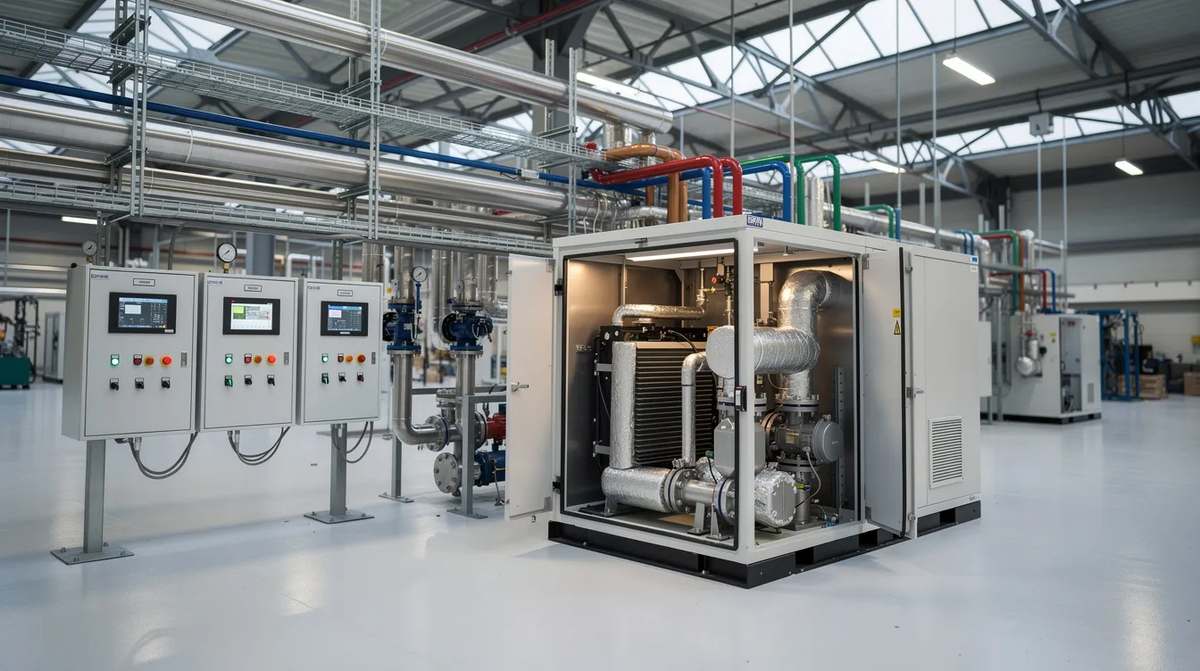
Combined heat and power systems generate electricity and useful heat from a single fuel source, often natural gas, achieving energy efficiency above 60%. These systems qualify for ITC-type benefits and can capture waste heat for process steam, geothermal direct use applications, or building heating.
Fuel cells and CHP projects may qualify for bonus incentives when located in energy communities or low-income areas, or when meeting domestic content rules. A food processing plant installing a CHP system that captures waste heat can cut energy costs dramatically while unlocking a 30% or higher credit on the project cost. Projects involving alternative energy technologies like geothermal electric systems or oil-to-renewable conversions may also qualify depending on emissions profiles and performance standards.
Who Qualifies? Eligibility Rules for Business Energy Tax Credits
Eligibility depends on entity type, project characteristics, location, and compliance with labor and technical standards.
C-corporations, S-corps, partnerships, LLCs, and certain tax exempt organizations can claim credits. Tax exempt entities can use elective pay or transfer rules to monetize incentives. The treasury department and IRS publish guidance on which entities qualify for each program.
Projects must meet these baseline conditions:
- Property must be placed in service during the qualifying tax year
- Must be new property (original use begins with the taxpayer)
- Must be used in a trade or business
- Must meet minimum performance thresholds (energy savings benchmarks for 179D, emissions rates for 48E)
Prevailing wages and apprenticeship requirements are critical for the full credit. A 15% apprenticeship requirement applies for certain tax credits, measured as a percentage of total labor hours performed by qualified apprentices from registered programs. Without compliance, the credit drops from 30% to the 6% base credit, representing a massive reduction in value.
Geographic bonuses can add 10 percentage points each for projects in energy communities (areas with high fossil fuel employment or closed coal facilities) and low-income census tracts. These stack with the base credit and domestic content bonuses, meaning a single project could reach a maximum credit percentage equal to 50% or more of eligible costs.
How to Claim Business Energy Tax Credits: Step-by-Step
Step 1: Planning and feasibility. Begin tax planning before signing construction contracts. Align system design, labor agreements, procurement sources, and project timeline with credit rules and bonus incentives.
Step 2: Documentation during construction. The IRS requires specific documentation for tax credit applications. Keep detailed invoices, equipment specs, commissioning reports, interconnection agreements, and labor records showing prevailing wage and apprenticeship compliance. A portion of your project budget should cover documentation management.
Step 3: Certification and studies. Section 179D and some state incentives require third-party certifications. Engage a licensed engineer to model energy savings compared with ASHRAE 90.1 standards. For production credits, establish metering to verify electricity produced.
Step 4: Filing tax forms. Businesses typically claim credits on federal returns using forms like Form 3468 for investments. Clean vehicle credits use separate schedules. Check current IRS instructions for your tax year, as forms change periodically.
Step 5: Transferability and monetization. If your business cannot fully use credits, you can sell them under Section 6418 transferability rules. A mid-size manufacturer with $500,000 in credits and insufficient tax liability might sell those credits at 90 cents on the dollar, generating $450,000 in cash. This creates real money and interest from tax credit buyers in active markets.
Coordinate tax, finance, and energy advisors before construction starts. Missing a procedural step can determine whether you capture the full value or lose eligibility entirely.
Common Pitfalls and Mistakes to Avoid with Energy Tax Credits
Starting construction without understanding prevailing wage and apprenticeship rules is the most expensive mistake. Failing to pay workers the Department of Labor-determined rate or missing the apprentice-to-journeyworker ratio drops your credit from 30% to 6%.
Incomplete documentation causes IRS challenges. Missing commissioning reports, unclear cost breakdowns between eligible and ineligible components, or gaps in labor records can lead to denied credits or reduced refund amounts.
Assuming state and federal incentives always stack without limits is risky. Some state rebates reduce the eligible cost basis for federal credits, changing the net benefit. Model the combined value before committing capital.
Overestimating energy savings for Section 179D by using unrealistic baselines will not survive independent review. Standards-based modeling by an independent engineer is essential.
Timing errors like claiming a credit in the wrong tax year, misjudging when property is placed in service, or missing amended return deadlines for retroactive claims can void benefits entirely. Some businesses lose eligibility during a period of permitting delays they failed to anticipate.
Use tax professionals familiar with energy incentives. Generic software and non-specialist preparers frequently miss bonus adders or misapply construction commencement rules.
How Business Energy Tax Credits Support Broader Energy Efficiency Strategies
Energy upgrades reduce ongoing operational costs and promote sustainability. Tax credits for energy-efficient technologies can lower operational costs while advancing decarbonization goals. These credits should be viewed as components of a long-term energy efficiency roadmap, not isolated transactions.
A multi-site retailer might phase upgrades strategically: year one LED retrofits with 179D deductions, year two rooftop solar with the ITC, year three electric delivery vans with clean vehicle credits and chargers. Each phase builds on the savings from the prior one, creating compounding returns and reducing exposure to volatile utility rates for power and natural gas.
Aligning projects with local utility rebates, state grants, and green financing (PACE, green bonds, sustainability-linked loans) can further lower payback times. Alternative financing structures can generate equal or greater returns when combined with federal incentives. Track actual kWh savings versus projected performance after installation to refine future investment decisions and maintain audit-ready evidence.
FAQs: Business Energy Tax Credits
What is the difference between an energy tax credit and an energy efficiency deduction like Section 179D? A tax credit reduces your tax bill dollar-for-dollar. A $50,000 credit means $50,000 less in taxes paid. A deduction reduces your taxable income, so a $50,000 deduction at a 21% tax rate saves only $10,500. Credits deliver significantly more value per dollar of project cost.
How long will the 30% solar tax credit last for businesses? The Federal Solar Tax Credit offers 30% for solar installations placed in service through 2032 under current law. Step-downs begin for projects starting construction after 2033, so verify the exact percentage for your planned service date.
Can my small business with low taxable income still benefit from energy tax credits? Yes. Post-IRA transferability rules let you sell credits for cash. A business with $200,000 in credits and minimal liability could sell them at 85-92 cents on the dollar, generating immediate cash without needing tax capacity.
Do leased buildings qualify for energy efficiency incentives? Both owners and certain long-term lessees can benefit, especially under Section 179D, provided they bear the cost of improvements and the building meets technical performance criteria.
Are state and utility incentives taxable, and do they reduce my federal credit? Many rebates reduce the eligible cost basis for federal credits, which in turn reduces the credit amount. Confirm the treatment of each incentive with a tax professional before finalizing project economics.
How much documentation do I need to keep for an IRS audit of my energy tax credits? Retain contracts, invoices, technical specs, certification reports, energy models, and labor records for at least seven years. Large projects should keep records indefinitely given the dollar amounts at stake.
Can I claim credits for projects completed before the Inflation Reduction Act? Some projects placed in service in earlier years qualify under pre-IRA rules and may be claimed on amended returns within the standard statute of limitations, typically three years from the original filing date.
Why Choose Our Team for Business Energy Tax Credit Guidance
Our team has hands-on experience modeling and documenting projects that combine solar, energy efficient retrofits, combined heat and power, and fuel cells. We have helped businesses reduce project payback periods by several years through proper credit optimization.
We track evolving IRS guidance, DOE standards, and state incentive programs continuously, so clients are never relying on outdated pre-IRA rules. From feasibility studies and project scoping through coordinating with engineers on 179D certifications to preparing workpapers that integrate with your CPA or internal tax department, we handle the full process.
Transparency and risk management define our approach. We clearly outline assumptions, credit estimates, and audit-readiness so your leadership can make informed, defensible investment decisions.
Call to Action: Turn Energy Projects into Tax-Smart Investments
The 2024–2026 window offers some of the most generous business energy tax credits in U.S. history, but key deadlines are approaching fast. Section 179D ends for new construction after June 30, 2026, and several bonus provisions have defined phase-out schedules.
Schedule a consultation to review your facilities, upcoming capital plans, and potential eligibility. Share recent utility bills or basic project specs, and we can estimate your potential credit value within days.
Contact us today to turn your next energy upgrade into a tax-smart, cash-flow-positive investment.