If you’re researching clean energy investments or manufacturing projects, understanding tax incentives is essential. This guide breaks down what ITC means, how the Investment Tax Credit works in 2026, and how to determine whether your project qualifies.
Table of Contents
- What does ITC mean?
- Common meanings of ITC in business and tax
- How the Investment Tax Credit works in 2026
- Types of ITCs in clean energy and manufacturing
- ITC vs PTC: what’s the difference?
- Who is eligible for the ITC?
- How to claim the ITC
- Transferable ITCs and the tax credit market
- FAQs about ITC
- Conclusion
What does ITC mean?
In U.S. tax planning, what does ITC mean? ITC stands for Investment Tax Credit, a federal incentive that provides a dollar-for-dollar reduction in income taxes based on a percentage of qualifying capital investment.
In 2026, ITC most often refers to clean energy investment tax credits created and expanded by the Inflation Reduction Act of 2022. The ITC allows taxpayers to deduct a significant portion of the cost of installing renewable energy systems from their federal taxes, including systems like solar, wind, and geothermal. Eligibility criteria for the ITC, such as ‘energy community,’ are clearly defined by the IRS and other regulatory authorities, ensuring that only projects meeting specific requirements qualify. Each renewable energy source must meet applicable requirements.
The credit structure works simply: if your project’s eligible costs total $100 million and you qualify for a 30% base credit, you receive a $30 million reduction in tax liability. This provides a significant advantage to businesses and investors by making renewable energy projects more financially attractive. Projects meeting all bonus criteria can achieve effective rates of 40% or higher. These eligible project costs determine the value of the credit.
The expansion of the ITC has contributed to significant growth in the U.S. clean energy sector and played a major role in project development.
Common meanings of ITC in business and tax
The acronym ITC has several distinct meanings depending on the industry, including tax-related mechanisms, international trade regulation, and specialized fields like science and design.
U.S. Investment Tax Credit: Federal tax incentive under IRC Sections 48, 48E, and 48C for energy and manufacturing investments.
International Trade Commission: The International Trade Commission is an independent U.S. federal agency that investigates trade issues, such as the impact of subsidized imports and intellectual property infringement.
Input Tax Credit (GST): Input Tax Credit is used in Value-Added Tax or Goods and Services Tax systems, allowing businesses to recover the tax paid on business purchases. India’s GST framework uses this mechanism extensively.
Other technical meanings: Isothermal Titration Calorimetry is a laboratory technique used in biochemistry to measure heat changes when molecules bind. Installation Test Certificate certifies that equipment has been installed and tested to standards. Even Intermittent Traffic Control, a traffic management technique used during film productions to briefly stop traffic for shooting, shares the abbreviation.
For U.S. tax planning and clean energy investment, ITC almost always refers to the federal Investment Tax Credit.
How the Investment Tax Credit works in 2026
The modern ITC structure was overhauled by the Inflation Reduction Act in August 2022. The credit applies to projects beginning construction between 2023 and 2032, with phase-downs triggered afterward.
The ITC is calculated as a percentage of a project’s eligible costs when the project is placed in service. The current investment tax credit of 30% has been extended through 2032, with step-downs in subsequent years. Projects that don’t meet prevailing wage and apprenticeship requirements receive only a 6% base rate. This can have a material effect on project economics.
Additional bonuses can increase the effective credit:
- 10% for domestic content compliance
- 10% for projects located in energy communities
- Up to 20% for low-income community projects
The maximum potential investment tax credit is 50% of a project’s eligible costs when combining all bonuses. Key code sections include legacy Section 48, technology-neutral Section 48E for projects starting construction after December 31, 2024, and Section 48C for advanced energy manufacturing.
Types of ITCs in the clean energy and manufacturing space
There isn’t just one ITC. Multiple investment tax credits target different segments of the clean energy economy.
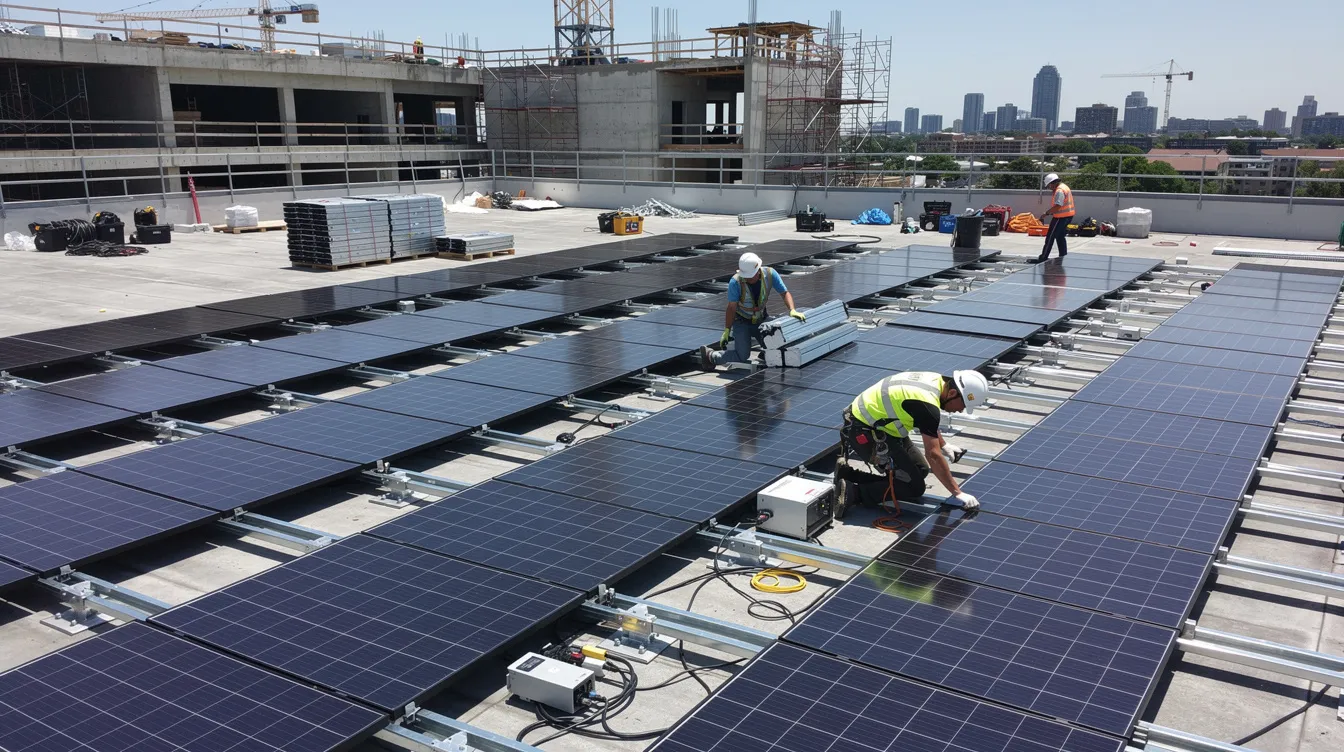
Energy generation property: Covers solar panels, wind turbines, and battery storage systems. A utility-scale solar farm placed in service in 2026 can utilize the full 30% base rate plus applicable bonuses.
Low-income community ITC: Section 48(e) adds 10-20% for facilities under 5MW through annual DOE capacity allocation. The 2024 round awarded 700MW, with applications for 2026 projects opening in Q1.
Advanced manufacturing ITC (48C): Targets U.S.-based factories producing solar modules, EV battery components, or critical minerals. Qcells’ Dalton, Georgia solar module plant leveraged 48C for substantial credit on $3.7 billion in investment. These credits foster innovation by encouraging R&D and technological advancements in clean energy manufacturing and can generate a substantial refund opportunity.
ITC vs PTC: what’s the difference?
Both the Investment Tax Credit and Production Tax Credit were expanded by the IRA to accelerate clean energy deployment. Understanding the difference helps developers and businesses investing in renewable energy choose the right structure.
The Investment Tax Credit provides an upfront tax benefit based on a percentage of the project’s eligible costs, while the Production Tax Credit offers ongoing benefits based on actual energy production over time, typically for 10 years.
Calculation method
ITC is calculated as a percentage of eligible basis. A $100 million project at 30% yields a $30 million credit upfront.
For projects placed into service after December 31, 2021, the PTC offers rates of 0.6 cents per kilowatt-hour for wind, closed-loop biomass, geothermal, and solar energy facilities. The ITC value is known early in project life, improving funding certainty.
For manufacturing credits under 45X PTC, calculation is based on quantity or cost share of eligible components, contrasting with 48C ITC which remains investment-based.
Eligible projects and strategic choice
Many clean energy projects, including utility-scale solar and onshore wind, may elect either credit under post-IRA rules. The choice affects project economics significantly.
A smaller community solar project often favors ITC for immediate cash flow benefit. A large wind farm with high capacity factor might prefer PTC’s 10-year production stream. Developers must weigh capacity factor, financing structure, tax appetite, and bonus eligibility when making this financially attractive decision.
Duration, sunset dates, and policy changes
The ITC is a one-time credit available in the year the project is placed into service, whereas the PTC has an eligibility period of 10 years after equipment is placed into service, creating different financial implications for project developers.
Extensions from the IRA run through at least 2032, shifting to technology-neutral credits 48E and 45Y for projects starting construction after 2024. Legislative changes remain possible—check current guidance before making investment decisions.
Who is eligible for the ITC?
Generally, U.S. taxpayers—corporations, partnerships, and individuals—that place qualifying property in service during the tax year may be eligible to claim the credit.
To qualify for the Investment Tax Credit, the property must be placed into service during the tax year and must meet specific eligibility requirements related to renewable energy systems. This applies to developers, commercial facility owners, manufacturers, and residential homeowners installing solar or storage. Eligible manufacturers or project owners must apply to the IRS to receive certification and claim the ITC.
Eligibility depends on property type, construction timing, service date, and compliance with wage, apprenticeship, and domestic content rules. Through 2024, over 15,000 commercial projects claimed ITCs totaling $15.4 billion. Successfully navigating these requirements is critical.
Special categories: farmers, manufacturers, and nonprofits
Farmers installing biogas digesters, solar, or geothermal systems can qualify while coordinating with USDA grants. Manufacturers compete for 48C allocation through DOE application rounds—2024’s second round applications closed March 2025.
Nonprofits and public entities may utilize direct pay under Section 6417 to monetize credits without taxable income. Schools and municipalities claimed $2.5 billion through this mechanism in 2024.
How to claim the ITC
The federal ITC is claimed in the tax year qualifying property is placed in service. Claiming the ITC involves submitting IRS Form 3468 along with your tax return, and it is essential to maintain proper documentation to substantiate your claim during an audit.
Pass-through entities allocate credits to owners via K-1 schedules according to partnership agreements. Taxpayers must substantiate eligible basis through detailed invoices, construction contracts, and interconnection costs.
Engage tax advisors early to ensure documentation supports prevailing wage compliance and domestic content certification. Retain engineering reports and labor records—audit defense depends on complete records. These records should be properly set aside and maintained.
Transferable ITCs and the growing tax credit market
The IRA created transferability, allowing ITCs and PTCs to be sold to unrelated taxpayers for cash starting with 2023 tax years. The transfer market exceeded $80 billion in 2023-2025 transactions.
Project owners earn the credit, then sell to buyers who offset their own federal tax liability. Pricing typically runs 90-95 cents per dollar of credit value. This structure helps developers monetize credits even without sufficient tax appetite, expanding access beyond traditional tax equity.
FAQs about ITC
What does ITC stand for in taxes? ITC stands for Investment Tax Credit, a federal incentive reducing income tax liability based on qualifying capital investment in energy or manufacturing property.
Can homeowners still claim solar ITC in 2026? Yes. Residential solar installations qualify under Section 25D at 30% through 2032, covering equipment and installation costs.
How long will the ITC be available? The 30% rate extends through 2032 for qualifying projects, with scheduled step-downs to 26%, 22%, and 15% for 2033-2035 starts unless Congress extends it.
Can ITC combine with state incentives? Yes. California, New York, Texas, and other states offer separate rebates or credits that layer with federal ITC, reducing total cost further.
Is International Trade Commission the same as Investment Tax Credit? No. The International Trade Commission investigates trade issues like dumping and IP infringement. Unlike the tax credit, it’s a regulatory agency unrelated to tax benefits.
Conclusion: turning ITC knowledge into real project value
ITC stands for Investment Tax Credit—a pivotal role making clean energy and manufacturing investment financially attractive. Understanding eligibility, the difference between ITC and PTC, and transferability rules can significantly support your project economics through 2032 and beyond.
Review your upcoming capex plans—new facilities, equipment upgrades, or renewable installations scheduled for 2026-2028—through the lens of ITC eligibility. With proper structure and compliance, you can transform policy understanding into concrete dollar-for-dollar tax savings.
Ready to learn how ITC applies to your project? Visit our website to schedule a consultation and assess your opportunities.