
Table of Contents
- Introduction: Why Cost Segregation Analysis Matters in 2026
- What Is a Cost Segregation Analysis?
- How a Cost Segregation Study Works Step by Step
- Asset Classes Identified in a Cost Segregation Study
- Tax Benefits and Cash-Flow Impact
- Risks, Limitations, and Common Misconceptions
- When a Cost Segregation Analysis Makes Sense
- FAQ About Cost Segregation Analysis
- Conclusion & Next Steps
Introduction: Why Cost Segregation Analysis Matters in 2026
If you own commercial real estate or residential rental property, you’re likely depreciating your building over 27.5 or 39 years while paying substantial taxes today. But what is a cost segregation analysis? It’s an engineering-based tax strategy that identifies building components eligible for accelerated depreciation over 5, 7, or 15 years instead of the standard long recovery periods, helping reduce future tax payments.
Tax savings realized today are worth more than the same savings spread out over 27.5 or 39 years due to the time value of money. With the Tax Cuts and Jobs Act of 2017 creating bonus depreciation and ongoing debates about restoring 100% bonus depreciation through 2026, the timing couldn’t be more relevant. Higher interest rates have amplified the value of immediate cash flow strategies for real estate investors.
This guide is for commercial building owners, multifamily investors, medical office operators, retail center owners, industrial property holders, and short-term rental owners with significant improvements. If your property was placed in service after 1987 and has a substantial cost basis, keep reading to understand how this incredible tax savings strategy can work for you.
What Is a Cost Segregation Analysis?
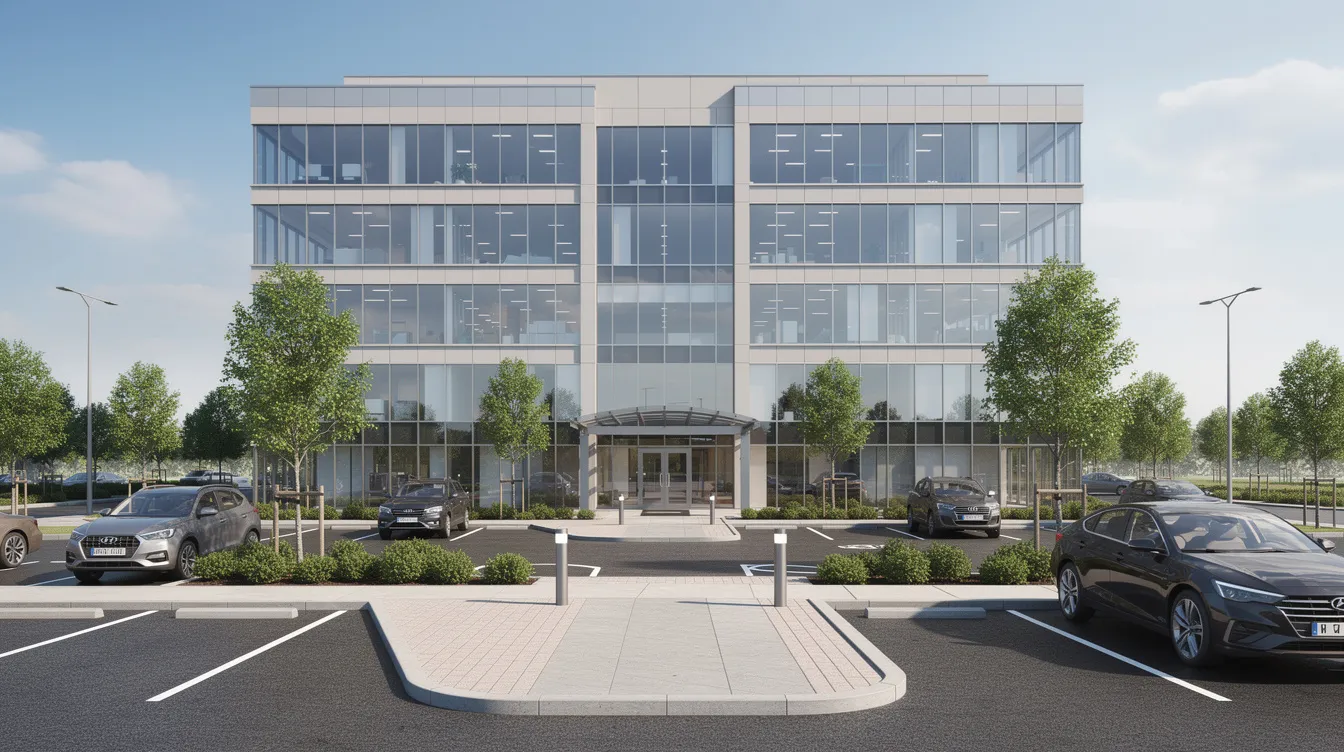
A cost segregation analysis is an engineering-based tax study that breaks a building’s total cost into individual components. The goal is to identify which components can be depreciated over 5, 7, or 15 years rather than the standard 27.5 years for residential rental property or 39 years for nonresidential real property.
This approach isn’t a loophole. The IRS formally recognized cost segregation through the 1997 Hospital Corporation of America v. Commissioner court case, which upheld reclassifying building components for faster depreciation. The IRS Cost Segregation Audit Techniques Guide (ATG), released in 2004, provides detailed methodologies that both auditors and taxpayers follow.
Professional engineers and tax experts dissect the property into different MACRS class lives: 5-year assets include personal property like carpeting and cabinets; 7-year assets include office furniture; 15-year assets include land improvements such as parking lots; and 27.5 or 39-year assets include the structure of the building itself.
Cost segregation identifies building costs that would typically be depreciated over a 27.5 or 39-year period and reclassifies them to permit a shorter, accelerated method of depreciation. Common examples of reclassified components include:
- Decorative lighting and accent fixtures
- Specialty electrical for medical equipment or manufacturing lines
- Dedicated HVAC systems for server rooms
- Custom millwork and built-in cabinetry
- Parking lots, sidewalks, and landscaping
Real property eligible for cost segregation includes buildings that have been purchased, constructed, expanded, or remodeled since 1987. A formal engineering-based study is typically cost-effective for buildings purchased or remodeled at a cost greater than $750,000, depending on the eligible asset’s value.
How a Cost Segregation Study Works Step by Step
A quality cost segregation study is a collaborative effort between tax professionals and engineers, following a clear process designed to withstand IRS review. Here’s what the process looks like:
1. Feasibility and Tax Benefit Screening
The process begins with modeling projected tax savings against study costs. A cost segregation analysis is most effective for properties with a depreciable basis of at least $500,000 to $1,000,000. Factors considered include the property’s cost basis, your marginal tax rate, and intended hold period. Benefits should substantially exceed fees—typically by 3-5 times.
2. Data Gathering and Document Review
Your tax team collects closing statements, construction draws, architectural blueprints, MEP plans, and cost ledgers. This documentation establishes the total qualified basis excluding land value. Conducting a cost segregation study requires thorough documentation and coordination between tax professionals and engineers to ensure compliance with IRS guidelines.
3. Engineering and Site Analysis
Engineers conduct a site inspection—physical or virtual—photographing, measuring, and interviewing property managers. Even without complete blueprints, unit cost databases like RSMeans provide estimation benchmarks for quantifying components.
4. Asset Classification and Depreciation Modeling
Using engineering takeoffs, costs are allocated into MACRS classes. This includes pro-rata allocation of soft costs (typically 10-20% of basis) like architect fees and permits. A high-quality cost segregation study relies on detailed construction analysis, engineering judgment, and tax law expertise to properly classify assets.
5. Final Report and Implementation
The deliverable is a comprehensive cost segregation report—often 50-200+ pages—listing assets by appropriate class life category with quantities, cost estimates, and IRC citations. A professional cost segregation study provides IRS-compliant documentation for audit defense. The ideal time to perform a cost segregation study is immediately after, or as close as possible to, the date a property is acquired, newly constructed, or placed in service.

Asset Classes Identified in a Cost Segregation Study
The core output of a cost segregation analysis is the reclassification of various building assets into specific MACRS recovery periods. Most building projects end up split among 5-year, 7-year, 15-year, and 27.5 or 39-year property, each with different depreciation speeds.
Classification depends on how each component functions and its permanence of attachment—not just appearance. Engineering judgment and internal revenue code interpretation both matter. A well-documented classification map becomes a long-term asset management tool for tracking components during future renovations and dispositions.
Five-Year Property
Five-year property generally covers tangible personal property assets with short useful lives. This includes specialized equipment-related electrical, data cabling, movable partitions, and certain decorative fixtures.
Specific examples by property type include:
- Retail stores: Point-of-sale wiring, display lighting, and signage
- Medical facilities: Exam room cabinetry, medical gas systems, and dedicated outlets
- Manufacturing plants: Dedicated power runs for production lines
- Office buildings: Built-in audio-visual systems and data/comms cabling
Five-year assets often represent 10-25% of total depreciable cost for typical office or retail properties. Specialized facilities like medical offices or manufacturing plants may see even higher percentages—sometimes 40-50% of basis.
Seven-Year Property
Seven-year property covers assets with moderate useful lives, typically including office furniture, fixtures, and select equipment not integral to the building structure.
Examples include modular workstations, reception desks, non-load-bearing shelving systems in warehouses, and restaurant bar fronts that function more like furniture than permanent structure.
In many commercial buildings, 7-year property represents a smaller portion of the study than 5-year or 15-year property but still contributes meaningfully to accelerating depreciation deductions.
15-Year Property (Land Improvements)
Fifteen-year property primarily covers land improvements outside the building envelope. These property related costs include:
- Asphalt parking lots and concrete drive lanes
- Curbs, gutters, and sidewalks
- Landscaping and retaining walls
- Site lighting poles and exterior signage foundations
Large developments—industrial parks or multifamily complexes built between 2010-2025—often have substantial 15-year land improvement costs. In years with enhanced bonus depreciation, 15-year property has been fully deductible in the first year, dramatically improving cash flow.
27.5- or 39-Year Property
The 27.5-year classification applies to residential real estate while 39-year applies to nonresidential commercial property. These cover core structural elements: foundations, structural framing, load-bearing walls, roofs, main plumbing risers, primary HVAC distribution, elevators, stairwells, and fire-protection systems.
The purpose of cost segregation isn’t eliminating long-life property—it’s carving out components that legitimately qualify for shorter lives. A typical study reclassifies 15-40% of total depreciable basis into shorter-life categories depending on property type and build-out level.
Tax Benefits and Cash-Flow Impact of Cost Segregation
The primary benefit centers on time value of money: accelerating depreciation reduces taxes earlier in the property’s life, boosting near-term cash flow and investment returns. Identifying components for reclassification can significantly reduce taxable income in the early years of ownership and highlight the tax benefits of cost segregation.
Consider a $5 million commercial building acquired in 2024. A cost segregation study might reallocate $1-2 million into 5, 7, and 15-year classes. At a 37% tax rate, this generates six-figure first-year depreciation expense savings compared to straight-line 39-year depreciation.
Cost segregation studies can create federal tax benefits ranging from $30,000 to $200,000 for every $1,000,000 invested in a property, depending on property type and tax situation. For every $1,000,000 invested into a property, accelerated depreciation through cost segregation can create $30,000 to $200,000 in federal tax benefits, enhancing cash flow.
Secondary benefits include improved internal rate of return on real estate assets, more capital for renovations or acquisitions, and better alignment between depreciation deductions and holding periods. The detailed fixed-asset record also supports future planning for remodels and energy-efficiency upgrades.

Increased First-Year Deductions and Bonus Depreciation
Reclassified 5, 7, and 15-year assets may be eligible for bonus depreciation, allowing a large portion of those construction costs to be written off immediately. Bonus depreciation allows investors to deduct a massive portion—sometimes 100%—of reclassified assets with a life of 20 years or less in the very first year.
With the restoration of 100% bonus depreciation, assets with recovery periods of five, seven, and 15 years can be fully expensed in the year they are placed in service, enhancing the immediate tax benefits of cost segregation studies. Through 2022, qualified production property and qualified improvement property received 100% bonus treatment, with phase-downs to 80% in 2023, 60% in 2024, 40% in 2025, and 20% in 2026.
Here’s a concrete example: reallocating $800,000 into bonus-eligible classes could generate $800,000 of extra first-year depreciation. For a high-bracket taxpayer, that translates to $250,000-$300,000 in federal tax liability reduction. Even without bonus depreciation, front-loading 5, 7, and 15-year depreciation materially accelerates deductions compared to straight-line schedules, making it an incredible tax savings strategy for many investors.
The net present value savings from a cost segregation study can provide a high return on investment, often cited as $15 in tax savings for every $1 spent on the study.
Ongoing Cash-Flow and Planning Advantages
Front-loading depreciation reduces taxable income in the early years of ownership, leaving more cash available for reinvestment or debt reduction. Cost segregation can significantly improve cash flow by accelerating depreciation deductions, which reduces taxable income during the critical early ownership period.
By shortening the tax life of property assets, cost segregation allows property owners to free up cash flow for further investments or business needs, improving financial flexibility. Improved cash flow can enhance debt-coverage ratios, making it easier to meet loan covenants or refinance under better terms.
Cost segregation enables owners to write off the remaining cost of components like roofs or HVAC units when they are replaced, rather than continuing to depreciate a non-existent asset. This supports future tax strategies such as partial asset dispositions during capital expenditures. A professional study offers audit protection by providing a detailed, engineering-based breakdown of property, making it more likely to withstand IRS review.
Risks, Limitations, and Common Misconceptions
While cost segregation delivers significant tax savings, it isn’t risk-free or universally appropriate. Property owners should understand both benefits of cost segregation and potential downsides before proceeding.
Study costs scale with property complexity. Typical ranges run $5,000-$15,000 for $1-5 million properties and $20,000-$50,000+ for $20 million+ construction projects. Benefits should substantially exceed fees to justify the investment. Choosing the right cost segregation company matters.
Recapture Tax may apply when the property is sold. Accelerated depreciation is taxed at ordinary income rates (up to 25% unrecaptured Section 1250 gain) rather than lower capital gains rates. This can erode 10-20% of tax benefits if you sell within five years, though long holds or 1031 exchanges mitigate this risk.
Low-quality studies—AI-only or template-based approaches lacking an engineering or construction background—risk IRS challenges. This can lead to accuracy penalties or full recharacterization of asset classifications. When conducted by experienced professionals following IRS regulations, the main risk is timing (shifting deductions forward), not losing deductions entirely.
Downsides and Situations Where It May Not Be Ideal
Cost segregation may not suit every situation:
- Short hold periods: Flipping within 1-3 years means depreciation recapture dominates any benefit
- Net operating losses: If you have no current taxable income, accelerated deductions provide limited immediate value
- Small properties: Buildings under $500,000 basis often don’t generate enough savings to justify study fees
- Tax-exempt entities: Organizations without tax liability don’t benefit from depreciation deductions
Using unsupported or overly aggressive classifications that the IRS later challenges can result in understatement penalties. Coordinate with a cost segregation specialist before commissioning a study to model both current-year and long-term effects under applicable tax laws. Consider state tax implications as part of your comprehensive tax plan.
A catch-up deduction can be claimed for missed depreciation using IRS Form 3115 without amending past tax returns if a study is done on a property owned for several years. This enables immediate retroactive savings for existing property owners.
When a Cost Segregation Analysis Makes Sense
Properties placed in service after 1987 with depreciable basis of at least several hundred thousand dollars often warrant a feasibility review. Cost segregation studies can be performed on properties that have been purchased, constructed, expanded, or remodeled since 1987, with a formal study being most cost-effective for buildings valued over $750,000.
Categories that typically see strong results include:
- Multifamily communities with extensive land improvements
- Hotels with specialty FF&E
- Medical office buildings and surgery centers
- Manufacturing and distribution centers
- Auto dealerships with significant lot improvements
- Retail centers with tenant build-outs
- Office buildings with leasehold improvements
Eligible properties for cost segregation studies include a wide range of commercial real estate such as offices, retail centers, warehouses, hotels, restaurants, medical facilities, and specialized assets like manufacturing plants and auto dealerships.
Cost segregation studies can be performed retroactively, allowing property owners to capture depreciation benefits from previous years using a “look-back” study. Retroactive cost segregation analyses can apply to properties as far back as 1987, often yielding substantial one-time deductions through recapture unrecognized depreciation.
New construction, renovations, and leasehold improvements are eligible for cost segregation studies, as many building components within these construction projects can be depreciated faster than the building as a whole. Consider your tax burden, expected hold period, financing structure, and upcoming renovations when deciding whether to order a cost segregation study immediately.
FAQ About Cost Segregation Analysis
What is a cost segregation analysis?
It’s an engineering-based study that separates a property’s purchase price into component parts, reclassifying certain costs into shorter depreciation periods (5, 7, or 15 years) rather than the standard 27.5 or 39 years. This allows real estate owners to maximize depreciation deductions and reduce tax liability earlier.
How much does a cost segregation study cost?
Professional studies typically range from $5,000-$15,000 for smaller properties ($1-5 million basis) to $20,000-$50,000+ for larger projects. Benefits should substantially exceed fees—most studies deliver strong tax savings opportunities when the property exceeds $750,000 in cost details.
What documentation is needed?
You’ll need closing statements, construction draws or invoices, architectural/MEP blueprints if available, and cost ledgers. Site access for engineering inspection is also required in most cases.
Can I perform cost segregation on a property I bought years ago?
Yes. The IRS allows look-back studies using Form 3115 to claim catch-up deductions in a single tax year without amending prior returns. This works for eligible property acquired since 1987 and can provide additional tax benefits from other tax strategies.
Does cost segregation trigger an IRS audit?
No. Properly conducted studies with thorough documentation actually reduce audit risk by providing defensible backup. The IRS Cost Segregation Audit Techniques Guide establishes accepted methodologies that withstand review.
Is cost segregation available for short-term rentals and Airbnb properties?
Yes, if the property qualifies as a business under Section 162 and has sufficient improvements. Many short-term rental owners with substantial renovations maximize tax savings through accelerated depreciation.
Conclusion & Next Steps
Cost segregation analysis accelerates depreciation, enhances cash flow, and delivers financial benefits for sizable commercial and multifamily properties placed in service since 1987. By understanding how to allocate costs among different MACRS classes, property owners can significantly increase cash flow and reduce their real estate tax liabilities.
The strategy works best when paired with thoughtful tax planning that considers your holding period, exit strategy, and potential changes under tax regulations like the Big Beautiful Bill Act discussions. Working with a qualified cost segregation specialist or cost segregation company ensures your study meets IRS standards while identifying every legitimate tax savings opportunity.
Ready to explore whether cost segregation makes sense for your property? Start by gathering basic information—acquisition date, purchase price, construction or renovation details—and consult with a qualified advisor to run a preliminary benefit estimate. Understanding and properly applying cost segregation can materially improve the after-tax performance of your real estate investments throughout the 2020s.