
Timing is everything in real estate—and that includes when you claim your tax deductions. While most investors understand that depreciation reduces taxable income, fewer realize they can front-load those deductions into the early years of ownership, generating immediate cash flow and reinvestment capital. With bonus depreciation rates phasing down and legislative changes on the horizon, 2025 and 2026 represent a critical window for rental property owners to maximize accelerated depreciation strategies before the rules shift again.
This playbook breaks down exactly how accelerated depreciation works, which assets qualify, and how to structure your approach for maximum tax savings in the current environment.

Table of Contents
- Overview of Depreciation vs. Accelerated Depreciation
- What Is Real Estate Accelerated Depreciation?
- MACRS and Core Accelerated Methods (DDB & SYD)
- Which Rental Property Assets Qualify?
- Bonus Depreciation & Section 179 (With 2025–2026 Rules)
- Cost Segregation Studies & Look-Back Opportunities
- Tax Impact, Examples & Exit (Recapture, 1031)
- State-Level Traps and When to Avoid Acceleration
- Why Choose Our Team for Real Estate Tax Strategy
- FAQs on Real Estate Accelerated Depreciation
- Conclusion & Next Steps for Investors
Overview: Depreciation vs. Accelerated Depreciation
Depreciation is a non-cash tax deduction that allows property owners to spread the cost of their investment property over time, reducing taxable income each year without requiring additional out-of-pocket spending. For landlords, the timing of these deductions directly impacts cash flow—and that timing is precisely what separates standard depreciation from accelerated methods.
The IRS requires straight-line depreciation for most investment properties, meaning the deduction is spread evenly across the asset’s expected life. The most commonly used method of depreciation for residential properties is straight-line depreciation, which spreads deductions evenly over 27.5 years. Residential rental property is depreciated over 27.5 years, while commercial property is depreciated over 39 years under current IRS rules.
Here’s what that looks like in practice:
- A $550,000 duplex purchased in 2025 with 20% allocated to non-depreciable land ($110,000) leaves $440,000 for the depreciable building
- Under straight-line depreciation, that generates approximately $16,000 in annual depreciation expense ($440,000 ÷ 27.5 years)
- This deduction continues unchanged for 27.5 years until the building is fully depreciated
Understanding Accelerated Depreciation
Land is never depreciable because it does not wear out or become obsolete. Only the building and eligible improvements qualify for depreciation. The land-to-building allocation typically comes from closing statements, appraisal reports, or IRS-accepted methods. For urban properties, a common split might be 10-20% land and 80-90% building and improvements.
Accelerated depreciation, by contrast, is any method (or combination of methods) that front-loads deductions into the first 5–15 years instead of spreading everything evenly. Accelerated depreciation allows landlords to deduct more of an asset’s depreciation in the first 5 to 15 years after purchasing a rental unit, focusing on individual assets’ useful lifespan instead of grouping a property’s depreciation into an annual deduction.
Depreciation Recapture and Buyer Considerations
The trade-off comes at sale. Depreciation recapture may result in the IRS taxing previously claimed depreciation at a higher rate upon property sale. The maximum tax on recaptured depreciation is 25%, while the maximum tax on capital gains is 20%, depending on the investor’s income tax bracket. However, acceleration often still benefits real estate investors in net present value terms because early-year tax savings can be reinvested immediately.
One important note for buyers: new owners start a fresh depreciation schedule based on their own purchase price. There is no inheritance of the seller’s remaining schedule—your cost basis becomes the starting point for your depreciation deduction.
What Is Real Estate Accelerated Depreciation?
When real estate investors search for real estate accelerated depreciation, they’re typically looking to unlock “paper losses” that offset rental income and potentially other income streams, especially during acquisitions or renovations when actual cash outlays are highest.
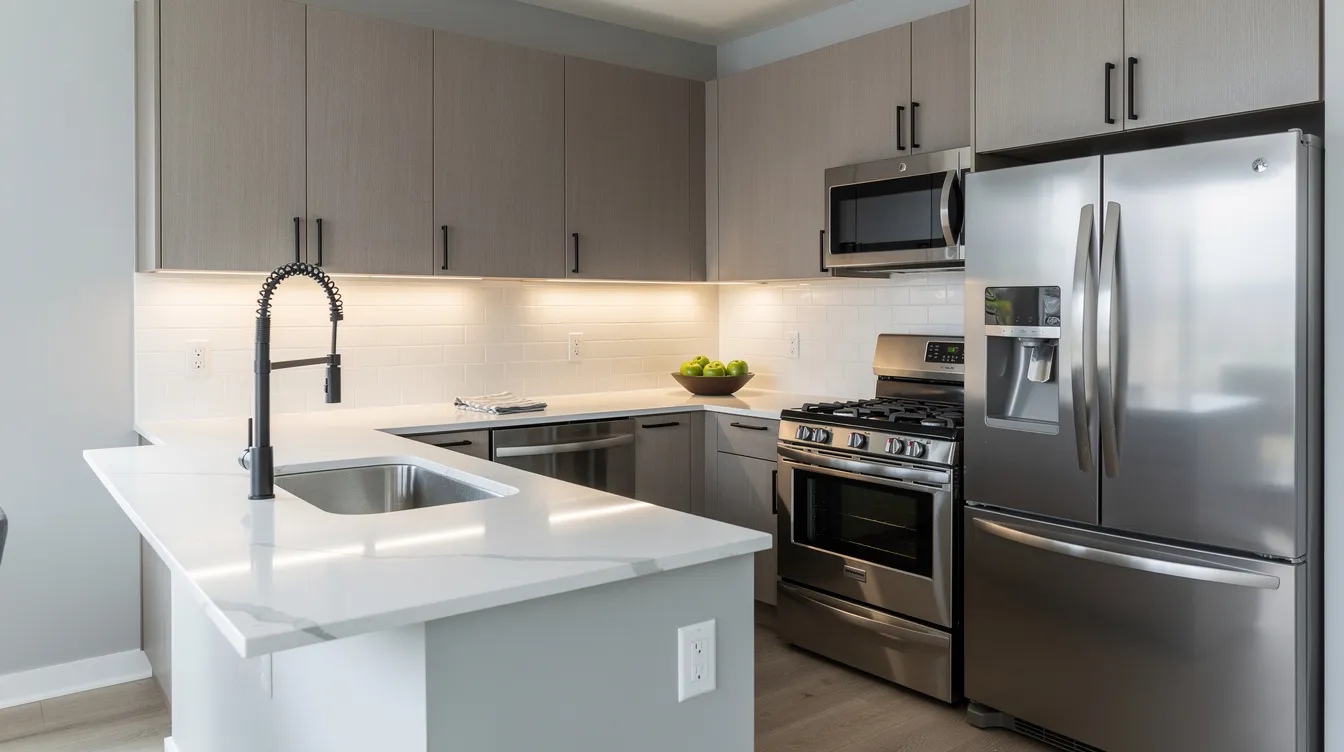
Accelerated depreciation in real estate is a tax strategy that assigns shorter recovery periods to components like carpeting, cabinets, parking lots, appliances, and networking equipment—rather than depreciating them alongside the 27.5-year or 39-year building shell. This componentization allows investors to claim significantly larger deductions in the early years of ownership.
Common Accelerated Depreciation Strategies
The acceleration typically works through several mechanisms:
- Componentizing the property via a cost segregation study to identify assets with shorter useful lives
- Applying 5-, 7-, 15-, or 20-year MACRS recovery periods to qualifying personal property and land improvements
- Using accelerated depreciation methods like double-declining balance within those shorter recovery periods
- Layering bonus depreciation or Section 179 expensing on top of the accelerated method
Benefits and Planning Considerations
The primary benefit is straightforward: larger deductions create paper losses in the first 5–10 years that can offset rental income—and sometimes W-2 or other business income when the taxpayer qualifies as a real estate professional. Accelerated depreciation increases the present value of tax savings, thus improving overall investment returns and reducing overall tax burden. This approach can dramatically improve after-tax cash flow during the years when investors most need capital for debt service, improvements, or additional acquisitions.
The trade-off is equally straightforward: you are borrowing deductions from the future. By using accelerated depreciation, investors can create a paper loss that offsets other income, potentially reducing their overall tax liability in the current year. However, later-year depreciation drops significantly, and sophisticated planning requires looking at expected gross income and tax brackets by year.
Acceleration is most impactful for investors acquiring or substantially improving property between 2024 and 2026. Current bonus depreciation rules and Section 179 limits create a favorable environment that may not persist indefinitely making this a strategic window for those ready to act.
MACRS and Core Accelerated Methods
The Modified Accelerated Cost Recovery System (MACRS) is the primary method used to depreciate residential rental property placed in service after 1986, allowing for accelerated depreciation. This framework governs how virtually all tangible property is depreciated for U.S. federal taxes and understanding it is essential for any real estate tax strategy.
Real estate generally uses MACRS GDS (General Depreciation System), and acceleration happens by assigning non-building components to shorter MACRS classes. The building shell—structural framing, load-bearing walls, roof, and foundation—remains on straight-line depreciation over 27.5 or 39 years. But peripherals like appliances, carpeting, dedicated electrical systems, and land improvements can qualify for 5-, 7-, 15-, or 20-year recovery periods.
Key MACRS concepts for rental real estate:
- The declining balance approach within MACRS produces higher deductions in early years for shorter-lived assets
- The system automatically switches from declining balance to straight-line when that yields a larger remaining deduction
- Half-year or mid-quarter conventions assume assets are placed in service mid-year, affecting first and last year deductions
- The Alternative Depreciation System (ADS) offers slower straight-line over longer lives but is rarely elected except for specific AMT or tax planning situations
The building itself typically remains on straight-line throughout its recovery period. Acceleration is primarily about everything attached to or around the building with a shorter useful life.

Double-Declining Balance (DDB) Method
The double-declining balance method is an accelerated depreciation method that allows for higher deductions in the early years of an asset’s ownership, aligning depreciation deductions with the asset’s purchase price. DDB doubles the straight-line rate and applies it to the asset’s remaining book value each year, yielding the biggest deduction in year one.
Here’s a concrete example using $12,000 in appliances with a 5-year life placed in service in 2026:
- Straight-line rate: 20% (1 ÷ 5 years)
- DDB rate: 40% (20% × 2)
- Year 1 depreciation: 40% × $12,000 = $4,800 (before half-year convention)
- With half-year convention: $2,400 actual first-year deduction
- Year 2 depreciation: 40% × ($12,000 – $2,400) = $3,840
Compare this to straight-line, which would yield only $1,200 in year one (half-year convention) and $2,400 in subsequent years. DDB front-loads approximately 2-3 times more depreciation into the early years.
DDB is typically used for short-lived assets like appliances, technology, security systems, and certain equipment that lose value quickly or become obsolete. Under MACRS, the system automatically switches from DDB to straight-line in later years when that produces a larger remaining deduction—ensuring no basis is forfeited.
Sum-of-the-Years’-Digits (SYD) Method
The sum of the years’ digits (SYD) method is another accelerated depreciation approach that assigns a percentage to each year of a property’s useful life, tapering more gradually than other methods. With SYD, each year’s depreciation is based on remaining life divided by the sum of the years’ digits.
SYD typically includes salvage value in the calculation and produces a more gradual decline in deductions than DDB. This can suit assets that retain residual value, such as high-quality cabinetry or fixtures with longer functional lives.
Here’s a simple example using $10,000 carpeting with $1,000 salvage value and a 5-year life:
- Depreciable basis: $10,000 – $1,000 = $9,000
- Sum of years’ digits: 5 + 4 + 3 + 2 + 1 = 15
- Year 1 depreciation: (5 ÷ 15) × $9,000 = $3,000
- Year 2 depreciation: (4 ÷ 15) × $9,000 = $2,400
- Year 3 depreciation: (3 ÷ 15) × $9,000 = $1,800
In real estate practice, SYD is less commonly chosen than MACRS tables and bonus depreciation. However, understanding it demonstrates how accelerated depreciation can be calibrated—more aggressive with DDB, more gradual with SYD—depending on investor preferences and tax bracket planning.
Which Rental Property Assets Qualify for Accelerated Depreciation?
Not every part of a building qualifies for acceleration. Knowing which components do—and which remain stuck on 27.5 or 39-year schedules—is the core of any tax-efficient depreciation strategy.
Investors can benefit from accelerated depreciation by conducting a cost segregation study, which identifies components of a property that can be depreciated over shorter periods, thus maximizing early tax deductions.
Common qualifying 5- and 7-year assets:
- Appliances (refrigerators, ranges, dishwashers, washers, dryers)
- Carpeting and flooring
- Cabinets and countertops
- Window treatments (blinds, curtains)
- Furniture and fixtures
- Security and alarm systems
- Low-voltage wiring and networking equipment
- Dedicated electrical circuits for specific equipment
15-year assets that typically qualify:
- Parking lots and asphalt surfaces (common in a 24-unit building)
- Sidewalks and curbing
- Fencing and gates
- Landscaping and irrigation systems
- Outdoor LED lighting and pole lights
- Signage
- Certain site utilities added during development
What usually does NOT qualify for acceleration:
- Land (never depreciable)
- Building shell and structural framing
- Load-bearing walls
- Roofs (though roof replacements may qualify under different rules)
- Elevators
- Central HVAC systems
- Major plumbing risers
- Major structural repairs that don’t meet improvement tests
Tangible property with a useful life of 20 years or less is typically eligible for bonus depreciation or accelerated methods, but classification must follow IRS guidance under Rev. Proc. 87-56 and subsequent updates, including the 2013 Tangible Property Regulations.
A professional cost segregation study remains the most defensible way to distinguish personal property and land improvements from 27.5/39-year structural components. These studies, conducted by engineers and tax professionals, provide documentation that can withstand IRS scrutiny.
Bonus Depreciation & Section 179 for Real Estate (2025–2026 Rules)
Bonus depreciation and Section 179 are the two most powerful tools for accelerating deductions on short-lived property tied to rentals. Both allow investors to claim immediate or near-immediate deductions rather than spreading costs over multiple years.
However, rules and percentages change over time. The specific calendar-year percentages and dollar caps relevant to 2024–2026 are essential for timing purchases and placed-in-service dates correctly.
Important consideration: many states (such as California, New York, and New Jersey) do not conform to federal bonus rules or have tighter Section 179 caps. Federal and state deductions may diverge significantly, requiring dual tracking and separate schedules.
Bonus Depreciation for Rental Property
Bonus depreciation allows investors to claim a one-time deduction of up to 100% of the cost of qualifying property in the first year it is placed in service, with the benefit being phased down in subsequent years. This applies to qualifying property with a recovery period of 20 years or less.
Bonus depreciation is available for property with a useful life of 20 years or less, and it can be claimed on both new and used property acquired and placed in service after September 27, 2017.
Recent and near-term bonus percentages:
- 2017–2022: 100% bonus depreciation
- 2023: 80%
- 2024: 60%
- 2025: 40% (under phase-down schedule)
- 2026: 20%
- 2027 and beyond: 0% (unless legislation restores it)
Proposed legislation like the Tax Relief for American Families Act could restore 100% bonus for qualified property acquired and placed in service after January 19, 2025. Under restored rules, taxpayers could elect a reduced bonus rate (for example, 40% in 2025) when they want to preserve future deductions and manage tax brackets strategically.
Bonus depreciation is generally automatic at the federal level unless investors elect out by asset class on a timely filed return. Opting out can make sense for those:
- Expecting higher future income or tax brackets
- Using passive loss rules strategically
- Wanting to smooth deductions over multiple years
Some states decouple from bonus and require straight-line or slower MACRS, creating differences between federal and state returns. California, for example, requires add-backs of any federal bonus claimed.
Practical scenario: A 2025 cost segregation study identifies $150,000 of 5-, 7-, and 15-year property in a newly acquired multifamily building. If 100% bonus is restored and elected, that entire $150,000 could be expensed immediately—potentially wiping out that tax year’s net rental income entirely.
Section 179 Expensing for Landlords
Section 179 allows rental property owners to deduct the full cost of certain qualifying assets, such as appliances and office equipment, in the year of purchase, up to a limit of $2,560,000 as of 2026. Rather than depreciating these items over several years, Section 179 permits immediate expensing.
The maximum Section 179 expense deduction is reduced by the amount by which the cost of Section 179 property placed in service during the year exceeds $4,000,000.
Important distinctions from bonus depreciation:
- Section 179 is elective, not automatic
- Limited by taxable business income (cannot create a loss)
- Has dollar caps that phase out at high investment levels
- Subject to recapture rules if business use falls below 50%
To qualify for Section 179 deductions, rental property must be treated as a business, requiring active participation or qualification as a real estate professional status. Passive rental activities may not qualify unless the taxpayer meets material participation or real estate professional tests.
After the Tax Cuts and Jobs Act and later updates, qualifying property for Section 179 includes:
- Personal property used in residential rentals (appliances, carpets, furniture)
- Certain non-residential improvements (roofs, HVAC, fire protection, alarms, and security systems)
- Qualified improvement property meeting specific criteria
In partnerships and multi-member LLCs, Section 179 is limited both at the entity level and at the partner level and often cannot create or increase losses in the same way bonus depreciation can.
Practical example: A rental property owner with a 20-unit building purchases $40,000 of new appliances and office equipment in 2026. Under Section 179, the full $40,000 could be expensed immediately—assuming sufficient business income to absorb the deduction and active business status.
Cost Segregation Studies & Look-Back Opportunities
A cost segregation study can help identify components of a property that can be depreciated more quickly, allowing investors to generate larger deductions in the early years of ownership. For larger properties, this study is the engine that makes meaningful acceleration possible. A cost segregation study breaks building costs into shorter recovery periods.
A cost segregation study involves engineers and tax professionals reclassifying building cost into 5-, 7-, 15-, and 39-year buckets based on:
- Architectural blueprints and construction documents
- Vendor invoices and cost records
- Site inspections and component assessments
- IRS guidelines and audit-defensible methodologies
When a Cost Segregation Study Makes Sense
When a study is most valuable:
- Properties purchased or renovated above $500,000 to $1 million in value
- Portfolios with multiple smaller properties that can be bundled
- New construction where detailed cost records are readily available
- Recent acquisitions where bonus depreciation can still be applied
Ordering a study before filing the tax return for the acquisition or renovation year allows immediate use of bonus and accelerated methods. This timing maximizes current-year tax savings when the deductions have the highest present value.
Look-back opportunities: For properties acquired as far back as 1987 that never had a cost segregation study, investors can use a “catch-up” study. This generates a one-time I.R.C. Section 481(a) adjustment that captures all missed accelerated depreciation in a single year—without amending old returns.
Cost Segregation Example and Potential ROI
Example: An investor acquired a $2.5 million apartment building in 2016 using straight-line depreciation. In 2025, they commission a cost segregation study that reclassifies $500,000 to shorter-lived components. The cumulative “catch-up” depreciation—what should have been claimed in prior years—flows through as a single deduction in 2025, potentially generating several hundred thousand dollars in accelerated depreciation deduction.
Typical study costs range from $5,000 to $20,000 for properties over $1 million, with ROI often reaching 5-10 times the study cost. For properties under $200,000, bundling multiple properties or using streamlined desktop studies may be more cost-effective.
Tax Impact, Examples & Exit Strategy (Recapture and 1031)
Acceleration affects not just current-year taxes but also future taxable income and the tax bill when you exit the investment. Understanding the full picture—from year-one savings through eventual sale—is essential for making informed decisions.
Case study: Straight-line vs. accelerated for a $600,000 fourplex
A fourplex purchased in 2026 with $120,000 allocated to land leaves $480,000 in depreciable basis.
Under straight-line:
- Annual depreciation: $480,000 ÷ 27.5 = approximately $17,455
- Year-one deduction: $17,455
With cost segregation identifying $96,000 (20%) as 5-7-15 year property:
- First-year deduction with DDB/bonus: approximately $38,000
- Additional first-year benefit: roughly $20,000
At a 24% marginal tax rate, that extra $20,000 in first-year deductions saves approximately $4,800 in federal taxes—real cash that can fund additional investments, improvements, or debt paydown.
Long-Term Tax Benefits and Exit Planning
Creating paper losses: Taking accelerated depreciation can create a paper loss that offsets other income, allowing investors to reduce their overall tax liability in the current tax year or carry forward the loss to future years. These losses can offset:
- Passive rental income from the same property
- Passive income from other rental real estate activity
- W-2 or business income (when taxpayer qualifies as a real estate professional with 750+ hours annually)
Accelerated depreciation can provide significant tax benefits by reducing taxable income in the early years of property ownership, but it may result in lower deductions in later years.
Carryforwards: Passive loss rules may restrict the use of accelerated depreciation losses to offset non-passive income for certain investors. However, passive losses and net operating losses can often be carried forward into future tax years indefinitely, so unused accelerated deductions retain long-term value.
Depreciation Recapture and 1031 Exchange Planning
Depreciation recapture on sale: When a property is sold, the seller may owe capital gains tax or depreciation recapture tax, which is a tax on the depreciation taken on rental property. The recapture hits all allowable depreciation claimed (or that should have been claimed) at up to 25%—stacked on top of capital gains rates when you sell property.
Front-loading deductions doesn’t change total depreciation over the holding period, but it does accelerate when you receive the tax benefit. In pretax net income terms, the time value of money typically favors acceleration—receiving $4,800 today beats receiving $4,800 in year 15.
1031 like-kind exchanges: A 1031 exchange allows investors to defer both depreciation recapture and capital gains by rolling proceeds into replacement property. Strict timelines apply:
- 45 days to identify replacement property
- 180 days to close the exchange
For investors planning to hold real estate indefinitely or pass to heirs, combining accelerated depreciation with serial 1031 exchanges can create powerful wealth-building and tax deferral strategies.
State-Level Traps and When to Avoid Acceleration
State tax rules can significantly change the value of accelerated strategies—and sometimes make them less attractive than they appear on federal returns alone.
State conformity issues:
- California does not conform to federal bonus depreciation and requires add-backs on state returns
- New York has historically lagged federal phase-downs and may require separate calculations
- Several states cap Section 179 at much lower levels than federal law (California caps at $25,000)
- Multi-state investors may face 20-50% erosion of federal tax benefits due to state add-backs
Scenarios where acceleration may be unwise:
- Converting to personal use: If a rental property is converted back to personal use, any previously claimed Section 179 deductions may need to be recaptured as ordinary income, which can lead to unexpected tax liabilities. Section 179 recapture applies if business use drops below 50%.
- Near-term sale without 1031: Aggressive acceleration inflates the recapture pool. Selling within 3-5 years without a 1031 exchange may result in recapture tax liability that offsets early benefits.
- Rising tax brackets: Investors anticipating higher future brackets may prefer spreading deductions evenly rather than taking large deductions in lower-bracket years.
- Lender underwriting: Some lenders prefer stable straight-line depreciation for calculating debt service coverage ratios. Aggressive acceleration can create volatility in reported net income.
When to elect out of bonus or use straight-line:
- Building passive loss carryforwards for future high-income years
- Expecting significant income increases within 3-5 years
- Planning near-term sale and wanting to minimize recapture
- Operating in states with severe decoupling from federal rules
Before implementing an aggressive acceleration strategy, model multi-year after-tax cash flow including federal, state, and local taxes, including property taxes. The math varies significantly based on property location, investor circumstances, and holding period.
Why Choose Our Team for Real Estate Tax Strategy
Accelerated depreciation is powerful but complex. Optimal implementation requires coordination between tax law, engineering analysis, state compliance, and individual investor circumstances. Our role is to design strategies that match each investor’s goals, risk tolerance, and timeline.
Experience that matters:
- Decades of experience advising small landlords, syndicators, and commercial property owners
- Hundreds of properties and portfolios reviewed for cost segregation and acceleration opportunities
- Deep understanding of how federal rules interact with state-level differences across multiple jurisdictions
Practical strengths:
- Proactive tax planning that anticipates law changes and adjusts strategies accordingly
- Coordination with qualified cost segregation engineers and 1031 exchange intermediaries
- Analysis that considers business interest expense limitations, passive loss rules, and adjusted taxable income thresholds
Client-centric approach:
- Clear explanations of complex tax law in plain English
- Transparent fee structures for planning engagements
- Annual check-ins to adjust depreciation strategy as tax code provisions or life circumstances change
Technology and tools:
- Secure client portals for document exchange
- Digital modeling tools that compare straight-line vs. accelerated scenarios over 5-10 year horizons
- Clear visualizations of how different strategies affect long-term tax liability
We invite you to schedule a consultation to review a specific property or entire portfolio and identify acceleration opportunities before year-end deadlines. Whether you’re considering your first rental real estate purchase or optimizing an existing portfolio, understanding your options is the first step.

FAQs on Real Estate Accelerated Depreciation
This section addresses the most common questions investors ask about accelerating depreciation on rentals and other income producing property.
Is accelerated depreciation legal?
Yes. Accelerated depreciation is explicitly allowed by the tax code when applied correctly. The key is proper documentation, correct asset classifications, and compliance with internal revenue service guidance. The Modified Accelerated Cost Recovery System (MACRS) is the most commonly used method for depreciating residential rental property, allowing for accelerated depreciation through methods like the double-declining balance and sum of the years’ digits.
Can I use accelerated depreciation on a short-term rental (Airbnb/VRBO)?
Yes, many assets qualify. Treatment depends on whether the rental real estate activity is classified as a rental or a hotel-type business and how many days guests typically stay. Properties with average guest stays of 7 days or fewer may qualify for different treatment and potentially more favorable loss offset rules.
Does accelerated depreciation always save me money?
Accelerated depreciation allows real estate investors to recover the cost of an asset more quickly, providing larger tax deductions in the early years of ownership, which can improve cash flow. It usually improves net present value of tax savings. However, it may not be optimal if you expect to be in a much higher tax bracket later, plan to sell quickly without a 1031 exchange, or operate primarily in non-conforming states.
Can accelerated depreciation offset my W-2 income?
It depends on your classification. Passive loss rules generally limit rental losses to offsetting passive income only. However, taxpayers who qualify as a real estate professional (750+ hours annually with real estate as their primary activity) and who materially participate can use rental losses against W-2 or ordinary income.
Do I need a cost segregation study for a single-family rental?
For lower-value rented property, a full study might not pencil out economically. However, bundling multiple single-family rentals or using streamlined desktop studies can make sense at certain value thresholds—typically around $150,000 or higher per property when multiple properties are combined.
What happens if tax law changes after I accelerate?
Deductions already claimed are generally locked in—you keep the benefit of depreciation already taken. However, future options (like bonus percentages) can change, which underscores the value of acting during favorable windows like 2025-2026. Consult a tax advisor before making significant timing decisions.
What is the difference between deduct depreciation and depreciate rental property?
Both terms describe the same fundamental process. When you depreciate rental property, you are claiming a depreciation deduction each year that reduces your taxable income. The depreciation schedule tracks how much you’ve claimed and how much basis remains.
Conclusion & Next Steps for Investors
Accelerated depreciation remains one of the most effective tax tools available to real estate investors, allowing them to reclaim capital faster, reinvest, and grow portfolios more efficiently. Accelerated depreciation can provide significant tax savings, allowing investors to reinvest the tax savings into their properties or other investments, enhancing their overall returns.
The key takeaway: acceleration changes the timing, not the total amount, of depreciation. The benefits of accelerated depreciation include the ability to lower taxable income significantly in the early years of property ownership, which can be particularly advantageous during years of higher income. Investors must weigh early-year tax relief against later-year deductions and eventual recapture—but for most, the time value of money tips the scales toward acceleration.
Concrete next steps:
- Gather closing statements and improvement invoices for properties acquired or renovated since approximately 2010
- Request a professional review for acceleration and cost segregation opportunities
- Consult with a real estate CPA or tax advisor before year-end to align property improvements, placed-in-service dates, and elections (bonus vs. Section 179 vs. straight-line) with your projected 2025-2026 income
The window for maximum bonus depreciation benefits continues to narrow. Taking action before year-end could maximize cash flow, reduce your tax bill, and position your portfolio for long-term growth through claiming accelerated depreciation.
Contact our team to schedule a consultation and determine whether now is the right time to deploy real estate accelerated depreciation in your portfolio. Whether you own a single fourplex or manage dozens of residential property assets, understanding and optimizing your depreciation strategy is essential tax advice for every serious investor considering a major capital expense or evaluating a property purchase price.