
If you own or advise on income-producing real estate, slow depreciation can hold back cash flow for decades. An engineering based cost segregation study helps property owners identify building components that may qualify for shorter depreciation periods, larger tax deductions, and stronger near term cash flow.
Table of Contents
Use the links below to jump to the cost segregation topics that matter most to you:
- Introduction
- What Is Cost Segregation?
- How an Engineering-Based Cost Segregation Study Works
- MEP and Specialty Systems
- Tax Benefits & Bonus Depreciation
- Our Engineering-Based Process
- FAQs
- Conclusion and Next Steps
Introduction: Why Engineering-Based Cost Segregation Matters Right Now
Under MACRS, residential rental property is generally depreciated over 27.5 years and nonresidential commercial real estate over 39 years, according to IRS Publication 946. That long timeline can delay tax savings and limit capital available for property investments, renovations, or debt reduction.
An engineering-based cost segregation study is a tax planning tool that accelerates depreciation deductions for commercial real estate owners by reclassifying building components into 5-, 7-, or 15-year asset classes. As of the 2025–2026 tax years, the restoration of 100% bonus depreciation allows taxpayers to write off the entire cost of qualifying property in the same year it is placed in service, significantly enhancing cash flow.
The difference is depth. Engineering based cost segregation looks at construction drawings, construction documents, electrical systems, mechanical systems, land improvements, and specific building components rather than relying on broad percentages.
What Is Cost Segregation? (The Basics in Plain English)
Cost segregation studies allow property owners to accelerate depreciation deductions by reclassifying certain building components, enabling them to depreciate specific assets over shorter lifespans, typically 5, 7, or 15 years instead of the standard 27.5 or 39 years. Land is not depreciable, so the analysis applies to acquisition, construction costs, property improvements, and renovations excluding land value.
For example, if a $5 million commercial building placed in service in 2026 has a $4 million depreciable basis, traditional 39-year depreciation is about $102,564 per year. If engineering analysis identifies 30% as personal property or land improvements eligible for accelerated depreciation and bonus depreciation, the first-year deduction may increase by more than $1 million.
The IRS Cost Segregation Audit Techniques Guide highlights components required for a study to be accurate and legally defensible, and studies using construction and engineering professionals are proven to be more reliable and defensible according to the IRS guidelines. A segregation study can also be performed on prior-year assets through a change in accounting method on tax returns.
How an Engineering-Based Cost Segregation Study Works
A strong-based cost segregation study combines site inspection, construction cost data, document review, and tax law knowledge. Engineering expertise requires professionals who understand construction drawings, and tax knowledge includes an understanding of tax codes and IRS rulings.
This is where not all studies are created equal. Engineers play a crucial role in cost segregation studies by analyzing building components to ensure that every eligible item is identified and reclassified correctly, which is essential for maximizing tax benefits.
Site Inspection and Field Documentation
Engineers conduct thorough site inspections to verify construction details and accurately identify property components, which is essential for establishing a reliable baseline for cost segregation studies. During the site inspection, the team documents interior finishes, exterior features, building systems, parking lots, sidewalks, retaining walls, site lighting, and specialty systems.
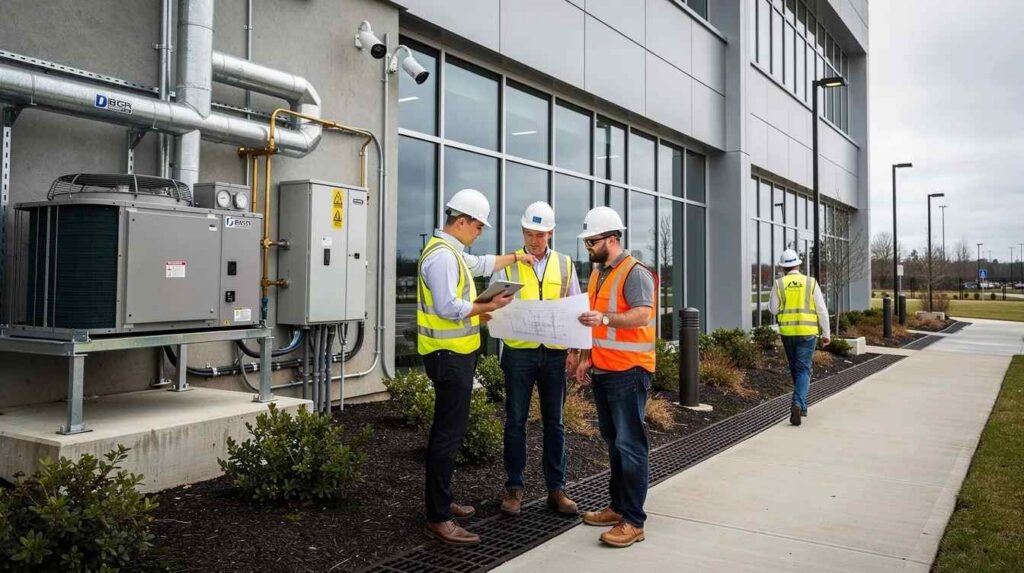
For a 2023 medical office in Dallas, for example, fieldwork might identify medical gas, specialized lighting, access control, and tenant improvements that were not obvious from the closing statement.
Construction Document & Cost Review
Engineers systematically review construction documentation, including architectural plans and specifications, to understand project scope and component details, which is crucial for accurate asset classification. The technical expertise engineers bring allows them to interpret construction documents, blueprints, specifications, and contractor invoices accurately, ensuring that all components are classified in compliance with IRS guidelines.
When original records are incomplete, estimators use recognized construction cost data and quantity take-offs to identify specific components. This is especially useful when plans changed because of upgrades, value engineering, or specific business processes.
Engineering Analysis: Structural vs. Non-Structural Components
The team separates structural components such as foundations, structural steel, load-bearing walls, and roof decking from tangible personal property and land improvements. Whiteco-style factors, including permanence, method of attachment, and damage upon removal, help determine whether an eligible component belongs in a shorter-life category.
Examples include decorative millwork, movable partitions, demising walls, custom casework, specialized equipment pads, asphalt paving, curbs, drainage, and exterior signage.
Cost Allocation & Tax Classification
After identifying assets, direct costs and indirect costs are allocated to proper asset categories and recovery periods. Direct costs come from invoices and pay applications; indirect construction costs such as design fees, overhead, profit, and general conditions are assigned proportionally.
| Sample allocation | Recovery period | Example assets |
|---|---|---|
| 22% | 5 or 7 years | personal property, equipment, power, low-voltage |
| 8% | 15 years | land improvements, paving, signage |
| 70% | 27.5 or 39 years | structural building shell |
Each item is mapped under MACRS and applicable revenue procedure guidance, including Section 1245 personal property and Section 1250 real property classifications.
Technical Documentation & Audit Readiness
Cost segregation studies require detailed documentation and compliance with IRS guidelines to ensure that the reclassification of assets is defensible in the event of an audit. The final report includes comprehensive documentation, engineering findings, asset classes, depreciation schedules, and cross-referenced workpapers.
That matters if an IRS audit occurs. The taxpayer can show how each dollar was classified, why reclassifying building components was appropriate, and which IRS authority supports the result.
Mechanical, Electrical, and Plumbing (MEP) Systems in Cost Segregation
MEP systems often produce major cost segregation benefits because base building systems and specialized systems may receive different treatment.
HVAC and Mechanical Systems
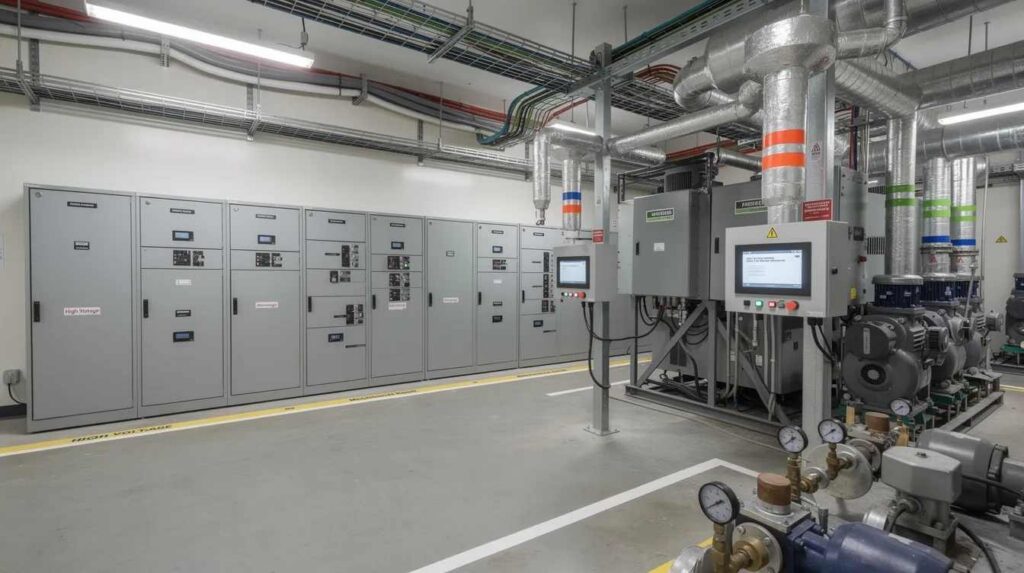
General comfort HVAC is usually 39-year property. But supplemental cooling for IT rooms, dedicated make-up air for commercial kitchens, clean-room ventilation, and manufacturing ventilation may qualify for shorter depreciation periods when tied to specific business processes.
Electrical Systems and Power Distribution
Main service and general panels are typically long-life property. Dedicated electrical systems serving CNC machines, MRI suites, server rooms, UPS systems, or restaurant equipment may be 5- or 7-year personal property. Specialized lighting in retail spaces, theaters, hotels, or agricultural facilities may also qualify.
Plumbing, Specialty Piping, and Low-Voltage Systems
Standard domestic water and sanitary lines usually remain structural. Specialty piping such as chemical lines, medical gas, RO/DI water, vacuum systems, data cabling, cameras, access control, and automation controls may be reclassified when documentation supports the classification.
Tax Benefits: Accelerated Depreciation, Bonus Depreciation & Cash Flow
By identifying and reclassifying building components, property owners can maximize tax savings in the early years of ownership, often achieving substantial reductions in taxable income and increased cash flow. By conducting a cost segregation study, property owners can often achieve first-year tax savings ranging from $50,000 to over $1 million by identifying and reclassifying assets that qualify for accelerated depreciation.
Accelerated Depreciation & Bonus Depreciation Mechanics
The Modified Accelerated Cost Recovery System (MACRS) categorizes real estate components into different property lives. Reclassifying 20% to 40% of qualified property into shorter asset classes can greatly increase depreciation deductions.
For example, a $10 million warehouse acquired in 2026 that moves 30% into 5-, 7-, and 15-year property may generate a $3 million first-year deduction if 100% bonus depreciation applies. The restoration of 100% bonus depreciation allows property owners to deduct the entire cost of qualifying assets in the year they are placed in service, significantly enhancing cash flow.
Depreciation recapture should still be modeled before a sale, but earlier deductions often improve the time value of money.
Cash Flow Benefits and Strategic Tax Planning
The goal is not just reducing tax liability; it is improving cash flow and maximizing cash flow for reinvestment. Many owners use tax benefits to fund renovations, acquisitions, reserves, or debt paydown.
A look-back study using IRS Form 3115 may reduce current tax liability without amending prior returns. Work with your CPA to consider passive activity rules, interest limitations, state conformity, and future disposition plans.
Property Types That Benefit Most from Engineering-Based Studies
Different property types, including commercial, residential, industrial, and mixed-use properties, require tailored approaches in cost segregation studies due to their unique characteristics and asset classifications.
Industrial & Manufacturing Facilities
Industrial properties, such as manufacturing plants, often contain specialized equipment and unique structural components that can be reclassified for accelerated depreciation benefits. Manufacturing facilities may include reinforced pads, cranes, compressed air, process piping, high-capacity power, and automation infrastructure. A 2025 production plant may shift 35% to 45% of basis into shorter-life assets.
Healthcare, Hospitality, and Multi-Family
Healthcare and medical facilities often include medical gas, vacuum lines, shielding, dedicated electrical, and specialty plumbing. Hotels include FF&E, decorative finishes, carpeting, lighting fixtures, and guest-room systems. Residential properties, including apartment complexes, present opportunities for reclassifying common area components and building systems to benefit from shorter depreciation periods.
Retail, Office, and Mixed-Use Properties
Commercial properties, such as office buildings and hotels, often have assets like carpeting and lighting fixtures that can be classified as personal property or land improvements for accelerated depreciation. Office buildings may also include modular partitions, server rooms, and tenant improvements, while mixed-use projects require careful allocations between residential, retail, and shared systems.

Our Engineering-Based Cost Segregation Process
Our cost segregation services are designed to be efficient, clear, and defensible, typically moving from kickoff to final report in about 4–6 weeks.
Discovery, Scoping, and Benefit Projection
We review property type, location, placed-in-service date, basis, acquisition documents, and current tax posture. Then we provide a high-level estimate of potential tax savings, expected ROI, and whether the study can help reduce current tax liability.
Fieldwork, Engineering Analysis, and Draft Schedules
We schedule fieldwork, collect construction documents, review architectural plans, and model component costs. Draft depreciation schedules show accelerating depreciation deductions, bonus depreciation, and multi-year impacts before finalization.
Final Report, Implementation, and Ongoing Support
The final report includes methodology, component details, depreciation tables, and CPA-ready workpapers. We also support advisors during questions from taxing authorities and can update the study after major renovations or acquisitions.
Why Choose Our Team for Engineering-Based Cost Segregation Services
Our team combines engineering based studies with tax-focused review, practical construction knowledge, and clear communication. The engineering based cost approach is valuable because it connects what was physically built to how each asset should be depreciated.
We help commercial property owners pursue significant tax savings without relying on unsupported shortcuts. Our process emphasizes technical expertise, transparent pricing, accurate classifications, and maximum tax benefits that are backed by documentation.
Frequently Asked Questions About Engineering-Based Cost Segregation
Which Properties Qualify for a Cost Segregation Study?
Commercial buildings, industrial assets, mixed-use properties, and residential rentals placed in service after 1987 are generally candidates. Substantial renovations and expansions may also qualify. Vacant land does not qualify, but land improvements do once placed in service.
When Is the Best Time to Do a Cost Segregation Study?
The best time is usually the year the property is placed in service, especially when bonus depreciation is available. Later studies can still capture missed depreciation through a Section 481(a) adjustment.
How Much Does an Engineering-Based Cost Segregation Study Cost, and Is It Worth It?
Fees depend on size, complexity, documentation quality, and timeline. The key is comparing fee to benefit: cost segregation studies can lead to tax savings ranging from $50,000 to over $1 million in the first year, depending on the property value and the components identified for accelerated depreciation.
Will a Cost Segregation Study Increase My IRS Audit Risk?
A properly prepared engineering based study is not inherently a red flag. Risk usually comes from aggressive assumptions, weak support, or DIY allocations that do not follow the Internal Revenue Service (IRS) Cost Segregation Audit Techniques Guide.
Can I Do Cost Segregation Myself or Use a Basic Software Tool?
In theory, yes. In practice, software often misses MEP, specialty systems, and complex asset categories. For larger properties, the lost deductions or audit exposure can outweigh the upfront savings.
Conclusion: Take the Next Step to Unlock Accelerated Depreciation
An engineering-based cost segregation study uses detailed engineering analysis of structural, MEP, and specialty systems to unlock accelerated depreciation, bonus depreciation, and better cash flow.
If you acquired, built, or improved a property in recent years, now is the time to review the opportunity. Request a complimentary benefit estimate and see how engineering-based cost segregation services can help maximize tax savings under current 100% bonus depreciation rules.