This is the most common reason a qualifying company never claims the research and development tax credit: the name.
“Research and development” conjures white coats, test tubes, and a department with a budget line. If your company doesn’t have that, it’s reasonable to assume the credit isn’t for you.
Very often, it is. The credit was written to reward companies that solve technical problems — and it doesn’t care whether the problem was solved in a laboratory or on a shop floor, a job site, or a laptop.
“We Were Just Doing Our Job”
That sentence keeps more companies out of this credit than the rules do.
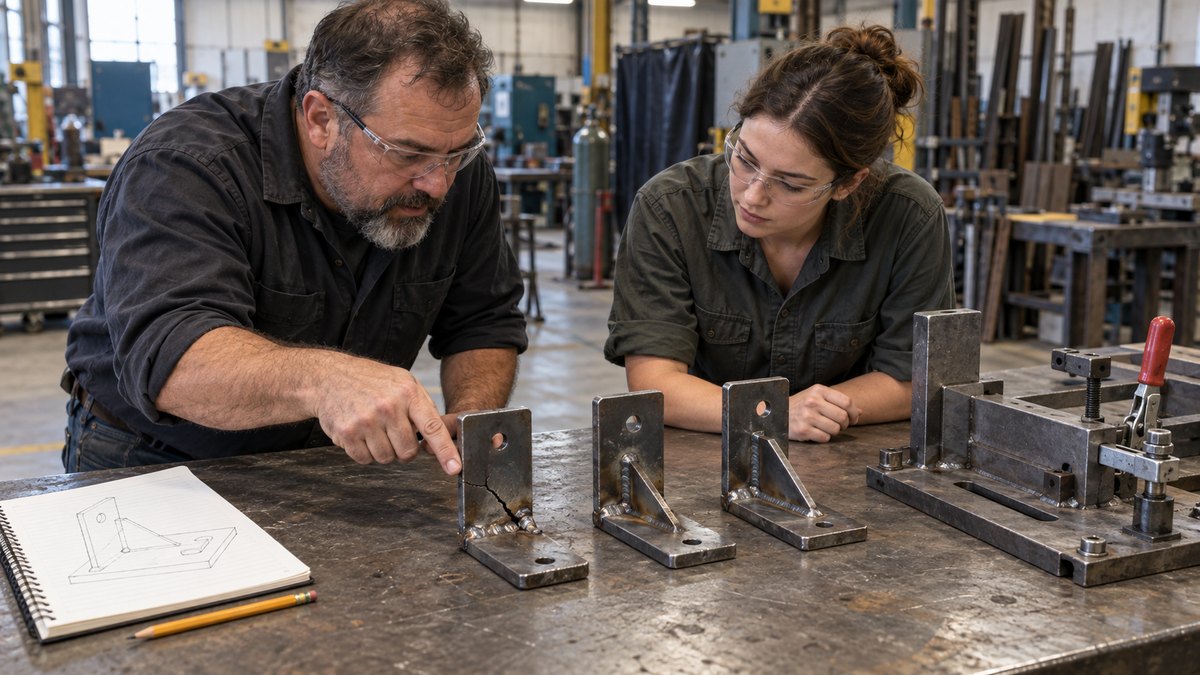
The line isn’t whether the work felt routine, and it isn’t whether the outcome was uncertain — plenty of ordinary work is uncertain. The line is how you resolved it: whether there was more than one way it could have gone, and you tested or modeled them to find out which one held.
Three scrapped parts followed by a change to the fixture and a retest is that. Three scrapped parts because the material was bad is not.
The Four-Part Test
1. Permitted purpose — were you trying to make something better?
The work has to relate to a new or improved function, performance, reliability, or quality of a business component — a product, process, technique, formula, invention, or software that you sell, lease, license, or use in your own business. It doesn’t have to be new to the world. Improving how your company makes something counts. Making something merely prettier or more fashionable does not.
2. Elimination of uncertainty — was there something you didn’t know at the start?
There has to have been genuine technical uncertainty at the outset: about whether you could do it, how you would do it, or how the thing should be designed. If you knew the answer before you started, that part isn’t research.
3. Process of experimentation — did you work it out systematically?
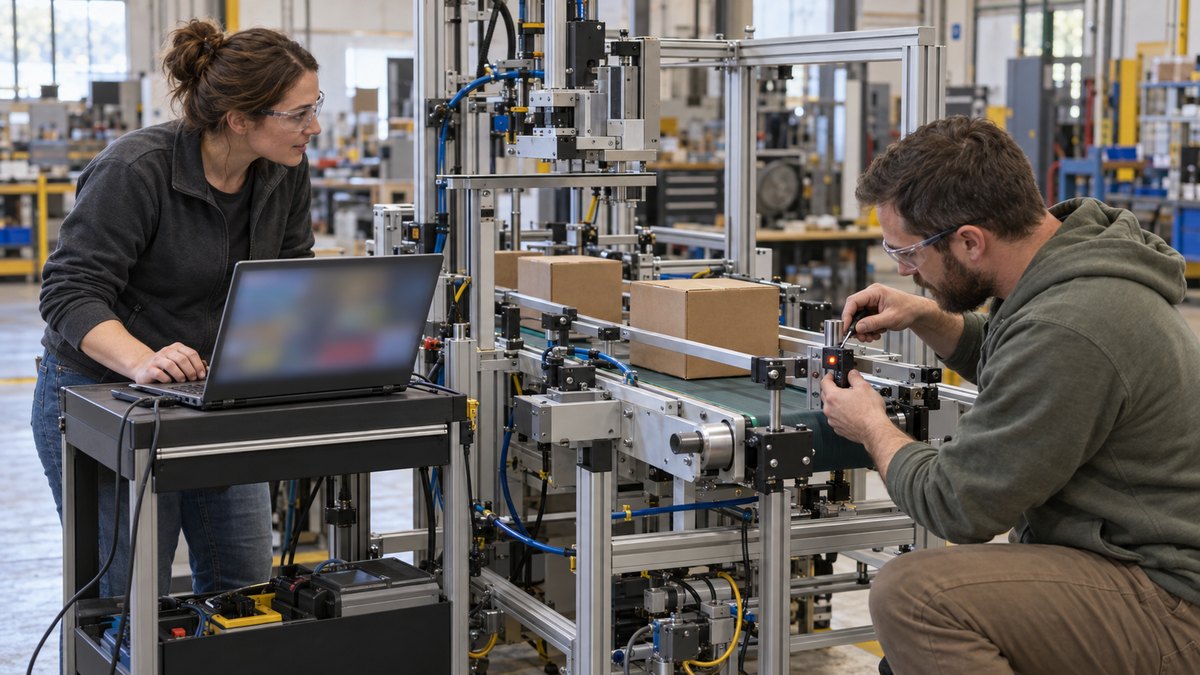
You have to have identified alternatives and evaluated them — through modeling, simulation, prototyping, or a systematic trial and error methodology. The word systematic matters: what counts is that you identified an uncertainty, identified possible approaches, tested them, and changed the design based on what you learned.
There is also a threshold worth knowing: substantially all — 80% or more, measured on a consistent and reasonable basis — of the activities in a business component have to be part of that process of experimentation. That is why a credible study allocates activity component by component rather than sweeping in whole departments, and it is a large part of what makes the claim hold.
4. Technological in nature — was it technical work?
The work has to rely on principles of engineering, physical or biological science, or computer science. Not economics, not marketing, not management.
Nothing in that test mentions a laboratory, a patent, a research department, or a PhD.
What This Looks Like in Real Companies
- A machine shop developing a process to hold a tolerance it has never held, iterating fixturing and parameters until the process is capable
- A fabricator developing a weld procedure for a dissimilar-material joint where no code procedure exists
- A software company building an integration where the performance requirement wasn’t obviously achievable
- A food manufacturer reformulating a product to remove an allergen while holding shelf life and texture
- An engineering firm designing a system for site conditions its standard approach doesn’t handle
- A contractor developing a means-and-methods approach for an installation that hasn’t been done that way before
- A plastics molder iterating mold and gate design to eliminate warp on a thin-wall part
None of those companies would describe themselves as doing research. All of them may be.
Not Sure Whether That’s You?
What we’ll need: What your company builds · Roughly what you spend each year on technical staff
Those two answers are genuinely enough for us to tell you whether there’s a credit worth pursuing.
Where the Line Sits
The credit covers developing something; it doesn’t cover the work around it. These fall outside it even when the four-part test is met:
- Exact duplication of an existing business component from physical examination, or from plans, blueprints, or detailed specifications.
- Routine or ordinary testing and inspection for quality control, efficiency surveys, activities relating to management functions or techniques, market research, and routine data collection.
- Internal-use software, unless it meets a high threshold of innovation — substantial and economically significant improvement, developed under substantial economic risk with genuine uncertainty of technical feasibility, and not commercially available. Software you sell generally isn’t subject to this test at all.
- Research in the social sciences, arts, or humanities.
- Research conducted outside the United States, Puerto Rico, or a U.S. possession.
- Research funded by someone else, to the extent it’s funded (see below).
Client-paid Work Can Still Qualify
Being paid by a customer doesn’t, by itself, take the credit away. Two features work in your favor. The first is keeping the right to use what you learned on other work — that is the threshold, and if the customer’s terms take those rights, the work is treated as funded by the customer. The second is payment that depends on your approach succeeding: those payments aren’t treated as funding the research at all. Where you keep the rights but get paid regardless of the outcome, the work counts to the extent its cost exceeds what you were paid. It is worth reading your agreements for both before assuming the answer — and these terms are negotiable on the next contract.
What the Credit Is Calculated On
Not on your revenue, and not on a “research budget.” The credit is computed on qualified research expenses:
- Wages of employees performing, directly supervising, or directly supporting qualifying work
- Supplies consumed in the process — including materials scrapped during development. Equipment you depreciate does not count.
- Contract research paid to outside parties, generally at 65% of the amount paid
- Payments for the right to use computers owned and operated by someone else, off your premises, to run computational work in the course of qualified development
If You Don’t Have Taxable Income Yet
A qualified small business can apply up to $500,000 of the credit against employer payroll taxes instead of income tax — $250,000 against the Social Security portion and the remainder against Medicare. To qualify: gross receipts under $5 million in the credit year, and no gross receipts before the five-tax-year period ending with that year. The election is available for up to five tax years — effectively a benefit built for companies in their first five years.
Frequently Asked Questions
How much is the credit actually worth?
It depends on your qualified wages and your prior-year history, because the credit is incremental. As a rough orientation, companies often land somewhere in the range of a few percent of qualified wages once the base calculation is applied. A real number comes from your actual figures — which is why we ask for them before quoting one.
What would we have to hand over, and what do you do?
Payroll by role, a list of the projects or jobs from the year, and whatever technical records you already keep — drawings, test reports, ECOs, travelers, meeting notes, version history. We interview the people who did the work, identify which projects qualify and which don’t, tie each one to the problem it solved, calculate the credit, and build the file your CPA claims it with. From 2026 most claims must be reported component by component (smaller claims are excepted), and amended claims already must be — so that structure is the part we do — you shouldn’t have to write anything new.
Our CPA has never mentioned it. Doesn’t that mean we don’t qualify?
No, and it isn’t a criticism of your CPA. Identifying qualifying activity means walking a floor or sitting with a development team and understanding the technical work — that’s engineering, not accounting. Most CPA firms don’t staff engineers, which is why they bring in a specialist and keep the client relationship where it belongs.
Is claiming the credit risky?
The R&D credit is a permanent provision claimed by tens of thousands of companies every year. What creates exposure is a claim built on estimates with nothing tying activities to specific components and specific uncertainties. The court cases that have gone against taxpayers generally involved companies doing genuinely difficult work who could not show which activities were experimentation. Structure is what protects the claim.
Can we claim for prior years?
Within the statute of limitations, yes — but amended refund claims carry stricter requirements than original returns. You must identify all business components and the research activities performed for each, and if anything is missing, the IRS gives you 45 days to fix it before rejecting the whole claim — a grace period currently scheduled to end on 10 January 2027, after which an incomplete claim can be rejected outright. The small-taxpayer relief from detailed reporting doesn’t apply to amended claims either. That is the strongest reason to have the file built properly rather than reconstructed in a spreadsheet.
Are there state credits too?
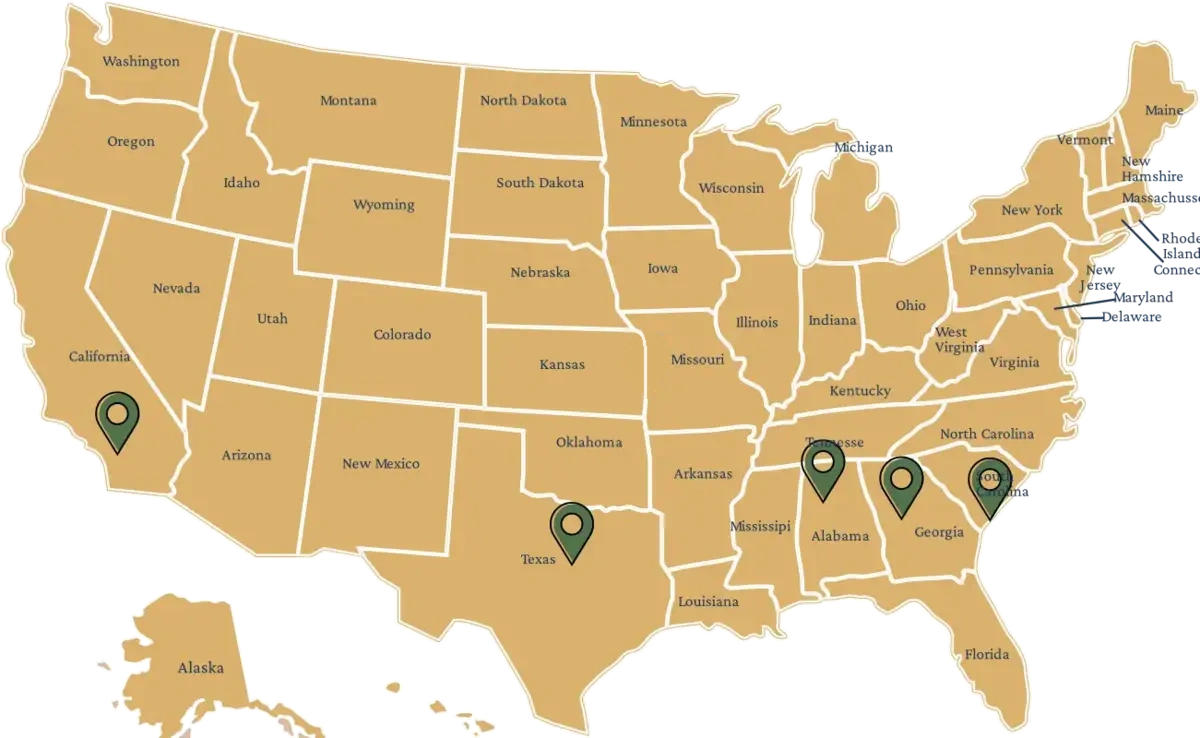
In many states, yes. Texas rebuilt and nearly doubled its credit for reports due on or after 1 January 2026 — 8.722%, or 10.903% for research contracted through a higher-education institution, and refundable for some smaller taxpayers. The same legislation repealed the Texas R&D sales tax exemption, and a company that used the exemption during its 2025 accounting period can’t take the new credit until its 2027 report — worth modelling for equipment-heavy manufacturers. Georgia offers a credit worth 10% of qualified expenses over a base, with excess usable against payroll withholding; it applies to defined “business enterprise” industries such as manufacturing, warehousing and distribution, processing, telecommunications, and R&D, so Georgia contractors and service-only engineering firms generally look to the federal credit instead.
Five Signs It’s Worth a Closer Look
These aren’t the legal test — they’re the pattern we see in companies that turn out to qualify.
- In the last year, did we develop or meaningfully improve a product, or the process we use to make one?
- Was there a point where we genuinely didn’t know if it would work, or how to make it work?
- Did we test, model, or trial more than one approach — and change the design based on what we learned?
- Was the problem technical — engineering, science, or software — rather than commercial or aesthetic?
- Do we have records of that work: drawings, test results, revisions, job notes?
Three or more yes answers, and it’s worth a conversation.
What to Do Next
Tell us what your company builds and roughly what you spend on technical staff. That’s enough for us to tell you whether there’s a credit worth pursuing and what it’s likely to be worth.
If the answer is that you don’t qualify, we’ll tell you that.
This article is general information about federal and state tax rules and is not advice for any specific situation. Whether particular activities qualify depends on facts and contract terms that must be examined individually.
Current as of October 2026.