
Cost segregation is a practical tax strategy for real estate owners who want larger depreciation deductions sooner, not decades from now. With changing bonus depreciation rules and the Big Beautiful Bill Act restoring permanent 100% bonus depreciation for qualified property acquired and placed in service after January 19, 2025, timing matters.
A professional cost segregation service can unlock substantial depreciation tax savings on commercial property, residential real estate, office buildings, retail centers, and multifamily properties. Property owners can realize tax savings of $30,000 to $80,000 per $1 million of building value in the first five years of ownership through accelerated depreciation methods.
Want to see your numbers? Request a free feasibility review and we’ll estimate savings, cost, and turnaround time before you commit.

Table of Contents
- What Is Cost Segregation?
- How a Cost Segregation Study Works Step by Step
- Tax Benefits in 2025–2026
- Which Properties Are Good Candidates?
- Cost Segregation Services We Provide
- Cost Segregation FAQs
- Why Choose Our Cost Segregation Services?
- Conclusion and Next Steps: Get Your Free Cost Segregation Analysis
What Is Cost Segregation?
Cost segregation is an IRS-approved method that separates real and personal property for federal income tax purposes. Residential rental property depreciates over 27.5 years, and commercial property depreciates over 39 years. A cost segregation study breaks down property into shorter-lived asset categories, usually 5, 7, and 15 years, allowing faster depreciation.
A cost segregation study involves identifying and reclassifying property-related costs into different categories to allow for accelerated depreciation timelines for certain building components. The structural components or shell of a building stays on the 27.5- or 39-year schedule, while tangible personal property, land improvements, and short-life property are moved into IRS-approved MACRS asset classifications.
For example, if $1 million of depreciable basis is normally spread over 39 years, the annual deduction is limited. If cost segregation studies can reclassify 10% to 40% of the overall construction or acquisition cost to shorter recovery periods, depending on the property type, the owner may maximize depreciation deductions much earlier.
How a Cost Segregation Study Works Step by Step
Professional cost segregation studies combine tax, engineering, and construction expertise. A proper cost segregation study is executed by a specialized team of engineers, construction experts, and tax professionals following a standard multi-step process, including document review and physical site inspection.
Typical steps include:
- Feasibility analysis based on property, square footage, acquisition costs, building value, and placed in service date.
- Collection of construction drawings, invoices, appraisals, depreciation schedules, and cost details.
- Property analysis through in-person or virtual tours.
- Cost segregation analysis where specialists separate property into distinct asset classes.
- Cost segregation report with specific classifications and depreciation benefits.
- CPA implementation for income tax purposes.
The process of a cost segregation study typically includes a feasibility analysis, collection of property information, property analysis, and the completion of a detailed report. Studies should follow IRS cost segregation audit guidance, engineering standards, and units-of-property concepts. A Rapid Report typically takes about 5–10 business days, while a Fully Engineered Study usually takes about 15–20 business days.
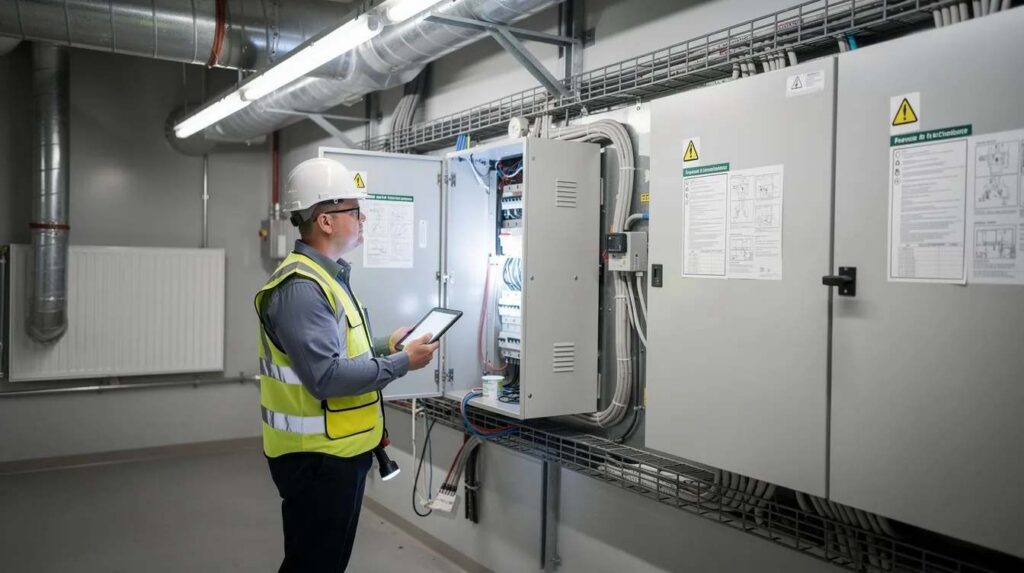
Key Components Identified in Cost Segregation Studies
Cost segregation specialists review individual components, actual cost, and total costs to identify short life assets.
Common examples include:
- 5-Year Property includes carpet flooring, specialty lighting, and cabinetry.
- 7-Year Property includes office furniture and specialty equipment.
- 15-Year Property includes land improvements like sidewalks and parking lots.
Other assets may include LVT flooring in office buildings, millwork in medical suites, dedicated electrical, supplemental HVAC, irrigation, retaining walls, and site improvements. Leasehold improvements in office and retail build-outs often create additional depreciation deductions and may support future partial disposition deductions when replaced.
Tax Benefits in 2025–2026
By accelerating depreciation deductions through cost segregation, property owners can improve their cash flow and reduce their taxable income, leading to increased profitability. Accelerating depreciation creates larger deductions that can wipe out or significantly reduce income tax owed on rental or business income.
Before the new tax law, bonus depreciation was phasing down from 60% in 2024 to 40% in 2025. The reinstatement of permanent 100% bonus depreciation for qualified property acquired and placed in service after January 19, 2025, enhances the tax savings potential for real estate investors. Section 179 may also apply to certain assets, though cost segregation is not a tax credit; it is accelerated depreciation.
Example: a $1,000,000 office building with $200,000 allocated to land leaves $800,000 in depreciable basis. If a cost segregation analysis moves 25% into shorter lives, $200,000 may be accelerated. Cost segregation studies can result in tax savings of $30,000 to $80,000 per $1 million of building value in the first five years of ownership.
One caution: if you are not classified as a “Real Estate Professional” by the IRS, your accelerated depreciation losses cannot offset ordinary W-2 income; they can only offset other passive real estate income.
How Cost Segregation Increases Cash Flow in the First 5 Years
Typically, cost segregation studies can reclassify 10% to 40% of the overall construction or acquisition cost to shorter recovery periods, significantly increasing cash flow. That early cash flow can reduce estimated tax payments, pay down debt, fund renovations, or help acquire more real estate assets.
Immediate tax savings from accelerated depreciation can be reinvested into other properties, used for renovations, or put toward debt reduction. Catch-Up Deductions allows claiming missed past depreciation all at once in the current tax year without amending prior returns, often through Form 3115 and a Section 481(a) adjustment.
Which Properties Are Good Candidates for Cost Segregation?
Any type of income-producing property placed into service after 1986 qualifies for cost segregation, making this tax strategy widely applicable across the real estate spectrum. Properties must be used for business or investment purposes rather than as a personal residence to qualify for cost segregation studies. Primary personal residences do not qualify for cost segregation because they are not income-producing assets.
Strong candidates include:
- office buildings
- medical and dental offices
- retail centers and restaurants
- hotels and self-storage
- manufacturing facilities
- residential properties such as multifamily, student housing, and build-to-rent communities
Cost segregation applies to both newly constructed and recently purchased or renovated properties, including various types of residential and commercial real estate. Properties acquired through purchases, 1031 exchanges, inheritances, or new construction can qualify for cost segregation studies, provided they meet the income-producing requirement.
Many projects work best with at least $750,000 to $1,000,000 in building basis, but portfolios of smaller assets may also justify cost seg studies.

Best Timing for a Cost Segregation Study
The best time to conduct a cost segregation study is in the year the property is acquired, constructed, or remodeled, but look-back studies can be performed at any time to claim write-offs without amending prior-year tax returns.
Common planning windows include a new building, major construction projects, leasehold improvements, or a high-income year. If a sale is expected soon, model depreciation recapture. Depreciation Recapture Tax occurs if the property is sold early, taxing accelerated personal property depreciation at ordinary income rates, up to 25%.
Cost Segregation Services We Provide
Our cost segregation services include full engineering-based studies, rapid desktop studies, and preliminary cost segregation analysis. We support commercial property owners, CFOs, CPAs, real estate investors, and real estate owners with one-off buildings or multi-state portfolios.
Our cost segregation work covers acquisitions, new construction, remodels, and leasehold improvements. We also review prior segregation studies when new tax law creates added opportunity, helping clients protect tax positions while pursuing the full benefit available.
Our Cost Segregation Work Process and Deliverables
Clients can expect a kickoff call, data checklist, virtual or in-person site review, draft analysis, final cost segregation report, and audit support if needed.
Deliverables typically include:
- PDF narrative explaining methodology
- Excel schedules separating 5, 7, 15, 27.5, and 39-year assets
- photos and engineering assumptions
- reconciliation to tax basis
- CPA-ready fixed asset details
Our studies are designed around irs guidelines, practical implementation, and clear documentation for any future irs audit.
Cost Segregation FAQs
Here are the questions we hear most often from property owners comparing cost, eligibility, and risk.
How much does a cost segregation study cost?
Cost segregation studies generally cost between $950 for a self-directed Rapid Report for smaller properties and $2,800 or more for a Fully Engineered Study, depending on property type and complexity. Larger or complex commercial property projects may require custom pricing.
How long does a study take?
A Rapid Report typically takes about 5–10 business days. A Fully Engineered Study usually takes about 15–20 business days after we receive the required documents.
Can my CPA do this without an engineer?
Your CPA is essential for tax implementation, but specific classifications often require construction and engineering support. Rule-of-thumb segregation work can weaken tax positions.
Will a cost seg study increase my audit risk?
Not by itself. Risk comes from poor documentation, aggressive asset classifications, or failure to follow irs guidelines.
Can older properties qualify?
Yes. A catch up study can claim missed depreciation in the current year without amending prior returns.
What about depreciation recapture?
Recapture can increase tax liabilities on sale. Long-term hold periods, 1031 planning, and careful modeling often still make the tax benefits worthwhile.
Why Choose Our Cost Segregation Services?
We use an engineering-driven approach, clear communication, and CPA-friendly reporting. Our team has completed hundreds of cost seg studies across multiple states and property types, giving us a practical track record with complex assets.
We focus on defensible numbers, not inflated promises. For example, one medical office owner increased first-year depreciation by roughly $450,000 on a $3.2M project after a detailed analysis of building components, short life assets, and site improvements.
Conclusion and Next Steps: Get Your Free Cost Segregation Analysis
Send us the property address, property type, acquisition or construction cost, placed in service date, and a short description of major improvements.
We’ll return an estimated reclassification range, approximate first-year tax savings, indicative fee, and timeline. If you want to save money, reduce your tax burden, and increase cash flow from real estate, a professionally prepared cost segregation study is one of the most effective IRS-aligned tools available.