
If you’re exploring ways to reduce your tax burden on income-producing real estate, you’ve likely encountered cost segregation. For real estate investors, cost segregation can be a game changer, offering the potential to boost tax savings significantly. But before diving in, most property owners want a clear answer to one question: what will this actually cost me, and is it worth it?
This guide breaks down real pricing data, ROI expectations, and the specific scenarios where cost segregation delivers exceptional returns—or falls short.
Table of Contents
- Cost Segregation Cost at a Glance
- What Is a Cost Segregation Study?
- Typical Cost Ranges
- What Drives the Cost
- When Cost Segregation Delivers Its Best ROI
- Which Property Types Usually Justify the Cost
- When Cost Segregation Doesn’t Make Sense
- How to Evaluate If It’s Right for You
- FAQs
- Conclusion
Cost Segregation Cost at a Glance: What Business Owners Should Expect
How much does a cost segregation study cost? Cost segregation studies generally range from $5,000 to $60,000, with most falling around $10,000 for a typical commercial building worth about $1 million. For many commercial buildings valued around $1 million, a typical fully engineered cost segregation cost falls in the $7,500–$12,000 range.
That fee typically covers engineering analysis, a site visit or virtual inspection, a detailed cost segregation report, depreciation schedules broken into different categories, and potential audit support. Quality cost segregation study providers include documentation that meets IRS guidelines for defensibility. The cost of a cost segregation study is often structured as a percentage of the net present value of the tax savings, aligning the interests of the firm with the client.
The decision shouldn’t focus solely on the fee. A well-executed cost segregation study can help unlock tax savings for property owners, often yielding tax savings in the range of $40,000 to $60,000 for a typical $1 million commercial property, providing a return on investment of 4x to 6x in the first year. When you compare the study cost against estimated tax savings, the math usually becomes clear.
What Is a Cost Segregation Study and How It Creates Tax Savings
A cost segregation study involves a detailed analysis that breaks down a commercial property into its individual components, allowing for accelerating depreciation deductions of certain assets. This cost segregation work helps identify which assets can be moved into shorter depreciation lives. Instead of depreciating your entire building structure over 27.5 years (residential) or 39 years (commercial property), the study reclassifies qualifying elements into shorter depreciation lives in accordance with tax law and IRS guidelines.
A cost segregation study involves a detailed analysis that breaks down a commercial property into its individual components, allowing for accelerating depreciation deductions of certain assets. This cost segregation work helps identify which assets can be moved into shorter depreciation lives.
Components like parking lots, interior finishes, carpeting, specialized electrical systems, and land improvements may shift from long-life real property to 5-, 7-, or 15-year personal property. This reclassification unlocks accelerated depreciation, including current federal bonus depreciation rules, and enables property owners to accelerate depreciation deductions, allowing them to deduct a significant portion of their property costs in the first year instead of spreading them over decades.
The result is larger depreciation deductions in the first 1–5 years of ownership, improving cash flow and allowing real estate owners to reinvest or pay down debt faster. Cost segregation can provide immediate tax relief, improving liquidity for property owners and supporting cash flow cost segregation strategies. Any type of income-producing property placed into service after 1986 qualifies for cost segregation, including residential properties like single-family rentals and multi-family buildings, as long as they are used for business or investment purposes.
Total lifetime depreciation doesn’t increase—the timing of deductions changes, which is where the economic benefit comes from through the time value of money.
Typical Cost Ranges for a Cost Segregation Study
Pricing varies by provider type (engineering firm vs. software), scope, and property size, but clear market norms exist. Here’s what to expect:
| Property Value | Typical Study Cost |
|---|---|
| $500K–$1M | $7,000–$12,000 |
| $1M–$3M | $10,000–$20,000 |
| $3M–$10M | $20,000–$40,000 |
| $10M+ | $40,000–$60,000+ |
Very small, software-driven “desktop” studies for simple residential rentals may start around $1,000–$1,500, while engineered studies for mid-size commercial buildings commonly land between $7,500 and $20,000. Institutional-scale projects like $20M+ hospitals or data centers can see study costs in the $30,000–$60,000+ range due to the depth of engineering and documentation required.
Reputable providers usually quote fees as a flat amount per property after reviewing basic details. Well-structured engagements include pre-engagement estimates, so owners don’t proceed unless projected savings significantly exceed the fee—typically by 3–5x minimum.
Average Cost by Property Value Bands
Here’s what real estate investors can expect across common investment sizes:
- $500K–$750K basis: $6,000–$9,000 study cost; potential savings may be modest but still positive ROI for high-bracket taxpayers
- $750K–$1.25M office or retail: $8,000–$12,000 typical fully engineered study
- $1M–$3M multi-tenant or medical office: $10,000–$20,000; complexity from tenant improvements increases hours
- $5M+ industrial or hospitality: $25,000–$40,000; study fee becomes a small fraction of year-one tax benefits
The fee doesn’t scale perfectly with purchase price. Complexity—multi-tenant buildouts, mixed-use design, renovations—often matters more than property value alone. Once properties exceed roughly $5M–$7M in depreciable basis, the study fee is usually a tiny percentage of first-year savings if the owner can use the losses.
Rule of thumb: Properties above $500,000–$600,000 in depreciable basis typically cross the threshold where cost segregation makes more sense for most taxpayers in the 32%+ bracket.
How Pricing Structures Typically Work
Three main pricing models dominate the market:
- Flat fee per property: Most common (80-90% of providers); predictable and preferred by sophisticated owners
- Tiered pricing: Based on property size or square footage bands
- Percentage-of-savings: The cost of a cost segregation study is often structured as a percentage of the net present value of the tax savings, aligning the interests of the firm with the client (typically 10–20% of NPV)
Add-on charges may apply for rush delivery (20% premium), multiple ownership entities, complex renovations, or multi-state tax schedules. Always get a clear written quote spelling out what’s included: study, report, schedules, audit support, and follow-up calls.
Ask how the provider will estimate potential savings before engagement so you can evaluate ROI before committing.
What Drives the Cost of a Cost Segregation Study?
Several variables push study fees higher or lower:
- Property size: Square footage correlates loosely with cost, but a 50,000 sq ft simple warehouse may cost less than a 20,000 sq ft medical office
- Building type: Industrial facilities with heavy MEP systems require more engineering hours
- Number of buildings: Multi-building properties increase scope and documentation
- Age and records quality: New construction with detailed contractor cost breakdowns enables 20–30% faster studies than older properties requiring historical cost modeling
- Physical inspection vs. virtual: Virtual inspections can save 10–20% on fees post-COVID, but regardless of method, properties should be easily accessible for inspections to ensure thorough documentation and analysis.
- Prior renovations: Multiple fit-outs or tenant improvements add complexity and may require additional analysis of property related costs
Example comparison: A simple single-tenant retail building might cap at $8,000, while a multi-tenant medical office building with labs and specialized systems could run $15,000+ for the same square footage.
The IRS’ Cost Segregation Audit Techniques Guide lists 13 principal elements of a cost segregation study, emphasizing the need for preparation by an individual with expertise and experience. Comprehensive IRS audit-defensible documentation adds value but also contributes to cost.

When a Cost Segregation Study Delivers Its Best ROI
The real question isn’t just “what does it cost?” but “what do I get back?” in year-one and long-term tax savings. Effective tax planning is essential to maximize these benefits, and cost segregation is a key strategy within a comprehensive tax planning approach.
Cost segregation generally works best when three things align:
- A property with at least ~$500,000 in depreciable basis
- Significant short-life components (20–35% of basis is common for offices and retail)
- An owner in a relatively high tax bracket who can use the losses
Reclassifying building elements into shorter-lived asset categories can significantly lower taxable income in the early years of ownership. Cost segregation can provide immediate tax relief, improving liquidity for property owners. These accelerated depreciation benefits can generate substantial cost segregation deductions for qualifying properties.
Current bonus depreciation schedule:
- 100% (2018–2022)
- 80% (2023)
- 60% (2024)
- 40% (2025)
- 20% (2026)
- 0% after 2026 unless Congress acts
Eligible short-life property can qualify for 100 bonus depreciation for assets placed in service after January 19, 2025 under the Big Beautiful Bill Act provisions.
Sample ROI Calculations by Property Size
| Scenario | Study Cost | Reclassified Basis | First-Year Deduction | Tax Savings (37%) | ROI |
|---|---|---|---|---|---|
| $600K warehouse | $7,000 | $150K (25%) | ~$90K (60% bonus) | $33,300 | 4.8x |
| $1M medical office | $10,000 | $300K (30%) | ~$180K | $66,600 | 6.7x |
| $3M hotel | $18,000 | $900K (30%) | ~$540K | $199,800 | 11x |
| $8M manufacturing | $35,000 | $2.4M (30%) | ~$1.44M | $532,800 | 15x |
Cost segregation studies can significantly improve cash flow by allowing property owners to take larger depreciation deductions in the first year instead of spreading them out over decades, thus enhancing the overall return on investment.
Results vary based on land allocation, state taxes, passive activity limitations, and whether the owner qualifies as a real estate professional or uses STR rules.
Timing: When Conducting the Study Maximizes Return
Cost segregation studies should ideally be performed immediately after a property is placed in service to maximize tax savings from day one. The placed in service date is when the property is ready and available for rental or business use.
However, investors can perform a “look-back” study to claim missed depreciation in a single year without amending past returns by filing IRS Form 3115. For example, a property purchased in 2021 and studied in 2024 can catch up all 2021–2024 depreciation in the 2024 return.
Timing is especially critical around major renovations. Performing a study before tearing out components can support partial asset dispositions and additional write-offs in future years.
Coordinate timing with your tax advisor to aim large depreciation deductions in high-profit years when marginal rates maximize benefit.
Which Property Types Usually Justify the Cost?
Not every property produces the same level of benefit. Properties that can benefit from cost segregation studies include newly constructed or acquired commercial real estate such as office buildings, retail spaces, warehouses, and manufacturing facilities, provided they are valued at over $500,000.
Any type of income-producing property placed into service after 1986 qualifies for cost segregation, including residential properties like single-family rentals and multi-family buildings, as long as they are used for business or investment purposes.
High-ROI property types:
- Multi-tenant office and retail centers (25–35% reclassification due to tenant improvements)
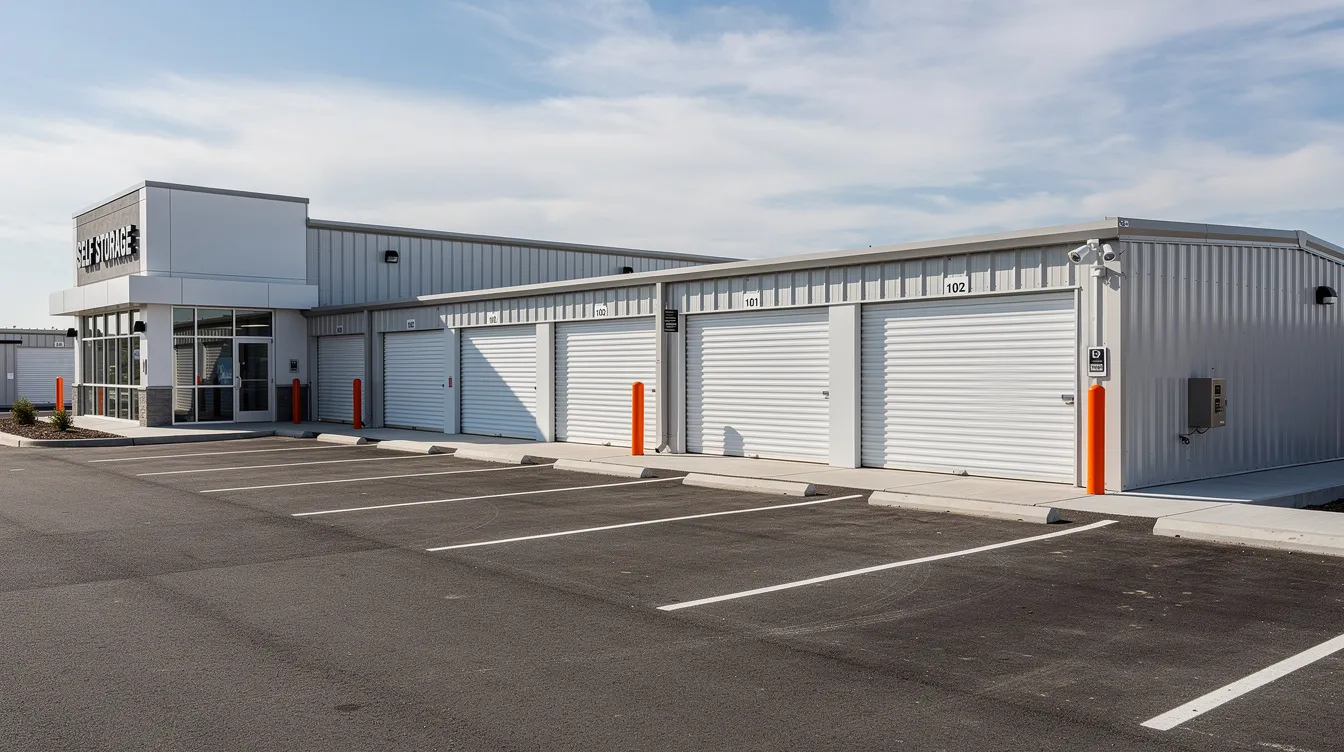
- Hotels and self-storage (significant site work and parking lots)
- Medical offices and industrial facilities (specialized systems push 30%+)
- Restaurants with heavy kitchen equipment and finishes
- High-value short term rentals
Properties with substantial land improvements (parking, landscaping, site lighting) and high interior finish costs generally outperform basic “four-wall” structures. Residential multifamily buildings can work well too, especially those acquired or built after the late 1980s, but ROI depends heavily on property value and tax profile.
Short-Term Rentals and High-Income Investors
Short-term rental properties, like those listed on Airbnb or VRBO, can also benefit from cost segregation studies, especially if they are valued at several hundred thousand dollars or more.
Short term rentals with average stays of 7 days or less can generate non-passive losses when the owner materially participates (100+ hours annually), allowing accelerated depreciation to offset W-2 or professional income. For high-income professionals in the 32%–37% bracket, this tax strategy can turn a one-time study fee into six-figure savings.
Mini-case: A physician purchases a $1.2M STR in 2025 with $900K depreciable basis. Reclassifying 30% ($270K) at 40% bonus yields ~$170K in first-year deductions. At a 37% marginal rate, that’s $63,000+ in tax savings against a $10,000 study fee—a 6x return.
Real estate professional status (REPS) is another path to treating rental losses as non-passive, but it requires 750+ hours and majority time documentation. These strategies require coordination with a tax advisor who understands both cost segregation and passive activity rules.
When Cost Segregation Studies Don’t Make Financial Sense
Cost segregation isn’t appropriate for every property. For properties valued at less than $400,000 to $500,000, the costs of a cost segregation study may outweigh the potential tax savings, making it less financially viable. Property owners should also consider how cost segregation interacts with other tax strategies when evaluating the overall financial impact.
Red flags where study cost may outweigh benefits:
- Properties under ~$400K–$500K depreciable basis
- Owners in low tax brackets (10%–12%)
- Investors already limited by passive activity rules with no path to non-passive treatment
- Properties planned for sale within 1–2 years where depreciation recapture triggers quickly
- Leases where the taxpayer doesn’t own the building structure
Example: A $350,000 basis property with a $6,000 study cost might generate only $9,000 in savings—a 1.5:1 ROI that may not justify the effort.
When a property is sold, the IRS may “recapture” some accelerated depreciation benefits at ordinary income tax rates, which can significantly impact the net gains from the sale. However, 1031 exchanges can defer recapture, and the net present value benefit usually remains positive for longer holds.
Sometimes the best tax advice is to skip the study and use standard straight-line depreciation.
How to Evaluate Whether a Cost Segregation Study Is Right for You
Use this checklist with your CPA or advisor:
- Confirm depreciable basis exceeds $500,000 (excluding land)
- Estimate 20%+ of basis could reclassify to short-life property
- Current marginal tax rate is 32% or higher
- Can use losses (non-passive status or income offsets available)
- Property type has substantial finishes, site work, or specialized systems
- Plan to hold property 5+ years (mitigates recapture concerns)
Request a preliminary benefit estimate from a provider using high-level property data: purchase price, land allocation, property type, location, and placed-in-service date. Model how much accelerated depreciation you can actually use in the next 1–3 years.
If you answer YES to most of these, a study likely makes sense.
Working with Your CPA and Study Provider
Involve your CPA early to ensure the study integrates with entity structure, pass through entities considerations, state taxation, and long-term exit planning.
Questions to ask potential providers:
- How many cost seg studies have you completed?
- What’s your experience with my property type?
- What engineering credentials does your team hold?
- What’s your audit support policy?
- Can you provide sample reports and references?
Emphasize reports that are both tax-optimized and defensible under IRS guidelines, with clear asset classifications and cited authority for more detailed analysis.
Frequently Asked Questions About Cost Segregation Cost and Savings
What is the minimum property value that makes a cost segregation study worthwhile?
Generally, properties with at least $500,000–$750,000 in depreciable basis justify formal engineered studies. Below $400,000–$500,000, the costs typically outweigh potential savings.
How long does a typical cost segregation study take?
Most studies complete in 3–8 weeks from engagement to final cost segregation report, depending on property complexity and records availability.
Can I do a cost segregation study myself with software instead of hiring engineers?
DIY software exists but lacks the engineering defense required for IRS audits. Quality studies require physical inspection or detailed virtual analysis by qualified professionals.
How does bonus depreciation changing after 2026 affect my decision?
With bonus depreciation phasing to 0% after 2026 unless Congress acts, 2025–2026 represents a critical window. The Tax Cuts for Jobs Act allowed 100% bonus depreciation on eligible assets placed in service between September 28, 2017, and December 31, 2022, significantly boosting tax savings for property owners who utilized cost segregation during that period.
What happens during an IRS audit if I’ve used a cost segregation study?
Quality engineered studies with proper documentation have a 99%+ defense rate. The IRS accepts studies where methodology follows their Audit Techniques Guide.
Can I perform a cost segregation study years after purchasing the property?
Yes. Look-back studies via Form 3115 allow you to catch up missed depreciation without amending prior returns—money you may be leaving on the table.
Does a cost segregation study increase my total deductions, or just shift timing?
It shifts timing only. Total lifetime depreciation remains the same, but front-loading deductions creates significant savings due to time value and increased cash flow now.
How much should I expect to pay for a quality cost segregation study?
For most commercial properties, expect $7,500–$25,000 for a fully engineered study. The cost segregation cost scales with complexity, not just property value. Institutional properties may run $30,000–$60,000+.
Conclusion: Weighing Cost, Benefit, and Next Steps
Cost segregation delivers exceptional ROI when property size, tax profile, and timing align—but it’s not universally beneficial. For many properties over ~$500,000 in depreciable basis, especially under favorable bonus depreciation rules, the study fee represents a fraction of first-year tax savings.
The decision requires gathering core property data—purchase price, land value, placed-in-service date, building type—and consulting both your CPA and a qualified cost segregation provider. A preliminary savings estimate costs nothing and clarifies whether you qualify for significant savings.
Ready to see if cost segregation work makes sense for your real estate investments? Submit your basic property details for a complimentary preliminary savings and fee estimate. The numbers will tell you whether you’re leaving money on the table—or whether standard depreciation serves you better for now. Visit our website to request a preliminary savings estimate and learn how accelerated depreciation could improve your cash flow and tax position.
Our team can evaluate your property details, estimate potential tax benefits, and help you determine whether the expected return justifies the Cost Segregation Cost for your specific situation.