You brought in a new machining cell, went live on a new ERP or warehouse system, or automated part of the line. Then came the part nobody budgets for properly: pulling people off the floor, paying a vendor or your own trainers, and spending weeks getting your team productive on it.
Georgia’s Retraining Tax Credit exists to share that cost. It pays back up to half of what you spend training your existing employees on new equipment or technology, as a credit against your Georgia income tax — and the wages you paid people while they were in training count toward it.
What the Credit Does for an Employer
- It lowers the real cost of adopting new equipment and technology. The capital purchase gets the attention; the training is often the larger hidden cost. This credit offsets that side of the project.
- It rewards upskilling the people you already have — training your existing workforce on the new equipment instead of hiring for the new skill set.
- It works for any size of rollout. It is calculated per employee and per training program, so a 15-person cell conversion and a 300-person system go-live both qualify on the same terms.
- Unused credit carries forward. What you can’t use this year carries forward for up to five years (ten years for credits earned in tax years that began before 2025).
How the Credit Is Calculated
Step 1 — Add up the Eligible Training Cost for Each Employee
Eligible costs are the direct costs of the approved training program:
| Cost | What counts |
|---|---|
| Trainee wages | Wages paid to the employee for the hours spent only in training during paid time — not hours spent producing while they learn. Usually the largest component. |
| Instruction | Your in-house trainer’s pay for the training time, or the vendor’s or outside provider’s training fee |
| Program development | The cost of developing the training program itself |
| Materials | Manuals, textbooks, instructional media and supplies |
| Training-only equipment | Equipment used only for the training, not for production |
| Travel | Reasonable travel to the training |
Not eligible: sales tax, the cost of the training space, and anything the employee paid — including training time charged against the employee’s PTO or vacation.
Step 2 — Apply 50%, Capped per Program and per Year
The credit is 50% of the eligible cost, up to $500 per employee for each approved program they complete, and up to $1,250 per employee per year across all programs. One program caps at $500; two at $1,000; reaching $1,250 takes three or more.
A Worked Example
A plant installs a new CNC machining cell and trains 30 operators on it. For each operator:
| Per operator | Amount |
|---|---|
| Trainee wages — 24 hours of classroom and hands-on training at $26/hour | $624 |
| Share of the equipment vendor’s training fee ($12,000 ÷ 30) | $400 |
| Manuals and materials | $40 |
| Eligible cost | $1,064 |
| 50% of eligible cost | $532 |
| Credit (capped at $500 for one program) | $500 |
Across 30 operators that is $15,000. If the same operators also complete a separate approved maintenance program on the new cell, each can earn a second $500 that year; technicians trained only on servicing it earn their own $500 each.
The example is illustrative — your wage rates, hours and vendor fees set the real number — but it shows why trainee wages matter: without them, most programs never reach the $500 cap.
Step 3 — Use It Against Your Georgia Income Tax
The credit can offset up to 50% of your Georgia income tax for the year, with any balance carried forward (five years; ten for credits from tax years that began before 2025). For an S corporation or partnership, the credit passes through to the owners in proportion to their share of income, and the 50% limit applies to each owner’s own Georgia tax — so whether it’s usable depends on the owners’ returns.
What Training Qualifies
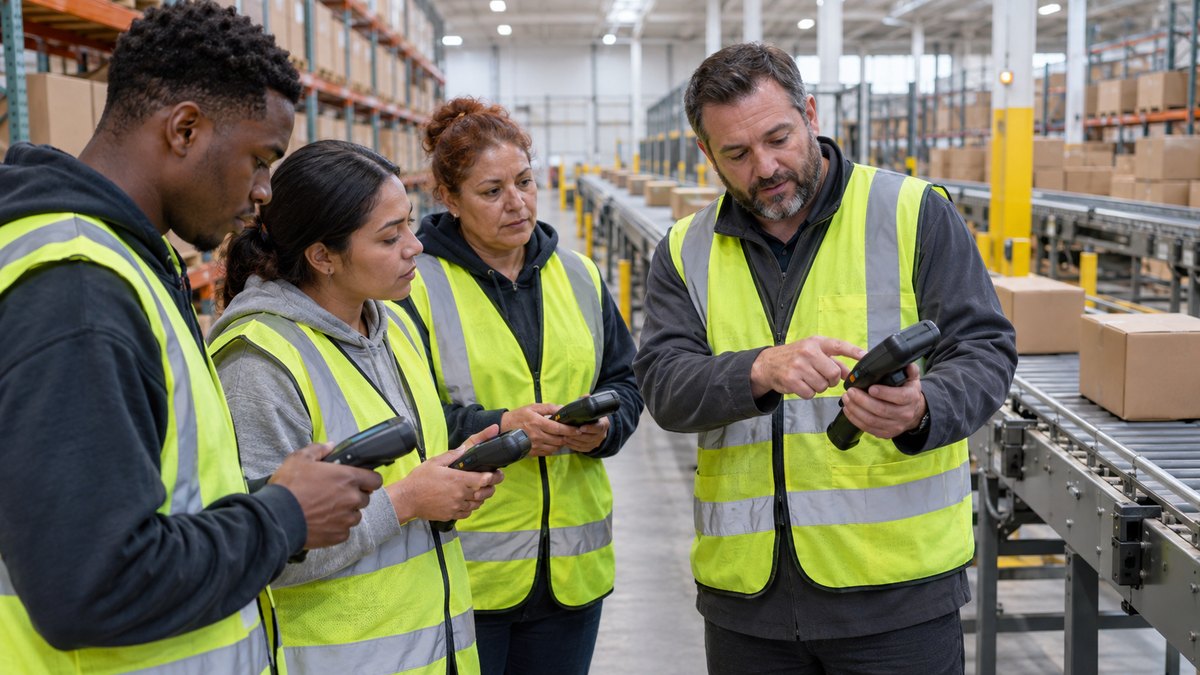
The training has to be on equipment or technology that is new to your company. Typical qualifying projects:
- Manufacturing — a new line or machine cell, new quality or inspection systems, a new ERP or MES rolled out to the floor
- Distribution and logistics — a new WMS, new automation, new material handling or sortation equipment
- New automation or AI-driven systems brought into any operation — a fast-growing share of qualifying projects
- Retail — a genuinely new point-of-sale or inventory platform, though ordinary off-the-shelf software is excluded (below)
General and recurring training doesn’t qualify: mandated safety training, soft skills and management development, certification or licensure testing and continuing-education courses, off-the-shelf office software (unless supporting or training on that software is your business), routine software updates, updated marketing or spec sheets, and cross-training on equipment you’ve had for years.
Which Employees Count
- Georgia residents
- Full-time — at least 25 hours a week
- Employed for at least 16 consecutive weeks
- Front-line employees and their immediate supervisors — managers and executives above first-line supervision aren’t counted
Each employee also has to complete the program, shown by a formal assessment — a written test, a hands-on demonstration or a skills checklist signed off by the trainer.
Industries Where It Often Comes Back Every Year
In some industries something new arrives almost every year — a new model line, a new production line, a system upgrade, new service equipment — and the people who work with it have to be trained on it. For these employers the retraining credit isn’t a one-off; it can become a yearly claim — whenever the year brings equipment or technology genuinely new to the business — and is worth setting up as a routine.
| Industry | What changes year to year | Training that typically qualifies |
|---|---|---|
| Auto, truck and equipment dealerships | New model lines often require new service equipment and systems in the store — high-voltage EV and hybrid service tooling, ADAS calibration rigs, new diagnostic platforms — or a switch to a new dealer management or CRM system | Technicians, shop foremen, service advisors and parts staff trained to use the new equipment and systems (manufacturer certification tracks and product-knowledge courses don’t count) |
| Automotive, EV and battery suppliers | Model changeovers that bring new lines, retooling and new automation | Operators, maintenance technicians and quality inspectors trained on the new lines and equipment |
| Aerospace and defense manufacturing | New programs that bring new inspection and test equipment, and new composites and machining equipment | Machinists, assemblers, inspectors and test technicians |
| Food, beverage and poultry processing | New processing and packaging lines, automation, inspection and vision systems | Line operators, maintenance and sanitation leads, quality technicians |
| Carpet, flooring and textiles | New tufting, dyeing, finishing and backing equipment; plant control systems | Machine operators, fixers and supervisors |
| Plastics, packaging, paper and printing | New molding machines, presses, converting lines and digital print equipment | Press and line operators, setup technicians |
| Metal fabrication, machining and tool and die | New CNC machines, lasers, press brakes, robotic welding cells and CAM software | Machinists, programmers, welders and setup leads |
| Distribution, logistics and third-party warehousing | A new or replacement WMS, new sortation, conveyors and robotics, new yard and fleet technology | Warehouse associates, equipment operators, maintenance technicians and leads |
| Utilities and telecommunications | New network and grid equipment, metering and field technology | Field and line technicians, network technicians and their supervisors |
| Building products and heavy equipment manufacturing | New production equipment, automation and quality systems | Operators, maintenance technicians and quality staff |
Two things stay true every year. What makes a year’s training qualify is that the equipment or technology is new to your business — certification exams and continuing education don’t count, and neither does refresher training on systems you already had. And each new training program needs its own TCSG approval, with TCSG-signed completion forms for each year’s claim, so the claim is rebuilt each year from that year’s changes.
How a Program Gets Approved
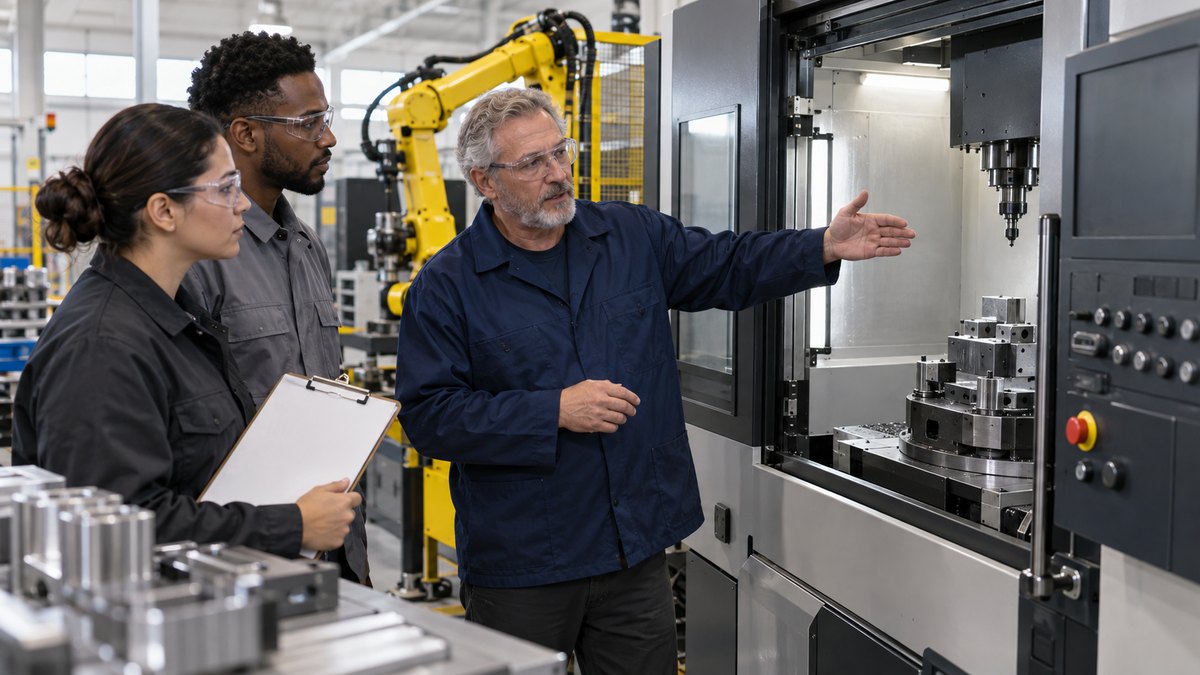
Each training program is approved by the Technical College System of Georgia (TCSG), the state agency that approves retraining programs for the credit. The program can be delivered by anyone — your own trainers, the equipment vendor or an outside provider; TCSG approves the program, not the trainer.
The approval application covers:
- The new equipment or technology and when it was put into service
- The skills your employees need to operate it, and the gap the new equipment created
- Whether that gap would put jobs at risk if it weren’t addressed
- The training plan — topics, hours, delivery method and who delivers it
- How trainees will be assessed, and how many employees will be trained
TCSG prefers to approve programs before training starts, and its turnaround is roughly 30 days. Approval after the training is done is available in practice when the records support it.
After the training, TCSG signs the program completion forms, and the credit is claimed on Georgia Form IT-RC with your Georgia return. It must be claimed within one year of when that return is filed or due (including extensions), whichever comes first — so it is best handled alongside the return for the year the training finished.
What You’d Hand Us, and What We Do
Mostly records you already keep: what the new equipment or system was and when it went in; training rosters or sign-in sheets with hours; trainer or vendor invoices; payroll for the people trained; and any tests or sign-offs. We also interview the people closest to the training — the supervisors and trainers involved (including the equipment vendor’s trainer where that makes sense) and your HR or training coordinator — to confirm and fill out the record of what was taught, to whom, for how many hours, and how skills were checked. From that we prepare the TCSG application, build the assessment piece if it’s missing, assemble the completion forms, calculate the credit employee by employee, and give your CPA everything needed to claim it.
Three Quick Answers
What we’ll need: What new equipment or system did you put in? · Roughly how many people were trained on it? · About how many training hours each?
Enough for us to give you a first estimate of the credit.
Frequently Asked Questions
We already did the training. Can we still claim it?
In many cases. The program still needs TCSG approval and completion documentation, which we assemble from your records, and the credit has to be claimed within a year of that year’s Georgia return — so it’s worth starting promptly.
Does vendor training on the new equipment count?
Yes. Training delivered by the equipment manufacturer or integrator qualifies when the program is approved, and the vendor’s training fee is an eligible cost along with your employees’ wages for the training hours.
Can one employee count in more than one program?
Yes — for example an operator program and a separate maintenance program on the same new equipment. Each approved program completed is worth up to $500 for that employee, up to $1,250 per employee per year.
Didn’t Georgia just repeal a lot of tax credits?
Seventeen of them, effective 1 January 2026. The Retraining Tax Credit wasn’t one of them, and neither was the Jobs Tax Credit — which may also apply if the same project added new positions.
What to Do Next
Tell us what you put in, roughly how many people you trained on it and for how long. We’ll give you a first estimate and tell you what it takes to claim it.
You’ve already paid for the training. Georgia will cover up to half of the eligible cost.
This article is general information about Georgia tax rules and is not advice for any specific situation. Program eligibility, employee eligibility and cost eligibility are determined by TCSG and the Georgia Department of Revenue on the facts of each case.
Current as of October 2026.