U.S. R&D incentives can reduce tax liability, improve cash flow, and put money back into innovation budgets. The R&D Tax Credit was created to incentivize companies of all sizes to underwrite the cost of innovation, allowing any company that designs, develops, or improves products or processes to potentially qualify.
Many businesses miss the r d tax credit because they misunderstand the four-part test, lack documentation, or do not realize routine daily work qualifies as R&D. Specialist r d tax advisors help translate technical projects into tax language, maximizing development tax credits while staying compliant with irs guidelines, Section 174 changes effective for 2025, and updated Internal Revenue Service guidance in 2025–2026.
Table of Contents
- Introduction
- How R&D Tax Credits Work
- What Activities Qualify
- Why Use R&D Tax Advisors
- Our Process
- Why Choose Us
- FAQs
- Next Steps
What Is the R&D Tax Credit and How Does It Work?
The federal R&D tax credit is a permanent federal incentive for qualified research activities performed in the U.S. Since its introduction in 1981, the Federal R&D Tax Credit has enabled companies to save billions of dollars, supporting innovation and growth across many industries.
Research and development tax credits, research and development tax, and development tax credits generally describe the same incentive family at the federal and state level. The credit provides a dollar-for-dollar reduction of income tax liabilities for companies engaging in qualified research activities, which can significantly enhance cash flow and profitability.
A tax credit calculation is based on qualified research expenses: wages, supplies, and usually 65% of eligible contract research. Advisors analyze whether the Regular Credit or the Alternative Simplified Credit (ASC) yields a higher return for businesses. Eligible startup companies can leverage R&D tax credits to offset up to $500,000 in federal payroll taxes, improving immediate cash flow. Established companies usually offset federal income tax, AMT, and sometimes state credits. Typical benefit: federal savings often equal 6–10% of QREs, with state-level programs adding more.
Qualified Research: Understanding the Four-Part Test
To successfully claim the R&D Tax Credit, businesses must demonstrate that their activities pass the IRS’s Four-Part Test, which assesses the nature and purpose of the research activities. The R&D Tax Credit requires that activities pass a four-part test established by the IRS, which assesses the business component, technological nature, elimination of uncertainty, and process of experimentation.
- Business Component/Permitted Purpose Test: The first part of the four-part test requires that the activity must relate to a new or improved product, process, or design intended to improve functionality, increased performance, reliability, or quality. This is the qualified purpose.
- Technological in Nature: The second part of the four-part test states that the activity must rely on principles of physical or biological sciences, engineering, or computer science.
- Elimination of Uncertainty: The third part of the four-part test requires that the activity must be intended to discover information to eliminate uncertainty regarding the development or improvement of a business component.
- Process of Experimentation: The fourth part of the four-part test mandates that substantially all the activities must relate to a process of experimentation, which can include modeling, simulation, or systematic trial and error.
Qualified research does not need to be new to the world. To qualify for the R&D Tax Credit, an organization’s innovative product, process, technique, formula, or software must be new to the business, not necessarily new to the world or industry. Failed experiments may qualify if teams evaluated alternatives and used other methods to reach a desired result.
Which Activities and Expenses Typically Qualify?
Any organization that resolves challenges in an innovative way is potentially eligible for the R&D Tax Credit. Any company that designs, develops, or improves products, processes, techniques, formulas, or software may be eligible for the R&D Tax Credit, including industries such as manufacturing, bioscience, software, and technology.
Eligible initiatives for R&D tax credits include developing new or improved products, creating proprietary software, designing prototypes, or refining manufacturing processes. Examples include prototyping a new product line in 2025, improving production efficiency before commercial production, custom internal software, sustainable materials testing, and construction companies designing energy-efficient systems.
Qualified research expenses include technical payroll, research expenses for supplies consumed in development, and eligible contract research paid to third parties. Routine quality control, foreign research, funded research, and reverse engineering without uncertainty usually do not qualify. Every expense must tie to a qualifying activity.
Why Work with Specialist R&D Tax Advisors?
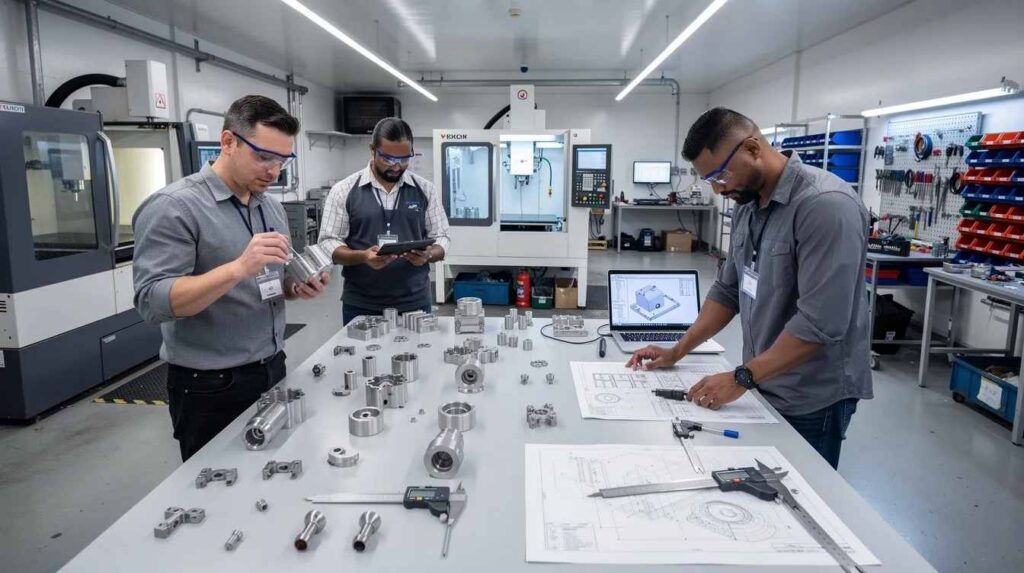
R&D tax advisors are specialized tax professionals who help businesses identify, document, and claim government tax incentives for innovation. They combine tax credit consulting, technical interviews, and documentation methods to reduce financial risk.
A development tax credit consultant can uncover eligible activities, classify expenses, coordinate with your CPA, identify additional credits, and provide audit defense. Advisors structure claims to withstand audits by IRS or state taxing authorities, thus mitigating risk. They also understand state programs, where development tax credits vary widely.
Our R&D Tax Credit Advisory Process
A good tax credit process is structured but not disruptive.
- Discovery: review projects, expenses, and likely benefit.
- Qualification: map research activities to the four-part test.
- Quantification: calculate qualified research expenses and compare Regular Credit versus ASC.
- Documentation: prepare a tax credit study with narratives, costs, and support.
- Filing: the process to claim the R&D Tax Credit involves preparing and submitting necessary documentation, forms, and schedules to the appropriate tax authorities, including IRS Form 6765.
- Support: defend credits claimed if examined.
Documentation setup involves utilizing existing payroll, accounting, and project-tracking systems to capture lab notes, design drawings, and time-tracking data. A focused study may take 3–4 weeks; a full multi-year study often takes 8–10 weeks.
How R&D Tax Advisors Collaborate with Your CPA and Finance Team
R d tax advisors complement your CPA. The advisor prepares the technical tax credit study; the CPA files the federal and state returns.
This matters because Section 41 credit rules and Section 174 research cost treatment must align, especially after 2025 changes. Advisors help model carryforwards, amended returns, payroll tax offsets, cash refunds, and total tax savings so finance leaders understand the real benefit.
Claiming R&D Tax Credits for Current and Prior Years
Companies can claim current-year credits on timely filed returns and may amend prior years, often up to three tax years if open. For example, a 2026 review may consider 2023, 2024, and 2025, depending on filing dates.
Amended claims need stronger proof. Advisors compare potential credit to additional cost, then sequence federal and state level filings to preserve refunds and state credits.
Managing Risk: Compliance, Documentation, and Audit Support
The irs closely scrutinizes R&D credits. Advisors help companies gather and organize proof of innovation to create audit-ready files due to the IRS’s close scrutiny of R&D credits.
Organizations should maintain continual records of qualified expenses, including payroll records and project notes, to support their claim for the R&D Tax Credit. Strong documentation connects each qualifying activity to uncertainty, experimentation, and cost tie-outs. It lowers audit risk and makes annual compliance repeatable.

Industries That Commonly Benefit from R&D Tax Credits
Businesses that frequently qualify for Research & Development Tax Credits include those in software development, manufacturing, bioscience, technology, engineering, architecture, and construction.
Manufacturing may qualify through automation, tooling, and improved product design. Software and SaaS may qualify through scalability, algorithms, and cybersecurity work. Architecture, engineering, and construction/design-build firms may qualify through energy modeling and novel systems. Food, bioscience, and clean energy teams may qualify through formulations, prototypes, and hard sciences testing. Even companies spending a substantial amount, such as $250,000–$1 million annually, may see significant amounts of savings.
Why Choose Our Firm as Your R&D Tax Advisors
Our approach is practical: strong client service, clear documentation, transparent fees, and claims built for compliance. Instead of treating tax credit services like a quick spreadsheet exercise, we focus on technical depth, secure data handling, and audit-ready support.
For example, many clients recover missed credits from prior years, a SaaS startup may use payroll offsets in 2024–2026, and a manufacturer may identify additional credits from process improvement work that was never tracked as research.
Frequently Asked Questions about R&D Tax Credits and Advisors
Do I Need Profits to Benefit from the R&D Tax Credit?
No. Profitable businesses usually reduce income tax. Qualified small businesses can often offset payroll tax liabilities for up to five years, subject to IRS gross receipts and age rules. Businesses that qualify for the R&D Tax Credit can use the credits to offset not only federal income tax but also payroll tax liabilities, providing additional financial flexibility.
How Do I Know If My Activities Qualify?
To qualify for the R&D Tax Credit, an organization must demonstrate activities that satisfy a four-part test established by the IRS. If your team improves an existing products line, develops software, tests prototypes, or resolves technical uncertainty, activities qualify for review.
Can Failed Projects Be Claimed?
Yes. Failure can support a claim when the team used a systematic trial, evaluated alternatives, and documented why the work did or did not achieve the desired result.
What If My Company Has Limited Documentation Right Now?
Many first-time clients lack perfect files. A tax credit consultant can rebuild support from interviews, accounting records, project notes, and design files, then improve tracking going forward.
How Far Back Can I Claim?
Often three open tax years federally, but deadlines vary. 2025 and 2026 returns may involve extensions, amended filings, and state-specific rules, so timing matters.
How Do R&D Tax Advisors Charge?
Look for a tax credit provider with clear pricing, defined deliverables, and audit support. Fixed or capped fees can reduce surprises compared with open-ended percentage billing.
Can R&D Credits Work with Other Incentives?
Yes, but coordination is important. R&D credits may interact with hiring, energy, and other incentive programs, so your advisor should prevent overlap or double-counting.

Next Steps: How to Get Started with R&D Tax Advisors
Gather development projects from 2022–2026, estimate annual R&D spend, involve your CPA early, and schedule a 30–45 minute consultation. The right advisor can turn innovation into compliant tax savings year after year.